
One Prop Trader a Day – Panagiotis Delavinias: I Simply Refused to Stop Before Finding Out


One Prop Trader a Day – Episode 147
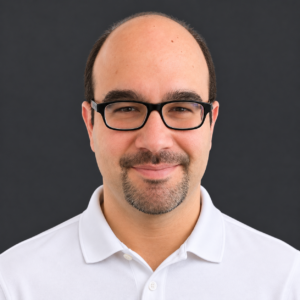
Panagiotis Delavinias
Panagiotis Delavinias (Panos) is a 42-year-old trader from the island of Lesvos in Greece, now living in the UK, who worked as an archaeologist and geophysicist before trading. He started trading at the end of 2022, became funded at the end of 2023, and for the last three years has traded only the ES futures, using DVA analysis with traditional technical analysis and two setups, the Failed Breakdown and the Breakdown Pullback. He has traded with Apex, Topstep, Fast Track Trading, Lucid, Tradeify, Bulenox, Take Profit Trader, FundingPips, Hola Prime, FTMO and Darwinex. Here is his story, in his own words.
FirmApex Trader Funding FirmTopstep FirmLucid Trading FirmTradeify FirmBulenox FirmTake Profit Trader FirmFundingPips FirmHola Prime FirmFTMO
What if you failed more than 60 evaluations and still refused to stop? Panagiotis Delavinias, a 42-year-old trader from Lesvos, Greece, now based in the UK, trades only the ES futures with a DVA-based framework. In this interview, he explains how a forgotten chart symbol and a prop firm that went bankrupt taught him to avoid consistency rules, why he judges performance over hundreds of trades instead of days, how his two setups work, and what he looks for in a prop firm.
My name is Panagiotis Delavinias (you can call me Panos). I am 42 years old and come from a Greek island called Lesvos in the North Aegean. However, for the last six years, I have been living in the UK. In Greece, I worked as an archaeologist and later as a geophysicist.
At the end of 2022, I came across an advertisement for a trading course run by an ex-banker, and it caught my attention. I started by trading futures, crude oil, and gold, but for the last three years I have traded only futures and, more specifically, only the ES.
I first became funded at the end of 2023. That was the moment trading stopped feeling theoretical and became real. Seeing profits and losses translate into actual money changed my perspective completely. It reinforced my belief that, with the right process and consistency, trading could genuinely change the course of my life.
When I received my first payout, it was time to replace my car’s tyres, so I had no hesitation in spending 650 pounds on them. I used the rest of the money to visit my family in Greece.
I must admit that the feeling of receiving your first payout is something you never forget. It is the moment when trading feels real.
I failed more times than I can count – certainly over 60 evaluations and at least three funded accounts.
Looking back, I do not regret any of it. Every failure taught me something valuable about risk, discipline, psychology, or execution. Those lessons were expensive, but they became the foundation of my development as a trader.
At first, what kept me going was curiosity. Trading seemed incredibly difficult, and that challenge fascinated me. Over time, curiosity evolved into ambition: the desire for financial independence and the ability to help the people close to me. Today, it is driven by something deeper – a genuine passion for the craft and the continuous pursuit of improvement.
The most expensive lesson I have learned was to avoid accounts with consistency rules, and the number is 7,200 dollars.
One day, I was trading with the prop firm Fast Track Trading (FTT), and I forgot to change the symbol on my chart. After the trading day ended, I realised that instead of making 92 dollars, I had made 920 dollars. Due to the consistency rule (I believe it was 20%), it turned out that instead of needing to make 1,500 dollars, I now had to make 7,200 dollars before I could request a payout.
This happened during the first three days after Trump’s election, and the markets were extremely active. I managed to turn the account from 1,500 dollars to 7,000 dollars, meaning I needed only another 200 dollars before requesting a payout. That morning, I woke up and read an email stating that FTT had declared bankruptcy.
Since then, I have never received any remuneration, not even the money I paid for the challenge itself.
From that experience, I learned to trust only long-established prop firms, avoid consistency rules, and request every available payout, no matter how small. If the money is in the bank, it cannot be lost.
Without question.
During my first two years, trading had a significant emotional impact on me. I evaluated my performance trade by trade and day by day, which was a mistake. Every loss felt personal, and that often led to destructive behaviours such as overtrading and oversizing.
For a long time, I would put together weeks of solid performance only to give a large portion of it back in a single bad day.
What changed was understanding that trading performance must be evaluated over meaningful sample sizes. A day, a week, or even a month can be misleading. What matters is executing a profitable process over hundreds of trades.
Today, I care far less about whether I finish the day green or red. My focus is on process, discipline, and consistency. If those remain intact, I trust the results will follow.
If my memory serves me well, I have traded with Apex, Topstep, Fast Track Trading, Lucid, Tradeify, Bulenox, and Take Profit Trader for futures, as well as FundingPips, Hola Prime, FTMO, and Darwinex for CFDs. At the moment, I maintain my Darwinex account, which I copy-trade to FundingPips, along with a funded Tradeify account.
For a period, I considered applying to real prop desks. However, that would mean working for someone else, which is exactly what I am trying to avoid by becoming a trader. Furthermore, prop desks often require traders to follow their own strategies, and that is something I am not willing to do.
The first thing I look for in a prop firm is its reputation and traders’ reviews on Trustpilot. If they pass that test, I then examine the account options they offer. I try to avoid consistency rules, especially when they are strict, such as 15% or 20%. I do not really mind if they are around 40-50% because I am not aiming for home runs.
I also prefer an end-of-day drawdown over a trailing drawdown. Additionally, I look for a profit target-to-drawdown ratio of at least 1:1 and ideally 1:1.5. Regarding payouts, I prefer daily payouts, but weekly payouts are also acceptable. As long as the payout percentage is 80% or higher, I am generally satisfied.
Today, I trade exclusively the ES futures market during the London and New York morning sessions.
My approach combines DVA analysis with traditional technical analysis. The foundation of my framework is the DVA methodology, which I use across yearly, quarterly, monthly, and weekly timeframes. I combine this with higher-timeframe imbalances, key market structure levels, and insights from Adam Mancini’s daily market analysis.
The objective is simple: identify where larger market participants are likely to engage and focus only on those areas.
I specialise in two setups: the Failed Breakdown (FBD) and the Breakdown Pullback (BPB). Both are built around liquidity, market structure, and reactions at significant levels.
Most trades target between 1R and 1.5R, while a small runner remains open to participate in larger directional moves. My edge comes from patiently waiting for multiple forms of confluence to align before taking risk.
Since I work evenings, I usually wake up between 8:00 and 9:00 in the morning. I have breakfast while watching my favourite TV series for 20-30 minutes or reading a book.
After that, I complete my market analysis, create my trading plan for the day, mark my levels, and set alerts. Since I am interested only in trading at my predefined levels, I spend the waiting time working on my trading journal and trade reviews.
My trading day usually ends around 10:30-11:30 New York time. After that, I either go to work or take a lunch break before completing trading-related tasks such as reviewing my statistics and preparing for the next trading day.
Before going to bed, I enjoy taking a walk when the streets and neighbourhood are quiet. It helps me think clearly and relax.
My most recent losing trade was yesterday (10/09/2026).
I was looking for either a Failed Breakdown (FBD) or a breakdown setup from the Previous Day Low (PDL). At that location, there was also a CVAL. Price moved down in an imbalanced fashion and bounced from the PDL/CVAL area. I rushed into a long position, thinking it might become an FBD and liquidity sweep.
However, price had not shown any acceptance above the Weekly -1.5 DVA Standard Deviation level, which was still exerting downward pressure. As a result, I was stopped out.
One of the mistakes I am still prone to making is entering before proper acceptance has been confirmed. Therefore, in this trade – and in every trade – I need to see clear acceptance above or below my levels before entering long or short positions, always in line with the higher-timeframe bias.
Since I only recently found true consistency, my biggest payout so far has been 2,000 dollars.
My first major milestone has already been achieved: finding consistency in the markets. My next milestone is reaching 10,000 dollars in payouts, which I believe can be achieved through copy-trading multiple prop firm accounts.
Only a handful of friends and family members truly understand what I do and what I have gone through to get here, and those are generally people who have traded themselves.
When I first started, I mentioned trading to some friends and to my mother, but they all told me to stop because they viewed it as gambling. Of course, I do not blame them. Their reactions came from a place of care and concern. However, I believe they would see things differently if they understood the markets the way I do today.
That is why trading can be a lonely profession, with both advantages and disadvantages. I strongly encourage traders to become part of a community and stay connected with other like-minded traders.
Perseverance.
Most people underestimate the amount of work required to become consistently profitable. Trading is not just about finding an entry pattern. It requires building an entire business framework: market analysis, risk management, execution, psychology, journaling, review, and continuous refinement.
Developing those skills can take years.
Many traders quit before they have truly given themselves enough time to discover what they are capable of. I simply refused to stop before finding out.
What I’d do with a 1 million dollar funded account, is the same what I’d do with a 50k account. If the account was from a combination of prop firms, then I’d investigate the rules and adjust my trading to them.
My trading style and risk management favour the prop firm challenges. Aiming for base hits of 1-1.5RR and small risk (1-3% for prop accounts/ 0.5% for bigger accounts & personal account) builds consistency and smooth equity curve and avoids deep drawdowns. Then I let time do the compounding.
My take on the firms
With Apex I had overall a good experience. Payouts were fast and smooth and support was there when I needed it. Since I first traded them, they have changed the rules quite a bit and they have established the 30-day challenges which go against my principle of taking enough time to pass the evaluations. Complex rules and asking traders to submit videos of their trades, kept me away from that firm all that time.
With Topstep support was responsive but I never had a payout with them. I trust they are reliable as they are long time in the industry.
I, also, had positive experience with Lucid, Bulenox and Tradeify. I like the option for Daily payouts from Lucid but all three of them have payout cap. For removing that, I’d like to give credit to Take Profit Trader (TPT), which I believe they are the closest someone can find to a personal account. They are, also, the only ones who offer three resets of the funded account if rules are breached.
Challenges passed – the receipts

About the writer – Panagiotis Delavinias
Panagiotis Delavinias (Panos) is a 42-year-old trader from the island of Lesvos in Greece, now living in the UK, who worked as an archaeologist and geophysicist before trading. He started trading at the end of 2022, became funded at the end of 2023, and for the last three years has traded only the ES futures, using DVA analysis with traditional technical analysis and two setups, the Failed Breakdown and the Breakdown Pullback. He has traded with Apex, Topstep, Fast Track Trading, Lucid, Tradeify, Bulenox, Take Profit Trader, FundingPips, Hola Prime, FTMO and Darwinex.
Enjoyed this article? Add JoinProp as a preferred source on Google.


