


One Prop Trader a Day – Episode 144
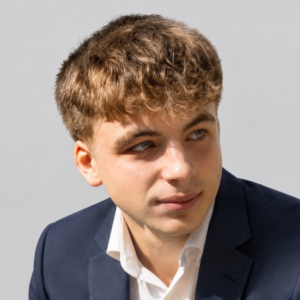
Edoardo Pezzella
Edoardo Pezzella is a 19-year-old Economics student from Rome, Italy who trades the Nasdaq during the New York session with a scalping-to-intraday approach based on ICT concepts, volume analysis and macroeconomics. He became a funded trader in February 2026 after passing his first FTMO challenge on a 10,000 dollar account, and so far he has traded only with FTMO. Here is his story, in his own words.
What if you only took one trade a day, set your stop loss and take profit, and walked away? Edoardo Pezzella, a 19-year-old Economics student from Rome, Italy, trades the Nasdaq during the New York session using ICT concepts. In this interview, he explains how three failed FTMO challenges taught him discipline, why he caps himself at one trade per session, what he looks for in a prop firm, and why he would change nothing with a 1 million dollar funded account.
I’m 19 years old, from Rome, Italy, and I’m currently studying Economics. I started trading when I was 16, and over the years I’ve developed a focus on the Nasdaq, mainly trading during the New York session with a scalping-to-intraday approach.
I became a funded trader in February 2026, when I passed my first FTMO challenge on a 10,000 dollar account. It was a strong emotional moment because, after several failed attempts, I had finally reached the goal I had been working towards. It made me realize that, through discipline, study and focus, it is genuinely possible to develop a positive edge in the markets. In practical terms, very little changed after becoming funded: I simply continued doing what I had to do.
I didn’t buy anything in particular with my first trading money. Instead, I reinvested it into my trading journey. I used part of it for a 50,000 dollar challenge and to pay for my TradeZella plan again. For me, reinvesting the money into the process was more meaningful than buying something for myself.
Before becoming funded, I failed three FTMO challenges. The main reason was that I didn’t have a clear and concise trading plan. I was also much more controlled by my emotions. Sometimes I would overtrade, telling myself that it was going to be the last time and that it wouldn’t happen again. What kept me coming back was the belief that the problem was something I could fix. Once I understood that I needed a clearer process and more discipline, I was able to approach the challenge differently.
The most expensive lesson I’ve paid for was 300 euros, which was the cost of a 50,000 dollar challenge that I failed. At the time, it was frustrating, but it taught me how important discipline and structure are. I now have another 50,000 dollar challenge and I’m currently close to reaching Phase 2, which makes that 300 euros lesson feel even more valuable in hindsight.
In the beginning, trading took a big emotional toll on me. Like most beginners, I was very attached to the P&L because I wanted to make money quickly. But that is exactly the trap you have to avoid. Once you start focusing on the potential profit rather than the setup, you are no longer trading your strategy – you are trading the money, and that becomes a loss most of the time.
Today, I have a maximum of one trade per session. As soon as I enter a position, I set my take profit and stop loss and then close everything. This removes the temptation to move my levels or interfere with the trade.
So far, I’ve only traded with FTMO. What I look for in a prop firm is simple: clear rules, reasonable pricing, security and reliability. I want to know exactly what is expected from me and feel confident that the firm is serious. In the future, I’d also like to explore futures, but for now I’m happy continuing with FTMO.
I mainly trade the Nasdaq during the New York session, with a scalping-to-intraday approach. My analysis is based on ICT concepts, combined with volume analysis and a foundation in macroeconomics. I use the broader market context to build my view and then look for a technical setup that gives me a clear entry and defined risk.
I usually start around 9:00 AM New York time, about 30 minutes before the market opens. I use that time to analyze the chart and prepare my view of the market. At 9:30, I start watching the market for a setup that fits my plan.
From there, it is mostly a mechanical process. I observe the chart, assess whether there is an opportunity according to my strategy, and sometimes keep up with relevant news at the same time. If there is no valid setup, I normally finish my session around 11:45 AM or noon.
If I do enter a trade, I immediately set my take profit and stop loss and step away from the position. I take a maximum of one trade per day, which helps me avoid getting dragged into emotional decisions.
My most recent losing trade was last Monday. It was a textbook trade according to my strategy and fully respected my entry trigger. The trade simply hit my stop loss, which is obviously part of trading. With a win rate of around 40-42%, I know that losses are going to happen even when I execute correctly.
What mattered to me was how I reacted to it. I accepted the loss calmly and didn’t let it affect my decision-making. Looking back, I wouldn’t really do anything differently – if the same setup appeared again under the same conditions, I would take the trade again.
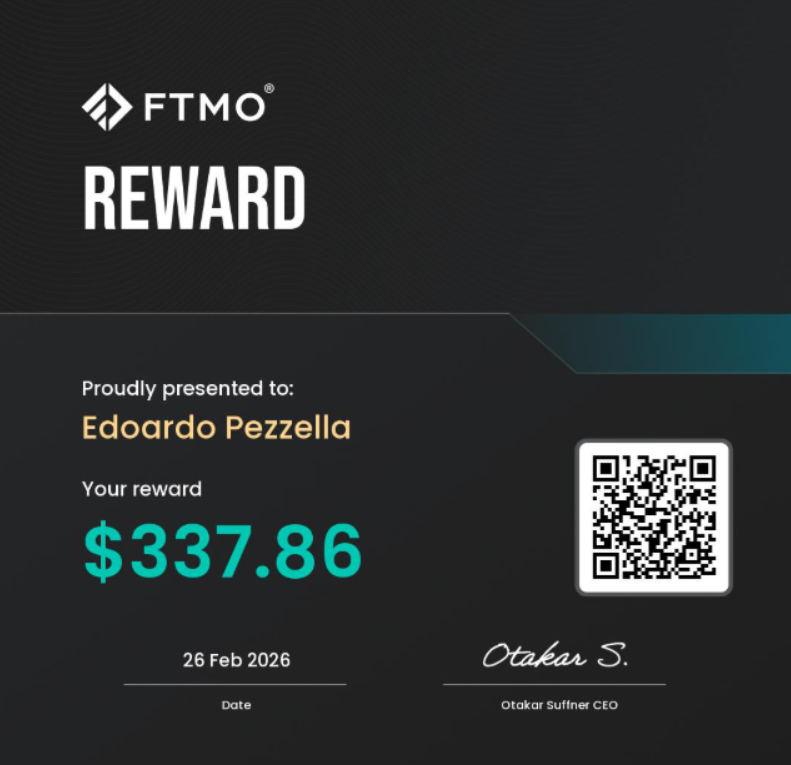
My biggest payout so far has been 337 dollars from my FTMO 10,000 dollar account. But honestly, I don’t consider the payout my most important milestone. The biggest milestone happens every day: becoming more disciplined, improving my process, and learning not to let emotions influence my decisions. The money is important, but building consistency and discipline is what really matters to me in the long run.
My family knows that I trade, while most of my friends know very little about it. My family believes in me and, more importantly, they see how much time and effort I put into it. They don’t really interfere or put pressure on me, which I appreciate. Having that support and freedom allows me to focus on the process.
Honestly, I think it comes down to one simple question: if other people have managed to make it, why shouldn’t I?
I genuinely enjoy what I do. I love finance and financial markets, so I know this is the path I want to pursue. Being disciplined and persistent makes me even more focused on the final goal: eventually being able to make a living from trading. The failed challenges didn’t change that goal; they just showed me what I needed to improve.
Honestly, I wouldn’t change anything. I would keep the same risk percentage, the same trades, the same setups and the same rules I follow today. The size of the account shouldn’t change the way I trade. If my strategy works with a smaller account, my job is simply to execute it in exactly the same way with a larger one. I wouldn’t suddenly become more aggressive just because the account is bigger.
My take on the firms
My experience with FTMO has been very positive so far. What I appreciate most is the clarity of the rules and the overall seriousness of the firm. The conditions are clear, the trading environment works well for my style, and I always know exactly what I am expected to do. This allows me to focus on my strategy rather than worrying about unnecessary complications.
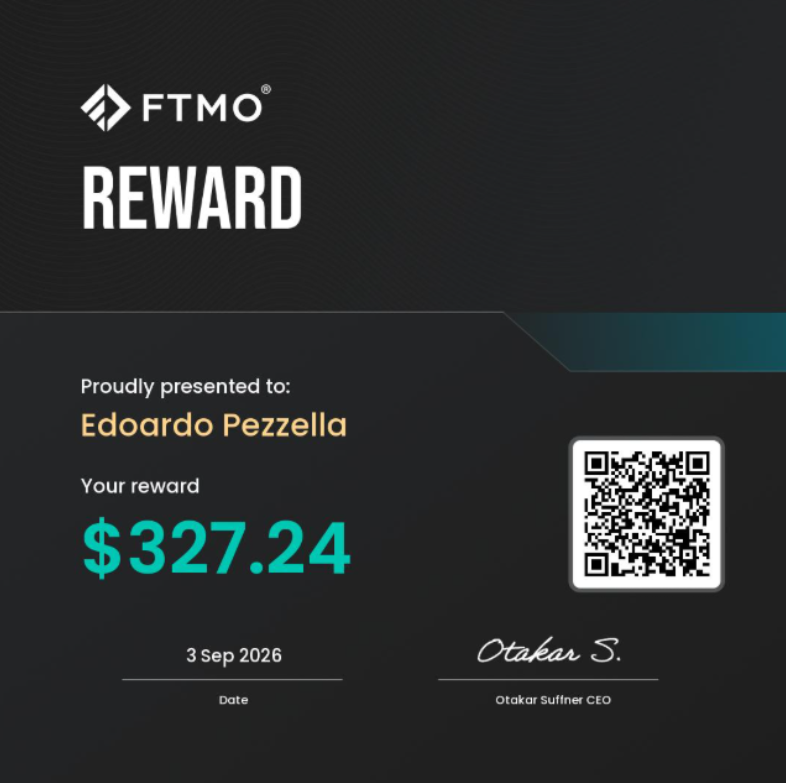
I’ve also been very satisfied with the payout process and the overall experience as a trader. I have received two payouts so far, and both experiences were smooth. For me, reliability is one of the most important things when choosing a prop firm, and FTMO has given me that confidence. Overall, I’ve had a very good experience with FTMO and I’m happy to continue trading with them.
Verified funded – the receipts
About the writer – Edoardo Pezzella
Edoardo Pezzella is a 19-year-old Economics student from Rome, Italy who trades the Nasdaq during the New York session with a scalping-to-intraday approach based on ICT concepts, volume analysis and macroeconomics. He became a funded trader in February 2026 after passing his first FTMO challenge on a 10,000 dollar account, and so far he has traded only with FTMO.
Enjoyed this article? Add JoinProp as a preferred source on Google.


