
One Prop Trader a Day – Matthew Rodriguez: Failure Was Singlehandedly My Greatest Teacher


One Prop Trader a Day – Episode 131
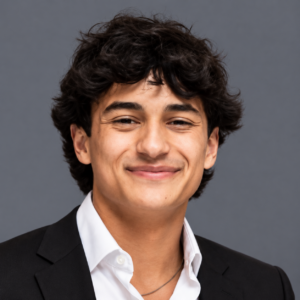
Matthew Rodriguez
Matthew Rodriguez is a 21-year-old finance student at the University of Tampa, originally from Chicago, Illinois. He trades Nasdaq futures (NQ and MNQ) with a liquidity and market structure approach, and currently trades with Lucid Trading after earlier accounts with Topstep and Alpha Futures. Here is his story, in his own words.
What does it take to turn a lost 8,000 dollar options account in high school into five payouts as a college student? Matthew Rodriguez, a 21-year-old finance student at the University of Tampa, originally from Chicago, Illinois, trades Nasdaq futures with Lucid Trading. In this interview, he explains how a denied first payout and around 6,000 dollars of evaluation fees pushed him to stop chasing money, how he balances charts, an internship and classes, and how he rates Lucid Trading, Topstep and Alpha Futures.
I’m Matthew Rodriguez, a 21-year-old finance student at the University of Tampa, originally from Chicago, Illinois. I primarily trade Nasdaq futures, focusing on NQ and MNQ contracts through prop firms like Lucid Trading and Topstep. I’ve always had an interest in the financial markets even as a kid, which is a big reason I decided to pursue a degree in finance.
My trading journey actually started when I was a junior in high school. I first got into trading options and managed to make around 8,000 dollars while trading during my lunch periods at school. At that age, making that kind of money was crazy to me, and it opened my eyes to the possibility that trading could become something real. However, I learned pretty quickly how important risk management is because I ended up losing everything I had made.
Eventually, I transitioned into trading Nasdaq futures, which came with a whole new set of challenges. I went through plenty of ups and downs, trying different strategies, making mistakes, and constantly working to find something that fit my trading style. It took a lot of trial and error before I finally developed a model that worked for me.
After plenty of trial and error, I finally started developing a trading model that worked for me. When I received my first funded payout, it wasn’t necessarily about the money. It was more about proving to myself that everything I had been working toward was actually possible. I had already experienced what it felt like to make money trading and lose it all, so this time it meant something completely different. Seeing that first payout actually hit my bank account was a reality check that all those hours studying the markets, trying new strategies, and learning from my mistakes were finally starting to pay off. It gave me the confidence that trading could become something real if I stayed disciplined and consistent. I’ve still had my fair share of ups and downs since then, but looking back, I’m glad I never gave up. I’m still learning and working every day to become a better trader, and that first payout will always mean more to me than anything I could have bought with the money.
I honestly wish I kept count, but there were way too many failures to remember. What kept me coming back was knowing that this was possible. I would see other traders sharing their success online, but what really motivated me was my own backtesting and studying the charts. I could see that my strategy had potential, and I knew if I stayed patient and disciplined, I could eventually make it work. The hardest part wasn’t finding opportunities in the market, it was learning how to control myself when those opportunities came.
Losing that first 8,000 dollars trading options in high school was definitely an expensive lesson, but my biggest came later. I had finally reached my first funded payout, only to have it denied because I accidentally traded during a University of Michigan economic news release. I was frustrated and let my emotions take over, which led to revenge trading and a downward spiral of failed evaluations. Before receiving my first payout, I had spent around 6,000 dollars of my own money on evaluations, much of it on credit cards that I was struggling to pay off. All of this was happening while I was attending college, working remotely at my internship, and balancing schoolwork with trading. Eventually, I realized something had to change. I stopped chasing the money and focused on discipline and risk management. Within that same month of struggling financially, I finally received my first payout, followed by another four payouts over the next two months. That experience taught me more than any winning trade ever could.
Trading definitely took a mental toll on me, and there were times when I let my emotions completely control my decisions. One thing that always stuck with me was that if I wanted to become a profitable trader, I had to start acting like one. Whenever I felt frustrated or wanted to revenge trade, I would remind myself that a profitable trader would remain calm, patient, and disciplined rather than letting one bad trade ruin their day. I genuinely believe the biggest challenge in trading isn’t finding the perfect strategy, it’s mastering the mental game. I’m still learning every day, but looking back at everything I’ve gone through, failure was singlehandedly my greatest teacher.
I’ve traded with Topstep and Alpha Futures in the past, but currently I trade with Lucid Trading. Personally, I think Lucid offers some of the best rules for certain funded accounts, which is a huge factor for me when choosing a firm. Another thing I really like about Lucid is that payouts are sent directly to your bank account. When looking for a prop firm, I focus on reasonable trading rules, payout reliability, and having the flexibility to trade my strategy without unnecessary restrictions.
Today, I primarily trade Nasdaq futures (NQ), while always keeping an eye on the S&P 500 (ES) for additional confirmation. Most of my executions happen on the 1-5 minute timeframes, but I build my overall directional bias using the daily, 4-hour, and 1-hour charts. My strategy focuses heavily on liquidity, market structure, and making sure my lower-timeframe entries align with my higher-timeframe bias. I’ve learned that being patient and waiting for the right setup is much more important than constantly being in a trade.
My trading day usually starts an hour or two before the New York market opens. I like to give myself time to wake up, clear my head, and sometimes go for a walk before sitting down at the charts. Once I’m ready, I’ll establish my daily bias, mark out liquidity targets, and build a trade idea around what I’m expecting price to do. If the market gives me my setup, I’ll execute the trade and usually step away afterward rather than forcing another opportunity. I also journal my trades, including why I entered, what I saw, and how I felt during the trade. After trading, I’ll log into my remote job, complete my assignments for the day, and then head to my afternoon college classes. It’s definitely a busy schedule, but having that routine helps keep me disciplined.
My most recent losing trade was honestly my own fault. I had a trade idea planned before the market opened, but price ended up reaching the liquidity target I was originally looking for. Instead of recognizing that my initial idea had already played out, I still entered the trade. Looking back, I should have stayed patient and reassessed the market rather than forcing an entry. It was another reminder of why I need my higher-timeframe bias, liquidity targets, and entry confirmations to align before taking a trade.
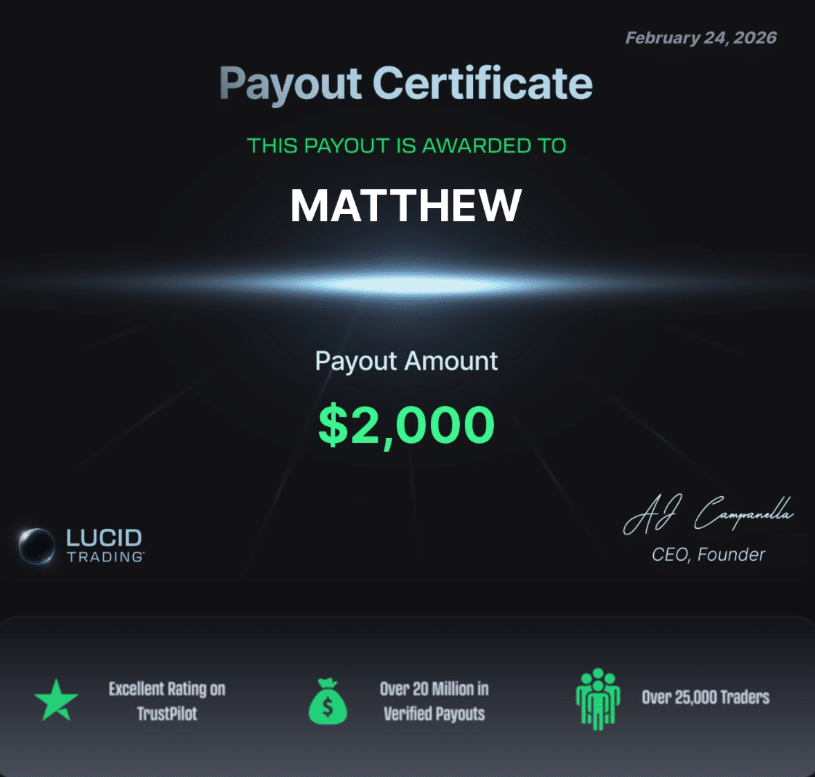
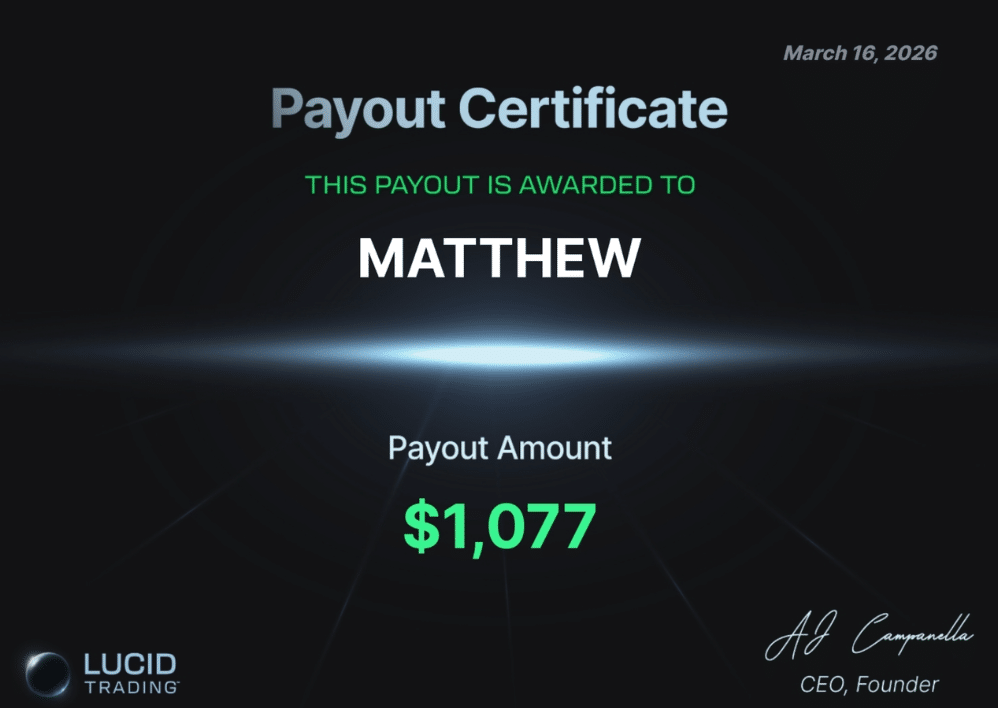
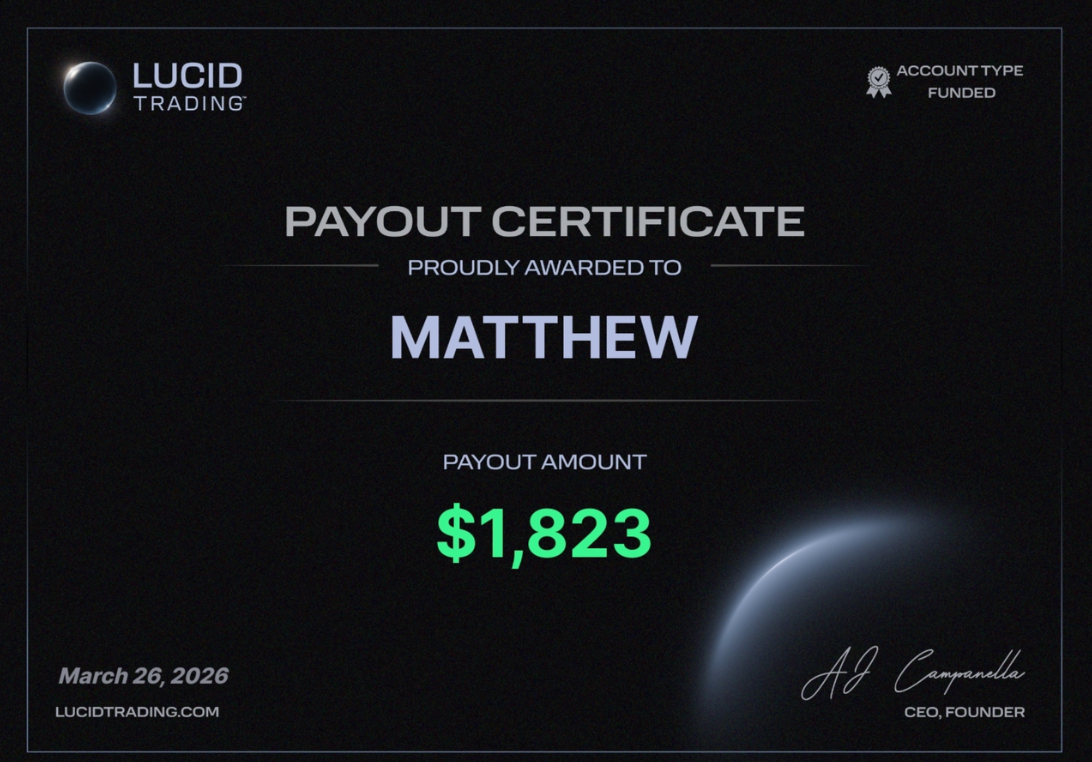
I’d say one of my biggest milestones was receiving three separate payouts, each requiring five winning trading days to qualify. While the payouts themselves weren’t necessarily huge because they came from individual accounts, the consistency behind them meant much more to me. It showed me that I was starting to develop a repeatable process rather than just getting lucky on a few trades. That’s when I started thinking about scaling my trading through copy trading across multiple funded accounts. My goal now is to maintain that same consistency while gradually increasing my account exposure, with the long-term goal of reaching five-figure payouts. For me, the biggest accomplishment wasn’t the dollar amount, it was proving that I could consistently execute my strategy over time.
When I first started trading, I tried explaining it to my parents, but they didn’t understand it at all. To them, it looked like I was gambling my money and potentially throwing away my future. Trading wasn’t seen as a realistic career path in my household, but honestly, I can’t blame them. They grew up in a different generation where making money online wasn’t really a thing, and you had to go out and work hard to earn a living. I think it was difficult for them to understand how someone could make money by sitting behind a computer screen. Over time, I’ve learned that rather than trying to convince people through words, it’s better to let my actions and results speak for themselves.
I think the biggest thing that separates me is that I simply never gave up. After countless failures, and with the help of God, I was able to keep pushing through and pursuing something I genuinely believed could become my dream. I’m nowhere near where I want to be, but I’m glad I’m not where I used to be, and that’s what keeps me moving forward every day. I’ve put too much time, effort, and sacrifice into this journey to just walk away. One thing I’ve always believed is that if you work hard enough, study hard enough, and continue improving yourself every day, you can put yourself in a position where success becomes inevitable. That’s the mindset I’ve tried to carry throughout my trading journey.
Honestly, I don’t think much would change with a 1 million dollar trading account. The biggest thing I’d focus on is making sure the size of the account doesn’t get into my head or affect my decision-making. I would approach it with the same discipline, patience, and risk management that I apply to my current accounts, adjusting my position sizing appropriately for the account’s rules and drawdown limits. I wouldn’t feel the need to take bigger risks just because I had more capital available. I’d stick to my trading plan, stay focused, and only execute A+ setups that align with my strategy. At the end of the day, whether I’m trading a 50,000 dollar account or a 1 million dollar account, my goal is the same: protect my capital, remain consistent, and let the results come naturally.
My take on the firms
I’ve traded with Alpha Futures, Topstep, and Lucid Trading, and I think each firm has its own advantages.
Lucid Trading (5/5) is currently my favorite, especially with their 50,000 dollar Flex accounts, flexible rules, and payouts sent directly to your bank account, although I’d like to see more account options in the future.
Topstep (4.5/5) is another great firm, especially because of its higher payout caps, although I think some of its trading rules could offer more flexibility.
Alpha Futures (3/5) was a firm I used heavily until my first payout was denied for trading around a University of Michigan economic news release that didn’t appear to significantly move the market, and while I understand the importance of news restrictions, I believe they should focus more on major, high-impact announcements, which is something I’d like to see improved.
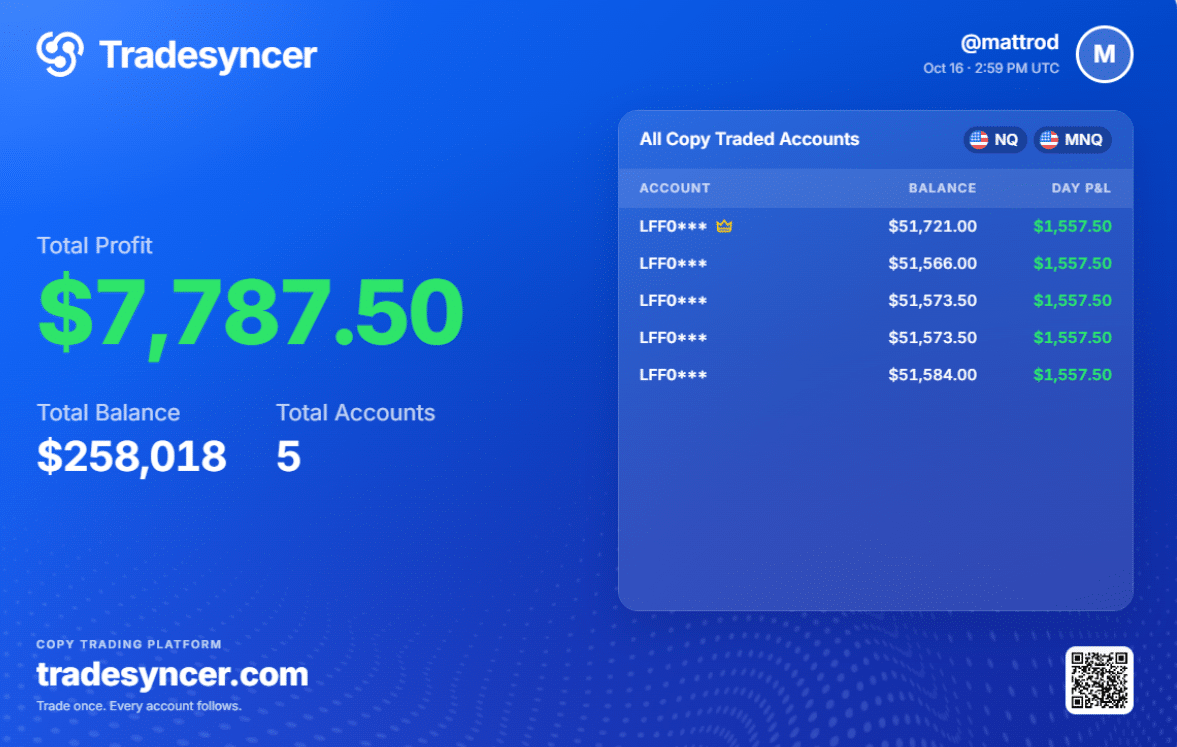
Verified funded – the receipts
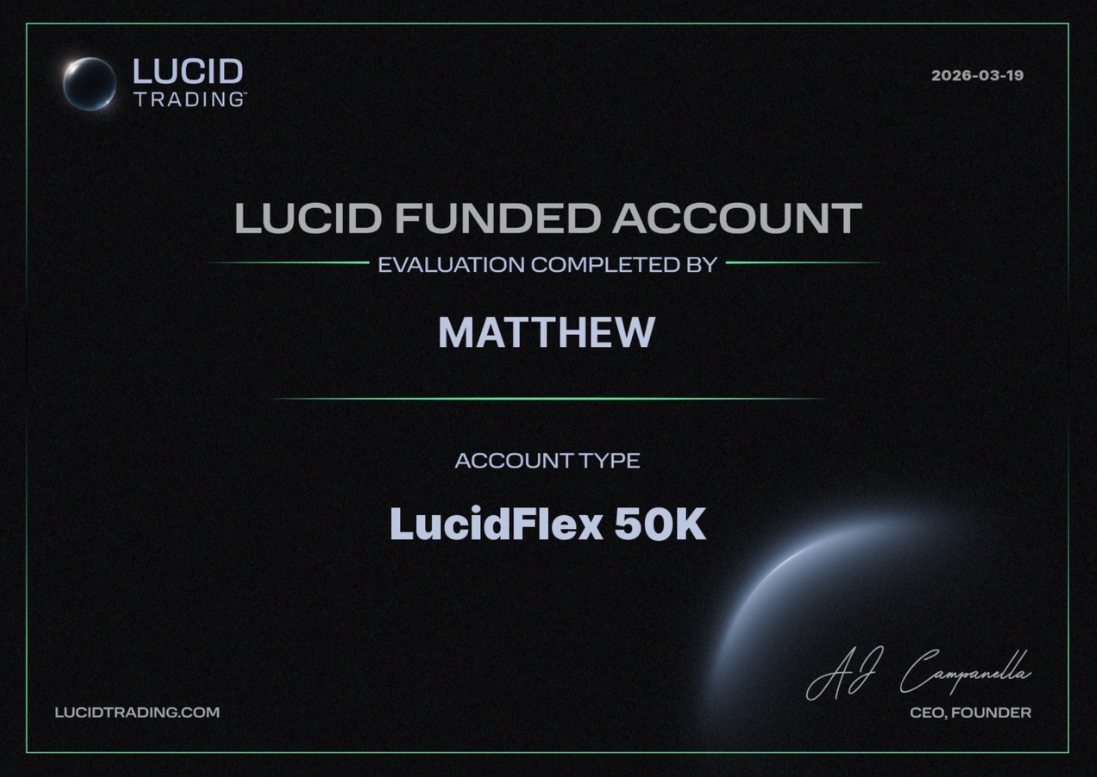
Challenges passed – the receipts
About the writer – Matthew Rodriguez
Matthew Rodriguez is a 21-year-old finance student at the University of Tampa, originally from Chicago, Illinois. He trades Nasdaq futures (NQ and MNQ) with a liquidity and market structure approach, and currently trades with Lucid Trading after earlier accounts with Topstep and Alpha Futures.
Enjoyed this article? Add JoinProp as a preferred source on Google.


