
One Prop Trader a Day – Sachin Pandey: Never Assume You Know What the Market Is Going to Do


One Prop Trader a Day – Episode 127
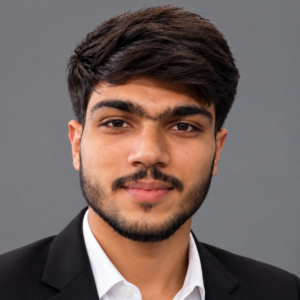
Sachin Pandey
Sachin Pandey is a 22-year-old trader from Uttar Pradesh, India, with around four years of trading behind him. He trades Gold (XAUUSD), Silver, Forex, crude oil and occasionally BTC, combining Smart Money Concepts with macro analysis, and reports more than 100,000 dollars in lifetime prop-firm payouts. Here is his story, in his own words.
FirmFunding PipsFirmInvestabl
What do you do when a single day costs you 12,000 dollars because you traded without a stop-loss? Sachin Pandey, a 22-year-old trader from Uttar Pradesh, India, turned that lesson into a risk-first approach that has now brought him more than 100,000 dollars in lifetime payouts and a biggest single payout of 16,000 dollars. In this interview, he explains how he treats failed challenges as lessons, how he trades Gold, Silver and Forex with Smart Money Concepts, and what he thinks of Investabl, the firm he reviews here.
I’m Sachin Pandey, 22 years old, from Uttar Pradesh, India. I’ve been trading for around four years, and over that time I’ve gone from experimenting with different markets to developing a structured approach that I follow professionally. Today, I mainly trade Gold (XAUUSD), Silver, Forex, crude oil and occasionally BTC. My trading combines Smart Money Concepts with macro analysis. I focus on liquidity, market structure, order blocks and fair value gaps, while also keeping an eye on the bigger economic picture.
I became a funded trader around 2025, after going through the challenge process and learning what it actually means to trade under strict risk limits. Getting funded changed my mindset completely. Before that, I was mostly focused on making money from individual trades. Once I started trading funded capital, I understood that consistency and capital preservation matter much more than trying to make huge returns quickly. It taught me to think like a risk manager first and a trader second. You don’t need to win every day. You need to survive, protect the account and take your best opportunities when they appear.
There were actually a few moments that made it feel real for me. I bought myself a MacBook, paid my college fees and eventually bought a vehicle with money I had made through trading. The MacBook was probably the first one that really hit me. It wasn’t just a purchase. It represented the fact that something I had started learning and working on during my early trading years was actually generating money that could improve my life. Paying my own college fees with trading income was an even bigger milestone because it made trading feel like a real skill rather than just something I was experimenting with.
I failed multiple challenges before getting funded. I don’t even remember the exact number anymore because I stopped looking at them as failures and started looking at them as lessons. Every failed challenge had a reason behind it. Sometimes I overtraded, sometimes I took trades that weren’t part of my setup, and sometimes I simply didn’t respect my own risk management. What kept me coming back was the belief that I didn’t need a completely new strategy. I needed to become better at executing the strategy I already had. Once I understood that, things started changing.
My most expensive lesson cost me 12,000 dollars in a single day. I was trading without a proper stop-loss, and then an unexpected Trump tweet caused a major market move against my position. The account eventually got stopped out. That was probably one of the most painful lessons of my trading career, but also one of the most valuable. It taught me something very simple: never assume you know what the market is going to do. No matter how confident I am about a setup, there has to be a point where I’m willing to accept that I’m wrong. Since then, risk management and predefined invalidation have become non-negotiable for me.
Did trading take a mental and emotional toll? Definitely. Trading can be mentally exhausting, especially when you’re dealing with losses, drawdowns or the pressure of managing larger capital. Earlier, I used to let a losing trade affect the next one. If I lost money, I wanted to make it back immediately. That mindset can become dangerous very quickly. Today, I treat trading much more like a business. I have predefined risk, I reduce my size when I’m not performing well, I journal my trades and I don’t force myself to trade every day. I’ve also learned to accept that a losing trade doesn’t mean the strategy is bad. It’s simply the cost of doing business.
I’ve traded with different prop firms during my journey, but today Investabl is the only prop firm I actively use. What I look for in a prop firm is very simple: transparent rules, reliable execution and, most importantly, a fair payout structure. That’s one of the reasons I moved toward Investabl. Their model is very different from the traditional prop-firm experience. Payouts are designed to be released on-chain through a smart contract, and the platform currently has no consistency rule and uses a static drawdown rather than a trailing one. For me, the biggest thing is being able to focus on trading instead of constantly worrying about whether some subjective rule will affect my payout.
My trading style is mainly based on market analysis, SMC and ICT concepts, market flow and price action. I don’t rely on one fixed setup or try to predict exactly where the market is going to move. I first analyse the overall market structure and liquidity, then use SMC and ICT concepts to identify important areas and potential setups. From there, I follow the actual market flow and price action rather than forcing a trade based on my bias. For me, risk management is the most important part of trading. Even the best setup can fail, so I focus heavily on position sizing, proper stop-loss placement and making sure one trade or one bad day doesn’t significantly affect the account. My main markets are Gold, Silver and Forex, with occasional trades in crude oil and BTC. I generally use higher timeframes to understand the bigger picture and lower timeframes to refine my entries. My philosophy is simple: analyse the market, understand the flow, wait for price action to confirm the idea, and manage the risk properly.
My day starts with the bigger picture. Before looking for entries, I check the major economic events, news, dollar strength, yields and overall market sentiment. Then I mark important 4H and 1H levels, previous highs and lows, liquidity zones, order blocks and areas where I expect price to react. After that, I wait. That’s probably one of the biggest changes in my trading career. I’m no longer trying to find a trade just because I’m sitting in front of a chart. When price reaches one of my planned areas, I move down to the lower timeframe and wait for confirmation. If the structure and liquidity setup align, I execute with predefined risk. Some days I take two or three trades. Some days I take none. A no-trade day is completely fine if there wasn’t a valid setup.
My most recent losing trade was a setup where the location was good, but the confirmation wasn’t as strong as it should have been. I identified an important area and entered after seeing what looked like confirmation. Price reacted initially, but the follow-through wasn’t there and eventually my stop was hit. The good thing was that I didn’t revenge trade or increase my position afterwards. Looking back, I would have waited for stronger confirmation before entering. That’s something I’ve become much more disciplined about: a good location doesn’t automatically make a good trade. You need the location, the confirmation and the risk-to-reward to make sense together.
My biggest single payout so far has been 16,000 dollars. But the bigger milestone for me is my overall experience with funded trading. I’ve received more than 100,000 dollars in lifetime payouts from prop firms. That number means more to me than one individual payout because it represents years of learning, failing, adapting and becoming consistent. I’ve also had the opportunity to manage accounts around the ₹1 crore level, which taught me that trading larger capital isn’t about suddenly taking bigger risks. It’s about becoming even more disciplined with risk.
Not completely, especially in the beginning. For someone outside trading, sitting in front of charts and making decisions based on price movements doesn’t always look like a conventional career. There were definitely people who questioned what I was doing. But over time, the results started speaking for themselves. Buying my own things, paying my college fees and being able to support myself through trading changed how people around me viewed it. I don’t really try to convince people anymore. I’ve learned that you don’t need everyone to understand what you do. You just need to understand it yourself and keep improving.
I think what separates me from someone who quit after their third failed challenge is the way you interpret failure. Someone can fail three challenges and think, “Trading isn’t for me.” I look at those same three failures and ask, “Why did I fail?” Was it overtrading? Poor risk management? Psychology? Bad entries? Trading outside my plan? Once you start looking at failure objectively, it becomes useful. I also stopped expecting trading to change my life overnight. I focused on building the process first. The money became a byproduct of becoming better at the process.
If you gave me a 1 million dollar funded account today, I wouldn’t try to make 100,000 dollars in the first week. The first thing I’d do would be to understand the firm’s exact risk parameters and build my position-sizing model around them. I’d start with relatively small risk, probably around 0.25-0.5% per trade, and focus on understanding how the account behaves under the firm’s conditions. I’d trade only my existing setups, keep detailed records and focus on protecting the account. The goal of the first seven days wouldn’t be to prove how much money I can make. It would be to prove that I can protect 1 million dollars. Once I’ve established that, scaling becomes much easier.
My take on the firms
Investabl is currently the only prop firm I use, and the biggest reason is the philosophy behind its payout model. The instant, on-chain payout system removes one of the biggest frustrations traders have with traditional prop firms, waiting for a manual payout review. Investabl says eligible payouts are released through a smart contract and settled on-chain, with no manual payout review. I also like the simplicity of the trading rules. There is no consistency rule, the maximum drawdown is static rather than trailing, and news trading is allowed. For a trader who already has a strategy and understands risk management, that gives you the freedom to focus on what actually matters: trading your edge and managing risk properly.
About the writer – Sachin Pandey
Sachin Pandey is a 22-year-old trader from Uttar Pradesh, India, with around four years of trading behind him. He trades Gold (XAUUSD), Silver, Forex, crude oil and occasionally BTC, combining Smart Money Concepts with macro analysis, and reports more than 100,000 dollars in lifetime prop-firm payouts.
Enjoyed this article? Add JoinProp as a preferred source on Google.


