
One Prop Trader a Day – Felipe Bertozo: Sometimes the Best Trade Is Doing Nothing


One Prop Trader a Day – Episode 106

Felipe Bertozo
My name is Felipe Bertozo. I am 32 and I am from São Paulo, Brazil. I trade Gold and Nasdaq futures during the Asia session using discretionary price action, and I run a trading education business alongside it.
FirmTopstepFirmTradeifyFirmLucid TradingFirmMy Funded Futures
My name is Felipe Bertozo. I am 32 years old and I am from São Paulo, Brazil.
I am a full-time futures trader and also a trading educator. Most of my trading is focused on commodities and US futures markets, mainly Gold (GC) and the Nasdaq (NQ). I trade discretionary price action, and I always try to understand the context before I look for an entry.
Getting funded was an important milestone, but it was not the finish line. Before that, I was focused on passing evaluations. Once I had a funded account, my mindset changed. It became much less about making money every day and much more about protecting capital and staying consistent. That is when I really started thinking like a professional trader instead of someone chasing payouts.
The first thing I bought with trading money was not a luxury purchase or anything expensive. After my first payout, I took my family out for dinner. It was my way of making that achievement feel real. Until then, the payout was just a number on a screen. Sharing that moment with the people who supported me made it feel like I had reached an important milestone.
After that, I created a personal milestone list. Every time I hit a new goal in trading, I reward myself with something meaningful, not necessarily something expensive. Sometimes it is buying a book I wanted to read, taking my family on a weekend trip, or celebrating another milestone together. Those small rewards keep me motivated and remind me that trading is not just about growing an account. It is about creating experiences and improving the quality of life for the people around me.
I failed around four evaluations before I got funded. It was frustrating at times, but every failed evaluation taught me something. Looking back, I do not think I was losing because my strategy was bad. Most of the mistakes came from my own decisions: trading when I should not have, risking too much, or trying to recover losses too quickly. In my first evaluation I was in a hurry to become funded, and that pattern of thought made the evaluation bad.
The most expensive lesson probably cost me around 800 dollars. Ironically, it was not because of the market. It was because I ignored my own rules, my own trade system.
One bad decision usually leads to another. Overtrading after a loss is something many traders experience, and I definitely learned that one the hard way.
My lowest point was not a single losing day. It was going through periods where I was putting in a lot of effort but not seeing the results I expected. That is frustrating, because you start questioning your decisions and wondering what you are missing.
But quitting was never an option for me. Even during the toughest moments, I was convinced I would make it work. I knew the learning curve in trading was steep, and I accepted that becoming consistently profitable would take time. Every setback became another lesson rather than a reason to give up.
Looking back, I am actually grateful for those difficult periods. They forced me to become more disciplined, more patient, and much more focused on the process instead of the outcome.
Has trading ever affected me mentally or emotionally? Absolutely. Trading has a way of exposing your emotions. I have dealt with stress, frustration, self-doubt and overtrading, like most traders have.
Today my trading is much simpler than it used to be. I mainly trade Gold and the Nasdaq during the Asia session, using discretionary price action and market structure. I spend more time waiting than trading.
I am not trying to catch every move. I am just looking for a few good opportunities that fit my plan. Usually I make two trades a day, always thinking about the risk to reward ratio of the execution.
Because I trade the Asian session, my routine is a little different from most traders. During the day I try to stay active. I work out, I spend time with my daughter when she gets home from school, and I review my previous trades. I also use that time to study the market and keep improving my execution.
About two hours before the Asian session opens, I sit down at my desk and start preparing. I update my market analysis, review the higher timeframe context, mark the key levels, and build a clear plan. By the time the market opens I already know where I would like to trade and, just as importantly, where I do not want to trade.
Once the session begins, my focus is on patience. I normally take no more than three trades in a session. I am always looking for trades with a favorable risk to reward ratio, and I prefer catching the beginning of a trending move rather than chasing price after it has already moved.
When the session is over, I review every trade, update my journal, and think about what I can improve for the next day. That daily review is one of the habits that has helped me become more consistent over time.
One of my most recent losing trades actually had a setup that I normally like to take. The price action and market structure were aligned with my trading plan, so I entered expecting the trend to continue.
After reviewing the trade, I realized I had overlooked something important. The RSI already had a hidden bearish divergence in place, which was signaling weakness against my long position. I was so focused on the price action that I did not pay enough attention to that piece of confluence.
The trade hit my stop loss, but it turned into a valuable reminder. My strategy is not based on a single indicator, but when I use the RSI as confirmation, I need to respect it. Missing that hidden divergence reduced the quality of the setup. The biggest lesson was not about taking the loss. It was about sticking to every part of my trading checklist.
I would not say I completely ignore any trading rule. But I do not believe every valid setup has to be traded. Experience has taught me that context matters more than the pattern itself. Two charts can look almost identical, but the probabilities can be completely different depending on what is happening around them. Sometimes the best trade is simply doing nothing.
Do the people around me understand what I do? Not at first. A lot of people hear “trader” and immediately think of gambling or taking huge risks. The people close to me now understand that trading is actually a business built around preparation, discipline and managing risk, but that took time for them to see.
Trading has given me more flexibility, and it has also made me much more disciplined. I have learned that my performance depends on things outside the charts too. Sleep, exercise, routine and emotional balance all have a direct impact on my results.
What separates me from someone who washed out at their third evaluation? I stopped looking for shortcuts. Instead of trying to make money as fast as possible, I focused on becoming the kind of trader who could survive for years. Consistency is not exciting, but it is what keeps you in the game.
The advice I would give myself one year ago is simple. Relax. You do not need to force opportunities. Trust your process, manage your risk, and remember that trading is a long-term game. The results come much faster when you stop chasing them.
If prop firms disappeared tomorrow, I would still be trading, without a doubt. I would continue trading my own capital, because that is what I genuinely enjoy. At the same time I would keep building my education business, producing market research, and helping other traders develop the skills they need to become consistently profitable.
And if someone gave me a $1,000,000 funded account today, the first thing I would do is take a week off and travel to New York and Chicago. As someone who trades the US markets every day, visiting the cities behind those markets has always been on my bucket list. I would love to experience the financial environment, visit the exchanges, meet people in the industry, and simply enjoy the moment before getting to work.
After that week, my approach would be exactly the same as it is today. I would take the time to fully understand the firm’s rules, follow my trading plan, and focus on consistency rather than trying to maximize returns right away.
As the payouts started coming in, I would not simply spend the money. I would invest a significant portion of the profits and let those investments gradually compound over time while building my own trading capital. My long-term goal is to become increasingly independent by growing my personal account alongside my funded accounts.
I also believe in milestone-based progress. I would create clear performance milestones, and each one would unlock the next level, whether that is increasing the amount I invest, allocating more capital to my own trading account, or rewarding myself for achieving consistent performance. It is a mindset very similar to how some prop firms reward traders who consistently perform well.
For me, having access to a million dollar funded account would not change who I am as a trader. It would simply give me a bigger platform to apply the same disciplined process that got me there in the first place.
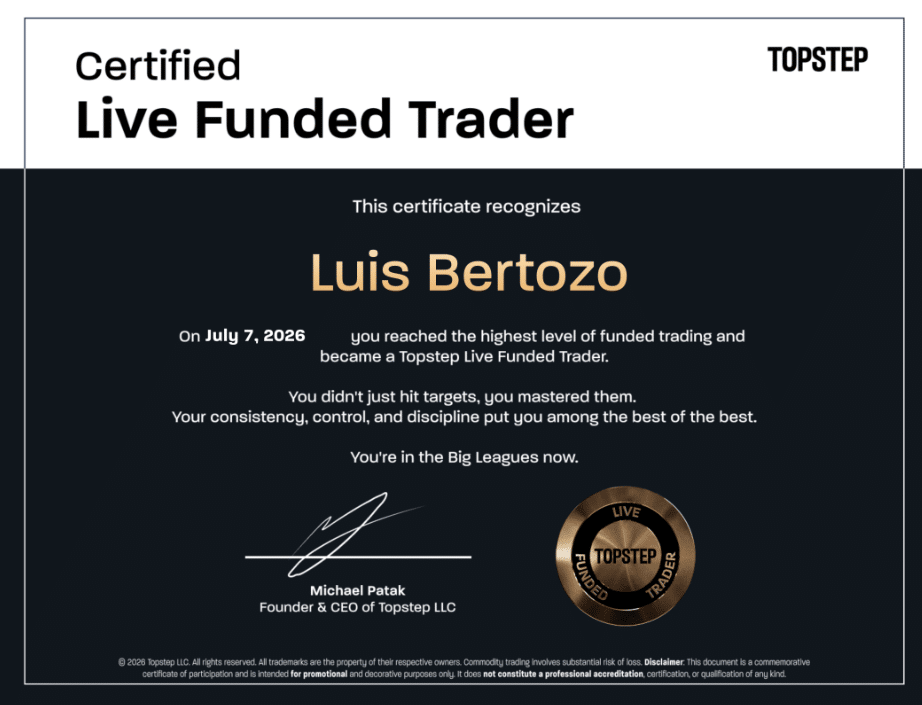
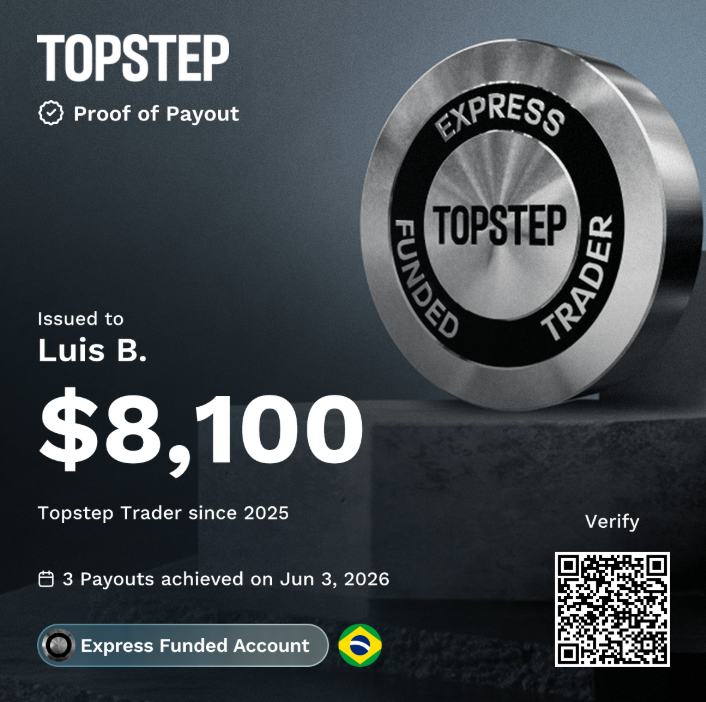
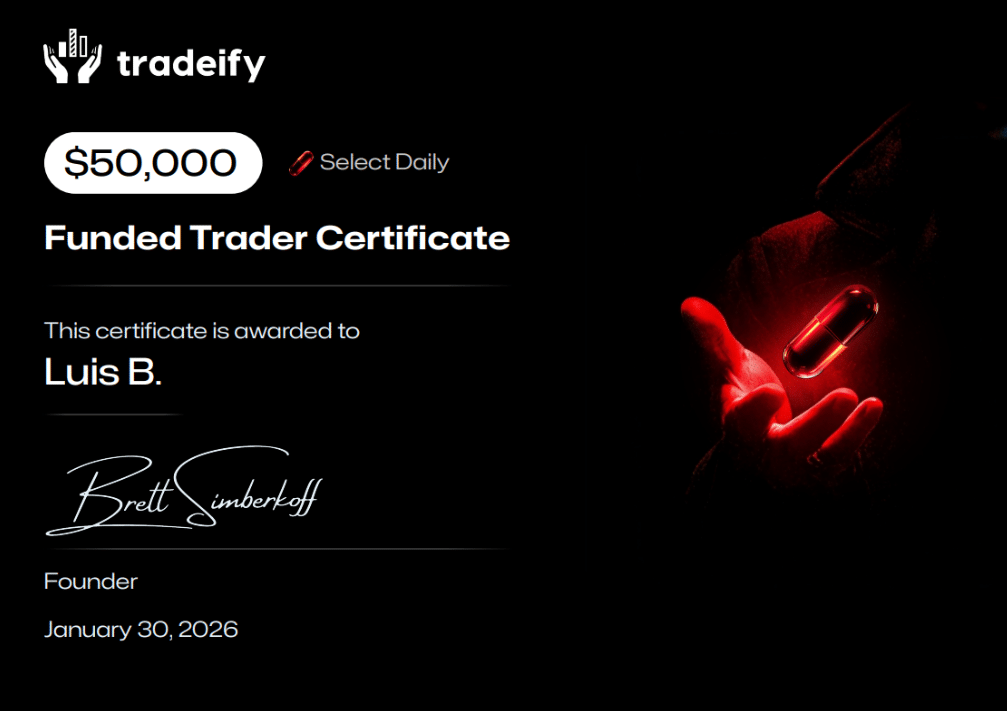
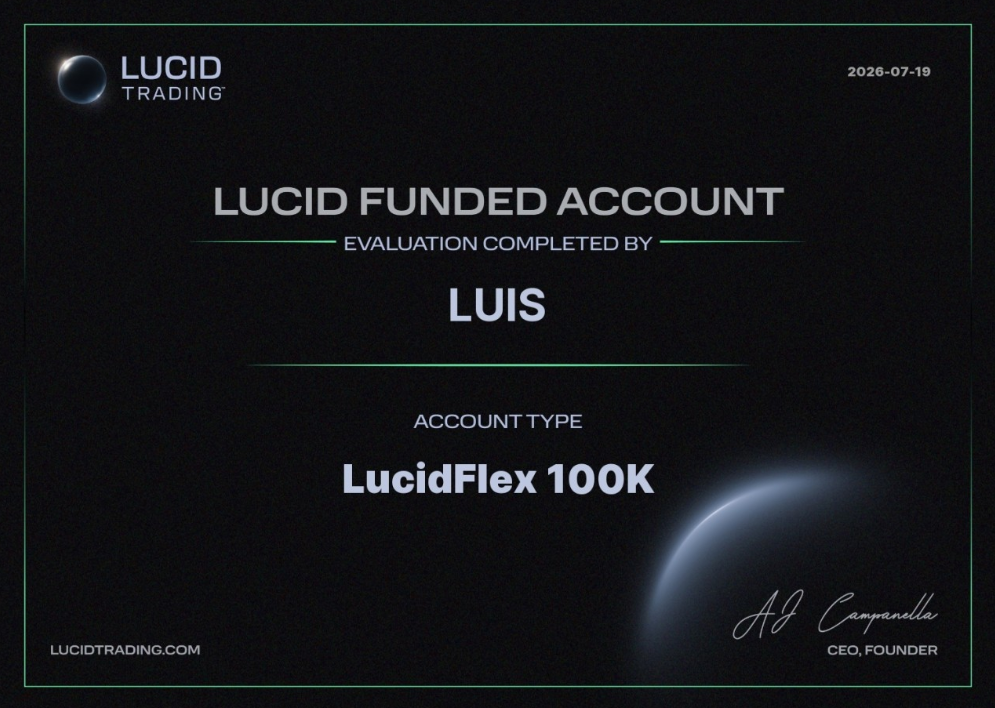
Verified funded – the receipts


About the writer – Felipe Bertozo
Felipe Bertozo is a full-time futures trader and trading educator from São Paulo, Brazil, trading Gold and the Nasdaq during the Asia session.


