
One Prop Trader a Day – Giorgio Geloso: The Most Expensive Trades Were the Ones I Never Needed


One Prop Trader a Day – Episode 123

Giorgio Geloso
Giorgio Geloso is a 33-year-old trader from Palermo, Italy, a former marine engineer who now focuses on trading gold (XAUUSD) intraday and on quantitative research. Funded since 2024, he failed more than 20 FTMO challenges and now manages more than 8 funded accounts of 100k. Here is his story, in his own words.
What does it take to go from failing more than 20 FTMO challenges to managing more than 8 funded accounts of 100k at once? Giorgio Geloso, a 33-year-old former marine engineer from Palermo, Italy, got funded in 2024 and now splits his time between intraday Gold trading and quantitative research. In this interview, he explains how he blew five Lucid accounts in a single day when each was just 150 dollars from payout eligibility, why he does not trade during the first 48 hours of a new funded account, and what he thinks of the prop firms he has worked with.
My name is Giorgio Geloso, I’m 33 years old and I’m from Palermo, Italy. My professional background is actually quite different from finance. I spent several years working as a marine engineer, eventually progressing into senior engineering roles before deciding to focus more seriously on financial markets. Today, my main focus is trading, quantitative research and the development of systematic strategies. As a discretionary trader, I have primarily traded gold (XAUUSD), while over time my interest has increasingly moved toward quantitative and alternative approaches to the markets.
I became a funded trader in 2024. For me, the biggest change wasn’t simply having access to more capital. It was realizing that trading could become something more structured and scalable than trading only my own account. Prop trading also forced me to look at risk differently. When you operate within predefined drawdown limits and specific rules, being right about the market is only one part of the equation. Risk management, consistency and execution become just as important as the strategy itself. That experience eventually pushed me to think beyond individual trades and become increasingly interested in systematic approaches, risk models and the mathematics behind capital allocation.
One of the first purchases that really made trading feel real to me wasn’t actually something I bought for myself. My mother-in-law’s car had broken down, and without it she would have had difficulty getting to work. I was in a position where I could simply step in and solve the problem, so I bought her a Range Rover Evoque. That moment stayed with me because it wasn’t really about the car. It was the realization that the money I had made from trading could have a tangible impact on someone I cared about. For me, that felt much more meaningful than buying something for myself.
I failed more than 20 times with FTMO alone. I’ve failed a lot of challenges over the years, and I’ve also lost funded accounts after passing them. I don’t think there’s any value in pretending otherwise. My journey in prop trading has definitely not been a straight line. What kept me coming back was understanding that, most of the time, the problem wasn’t necessarily my ability to read the market. It was execution, discipline, risk management and, sometimes, simply not knowing when to stop. Every failure forced me to understand the difference between having a profitable strategy and actually being able to execute it consistently.
Overtrading, without question, is the most expensive lesson I’ve paid for. It has cost me at least 30,000 dollars on a live account alone. But one of the most painful examples happened with prop trading. I had five funded accounts with Lucid, all of them just 150 dollars away from completing the minimum five profitable days required for payout eligibility. I blew all five accounts in a single day because I kept trading when there was absolutely no reason to. That experience made something very clear to me: having a profitable strategy is not enough. You can be incredibly close to the finish line and still destroy weeks of work in a few hours if you lose control of your discipline.
Trading has probably tested me mentally more than anything else I’ve done professionally. The difficult part isn’t just losing money. It’s dealing with the constant cycle of confidence, frustration, patience and self-control. I’ve experienced periods where I felt completely in sync with the market, followed by moments where one emotional decision was enough to undo weeks of disciplined work. Over time, I realized that my biggest challenge wasn’t finding another strategy or improving my market analysis. It was learning how to manage myself. I’m still working on that. I don’t think becoming mentally disciplined is something you achieve once and then forget about. It’s something you have to practice every single day.
I’ve traded with FTMO, FundedNext, Alpha Capital, Lucid, and Tradeify. What I look for in a prop firm is actually very simple: clear rules and reliable payouts. I don’t need complicated features or unrealistic promises. I want to know exactly what the rules are before I start, and if I follow those rules and become eligible for a payout, I expect the firm to pay without excuses or unnecessary complications. Over the years, I’ve learned that the quality of a prop firm isn’t determined by how attractive the challenge looks. It’s determined by what happens when it’s time to withdraw your money. For me, transparency, straightforward trading conditions, and a proven ability to honor payouts are what matter most.
Today, my main asset is Gold (XAUUSD), and my trading is primarily intraday. I use a top-down approach, starting from higher timeframes to understand the broader market structure and identify key areas of interest. I then move down to the 15-minute and 5-minute charts for context and confirmation, sometimes using the 1-minute chart to refine entries. My approach combines market structure, liquidity, volume profile, VWAP, key daily levels and price action. I’m generally looking for manipulation or rejection around important areas rather than simply chasing momentum. Over time, however, my focus has expanded beyond discretionary trading. I’ve become increasingly interested in systematic and quantitative strategies, mathematical hedging and risk models, where the edge comes less from predicting individual market movements and more from the structure and mathematics behind the strategy. So today I would describe my approach as a combination of discretionary intraday trading and systematic research, with risk management at the center of both.
My trading day usually starts with context rather than looking for an immediate entry. I begin with the higher timeframes to understand the overall structure, identify important levels and determine where price is trading relative to the previous day’s range and other key areas. From there, I move down to the intraday charts. On Gold, I pay particular attention to levels such as previous day highs and lows, VWAP, volume areas and locations where liquidity is likely to be concentrated. Once I have my areas, I wait. I don’t want to enter simply because price has reached a level. I want to see how the market reacts there. On the 5-minute chart I look for rejection, manipulation or a clear change in price action, and sometimes I use the 1-minute chart to refine the entry. The most important part of my trading day today, however, is knowing when to stop. That is something I learned the expensive way. If the setup isn’t there, I try not to manufacture one. And once the trading day is done, continuing to click usually creates more risk than opportunity. Outside of discretionary trading, I also spend time researching and testing systematic and quantitative strategies, which has become an increasingly important part of my work.
My most recent significant losing trade was on Gold. The frustrating part was that the initial trade itself wasn’t necessarily bad. My analysis worked almost perfectly and price moved to within roughly one pip of my take profit before reversing. What turned it into a real loss was what happened emotionally afterward. I became frustrated by seeing a winning trade come so close to closing at target and then reverse, and instead of simply accepting the outcome, I allowed that frustration to influence my next decisions. That is an important distinction I’ve learned to make: a losing trade and bad trading are not necessarily the same thing. You can execute a valid setup correctly and still lose. The mistake begins when you refuse to accept that outcome and try to force the market to give the money back. If I could replay that day, I wouldn’t necessarily change the original trade. I would change what I did afterward. I would accept the loss, close the platform and come back the next day with a clear mind.
My biggest milestone wasn’t necessarily a single payout. It was reaching the point where I was managing multiple funded accounts (more than 8 accounts of 100k) at the same time and receiving payouts consistently across different prop firms. After failing more than 20 FTMO challenges alone over the years, getting to the point where I could pass evaluations, manage funded capital and actually withdraw real money from prop firms felt much more significant than any single payout. I’ve had multiple payouts over the years, but what mattered most to me was proving that I could repeat the process. A single payout can happen. Repeatability is what makes you start thinking in terms of a system rather than a lucky result. That shift in mindset eventually became one of the reasons I started becoming much more interested in systematic and quantitative approaches to trading.
The people around me don’t completely understand what I do, and I don’t blame them. Trading is a strange profession from the outside. People around me have seen me make significant amounts of money, but they’ve also seen the frustration, the failed accounts and the difficult periods that come with it. My family and the people closest to me know what I do, but understanding the psychological side of trading is much harder unless you’ve experienced it yourself. Sometimes they probably think I’m crazy, especially after seeing me fail something and then come back the next day determined to try again. But over time, I think they’ve understood that for me this has become much more than simply placing trades. I’m fascinated by financial markets, risk, mathematics and the process of building systems around uncertainty. Today that interest is also evolving beyond my own trading, as I work on quantitative research and build Kairos Capital around that broader vision.
I think what separates me from someone who quits after their third failed challenge comes down to something very simple: I’ve never been someone who quits. That has been true throughout my life, not just in trading. In my studies, in my previous career, and now in financial markets, when I’ve decided that I wanted something, giving up has never really been part of my character. What has changed with time and maturity is that I’ve learned to accept losses. I’ve learned that sometimes you can do everything right and still lose, and that failure doesn’t always require an immediate reaction.
A 1 million dollar funded account is a nice question. If we were talking about 1 million dollars in real, live capital, my answer would probably be: nothing. Absolutely nothing for the first seven days. I’d give myself time to process it as a human being. I’d enjoy the moment, spoil myself and my family a little, settle down emotionally, and only then sit down and build a clear plan for what to do with that capital. With a 1 million dollar funded account, I’d approach it differently, but with a similar mindset. I wouldn’t place a single trade for at least the first 48 hours. I know from experience that when you finally get funded, there’s an immediate temptation to start making money and reach the first payout as quickly as possible. That mindset has backfired on me many times. That’s actually why I now have a personal rule: during the first 48 hours of a new funded account, I don’t trade. I’d wait those 48 hours, let the excitement disappear, then approach the account like any other trading account: build my zones, wait patiently, and only enter if one of my setups actually appears. With an account that size, the goal would be to keep things simple. I don’t need a 10% return. If I risk 0.5% on a trade with a 1:3 risk-to-reward ratio, that’s a potential 1.5% return. On a 1 million dollar account, 1.5% is already 15,000 dollars. There’s absolutely no reason to force it. Keep the risk small, wait for the right opportunities, and stay consistent. That’s it.
My take on the firms
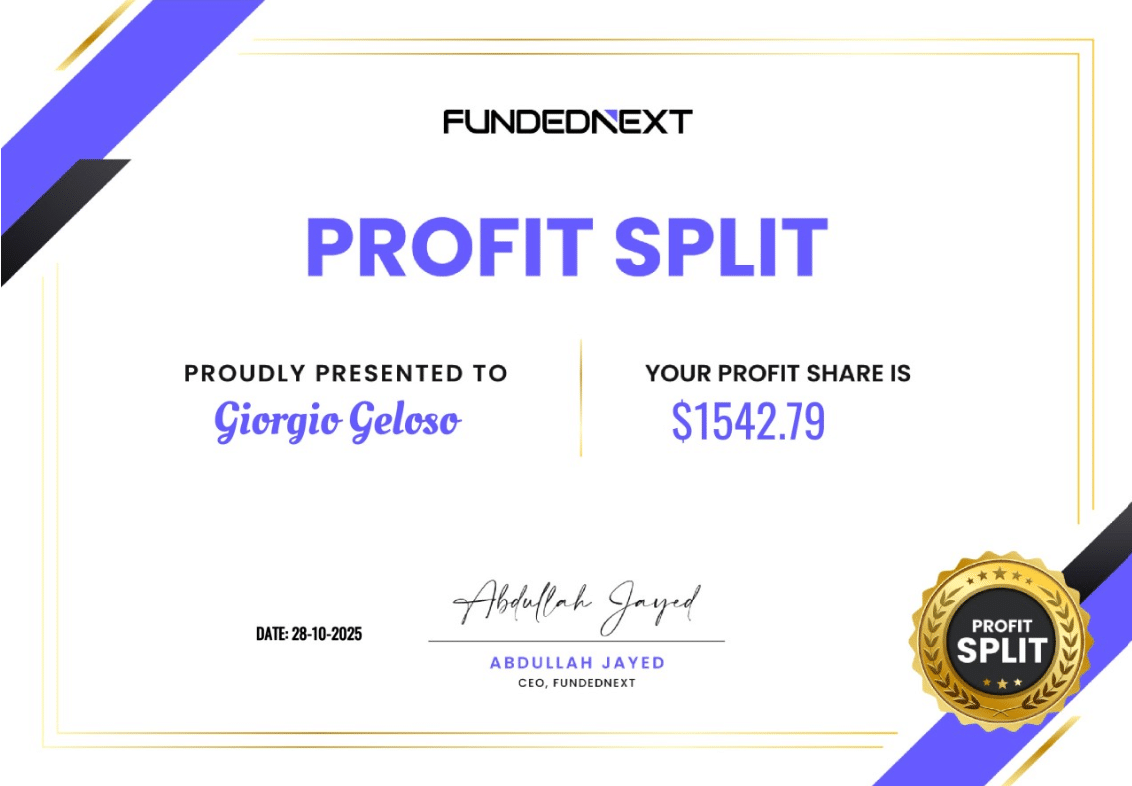
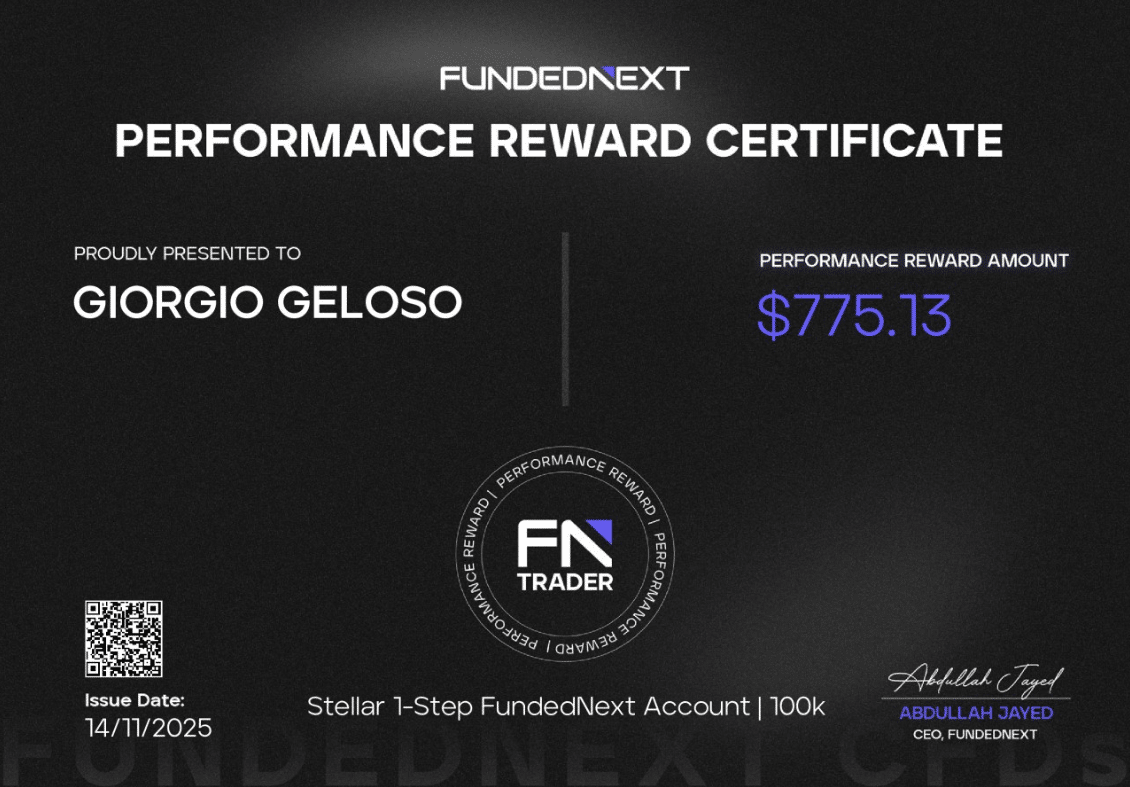
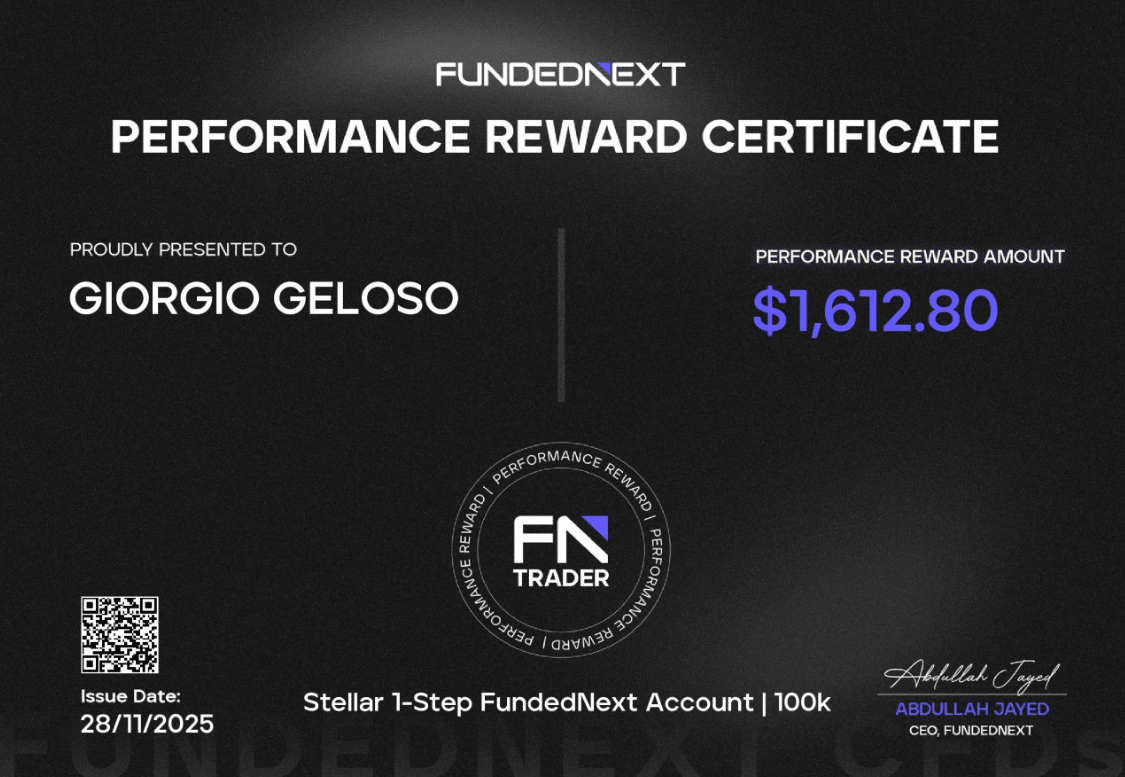
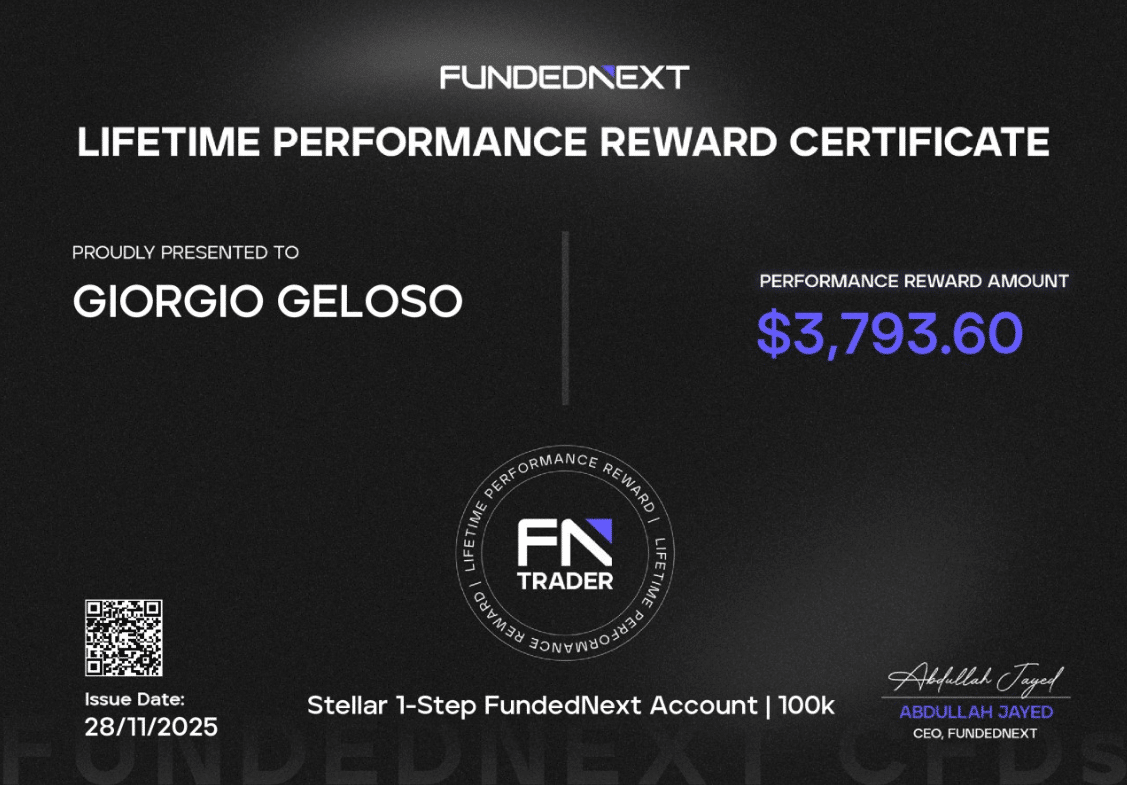
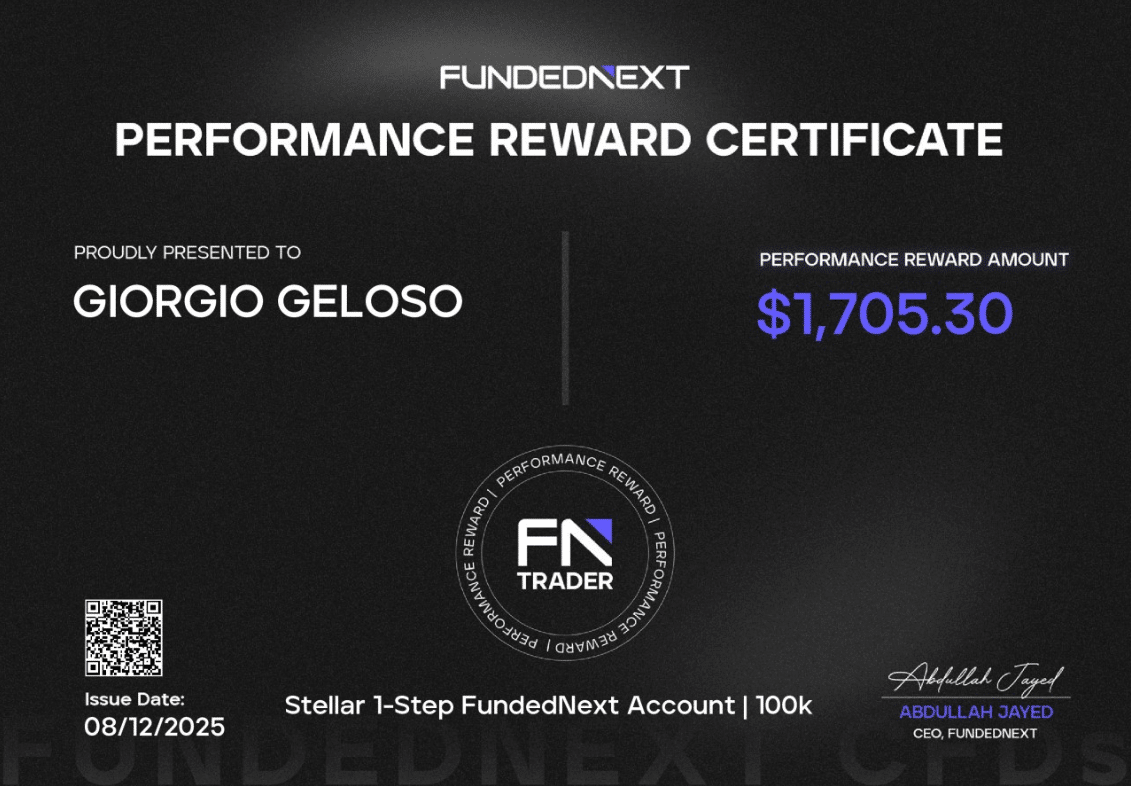
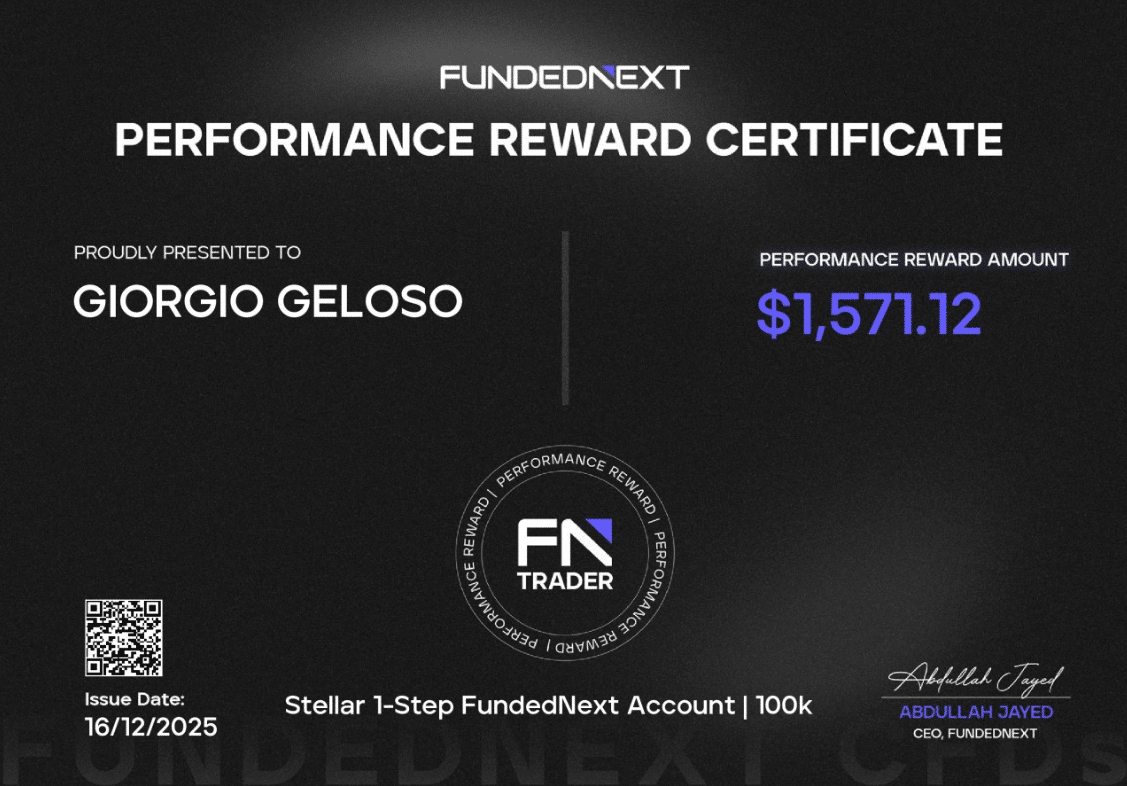
For CFD prop firms, I have nothing but good things to say about FTMO and FundedNext. My experience with both has been excellent: straightforward rules, a professional process, and most importantly, payouts have always been delivered as expected. They are both top-tier firms in my experience.
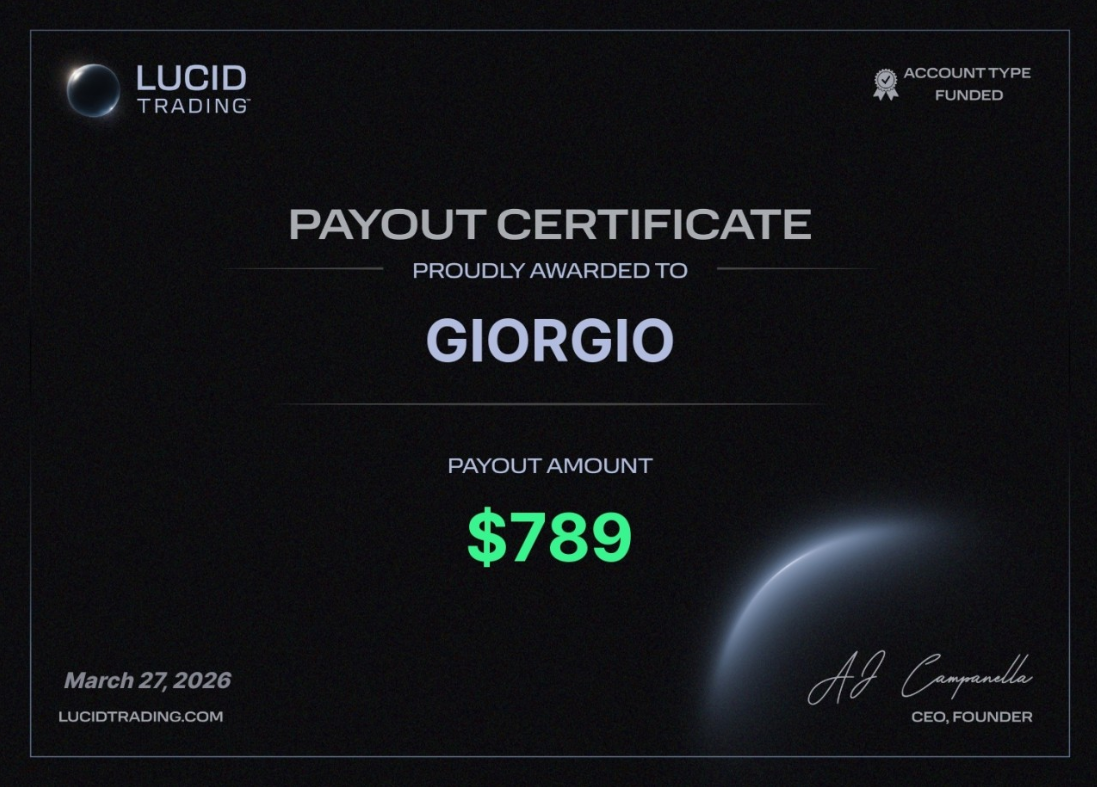
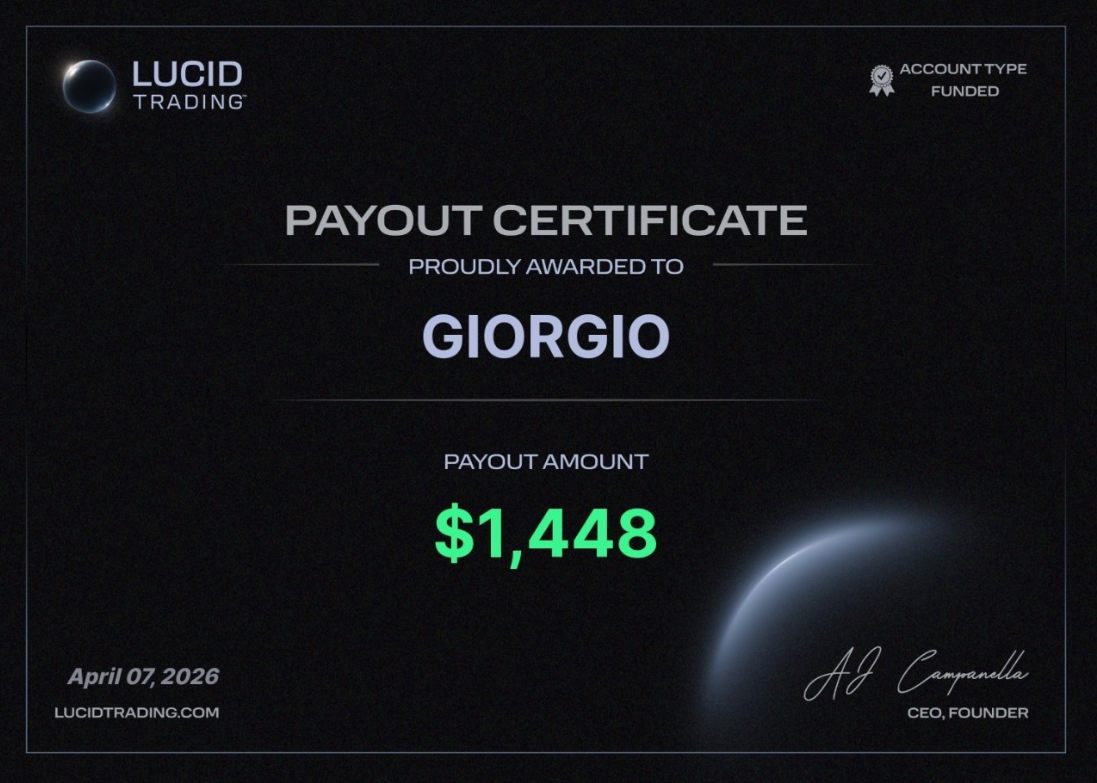
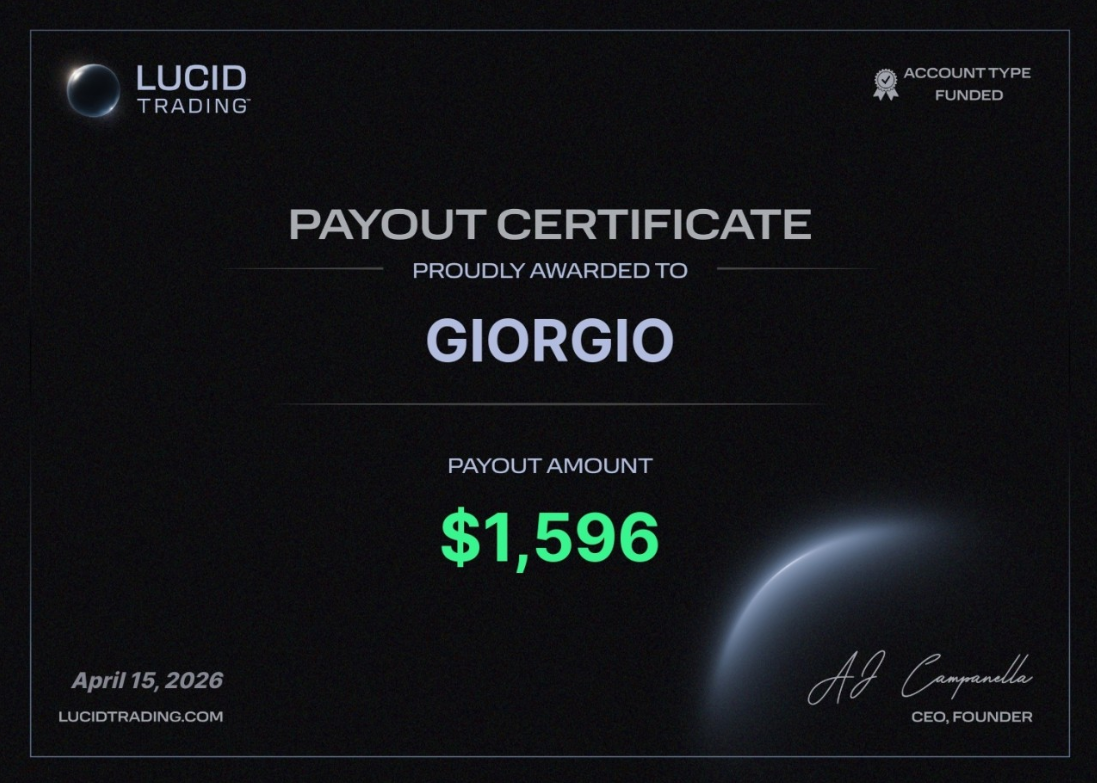
My experience with Alpha Capital was very different and, personally, the worst I’ve had with a CFD prop firm. I experienced a payout rejection that I strongly disagreed with, significant slippage, and a pre-payout interview process with questions that I felt were unnecessarily tricky. Overall, it was a very negative experience for me. On the futures side, Lucid has been my top choice so far. My experience has been extremely smooth, including payout approvals that came through in as little as one minute.
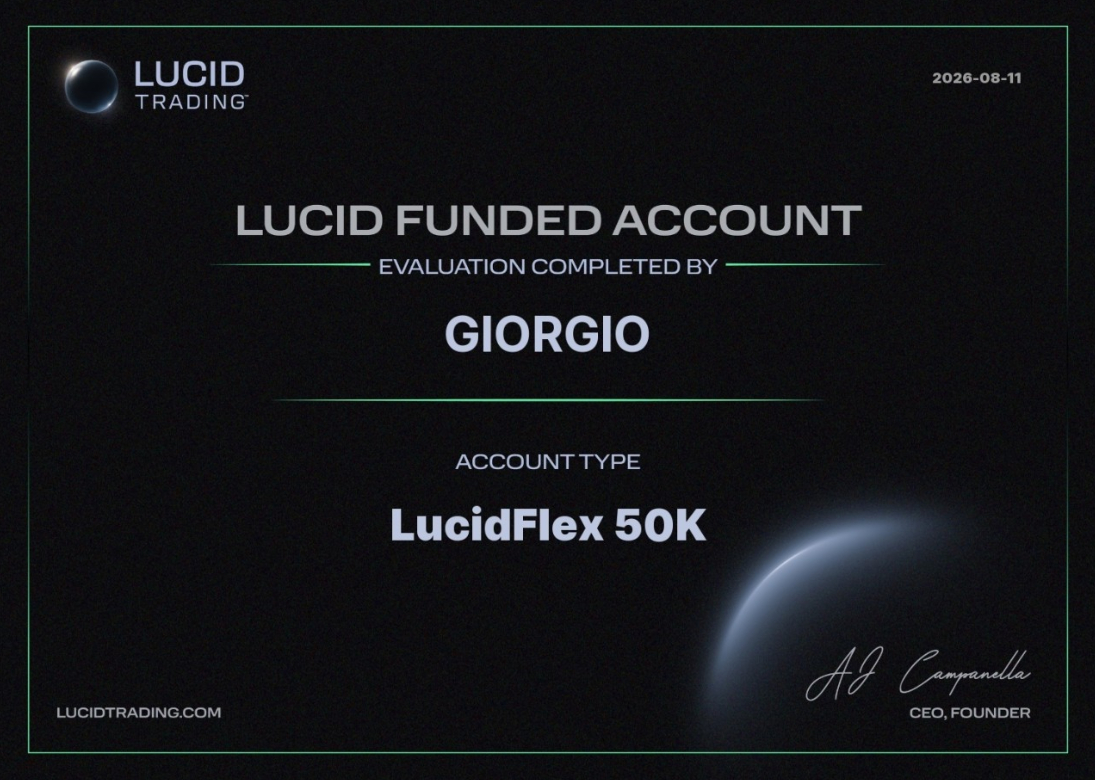
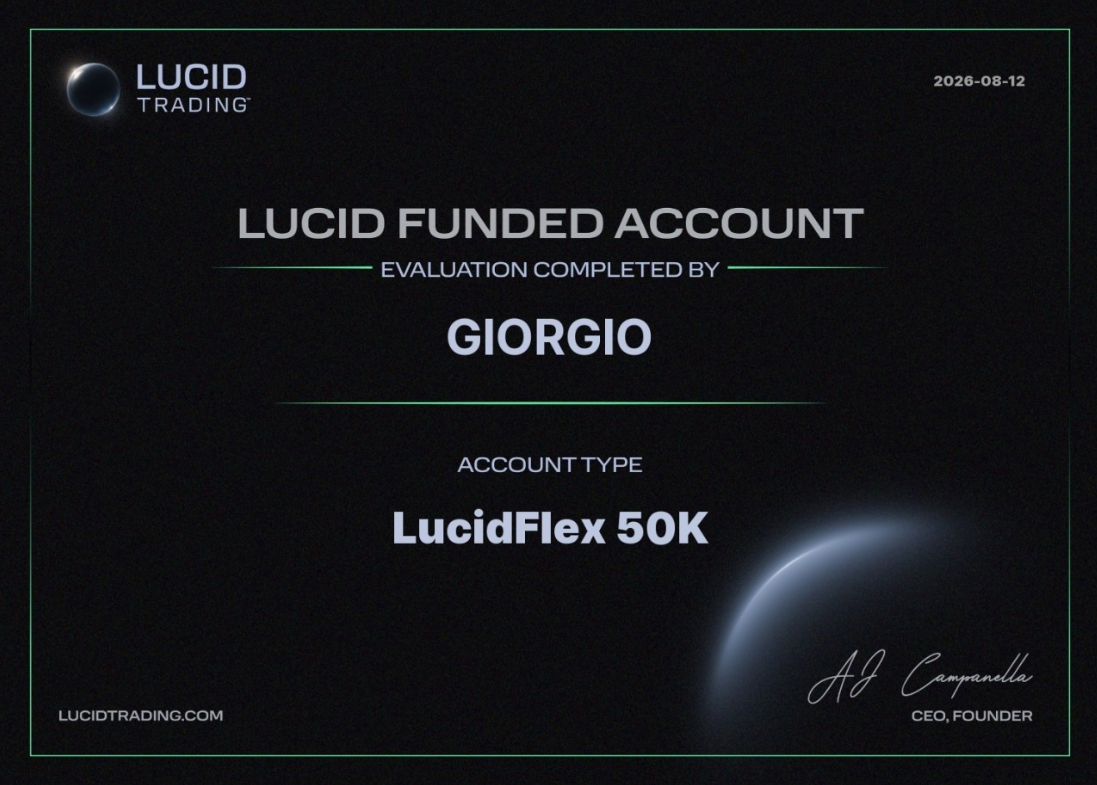
Verified funded – the receipts



About the writer – Giorgio Geloso
Giorgio Geloso is a 33-year-old trader from Palermo, Italy, and a former marine engineer. He trades gold (XAUUSD) intraday with a top-down approach built on market structure, liquidity, volume profile, VWAP and key daily levels, researches systematic and quantitative strategies, and is building Kairos Capital around that vision.Connect on LinkedIn
Enjoyed this article? Add JoinProp as a preferred source on Google.


