
One Prop Trader a Day - Hamed Khalili: The Chart Was Not My Biggest Challenge, I Was


One Prop Trader a Day - Episode 100

Hamed Khalili
My name is Hamed Khalili, although most traders in the Iranian trading community know me by my trading name, Forexvid. I trade EUR/USD and Gold, mentor other traders, and keep researching how markets behave.
Like many traders, I didn't build my career overnight. Over the years I refined my own interpretation of the RTM methodology into what I now call RTREX, and today I primarily trade EUR/USD and Gold (XAU/USD), mentor traders, and continue researching market behavior. Outside of trading, what I enjoy most is mentoring other traders. Looking back, I realize trading has taught me far more than market analysis.
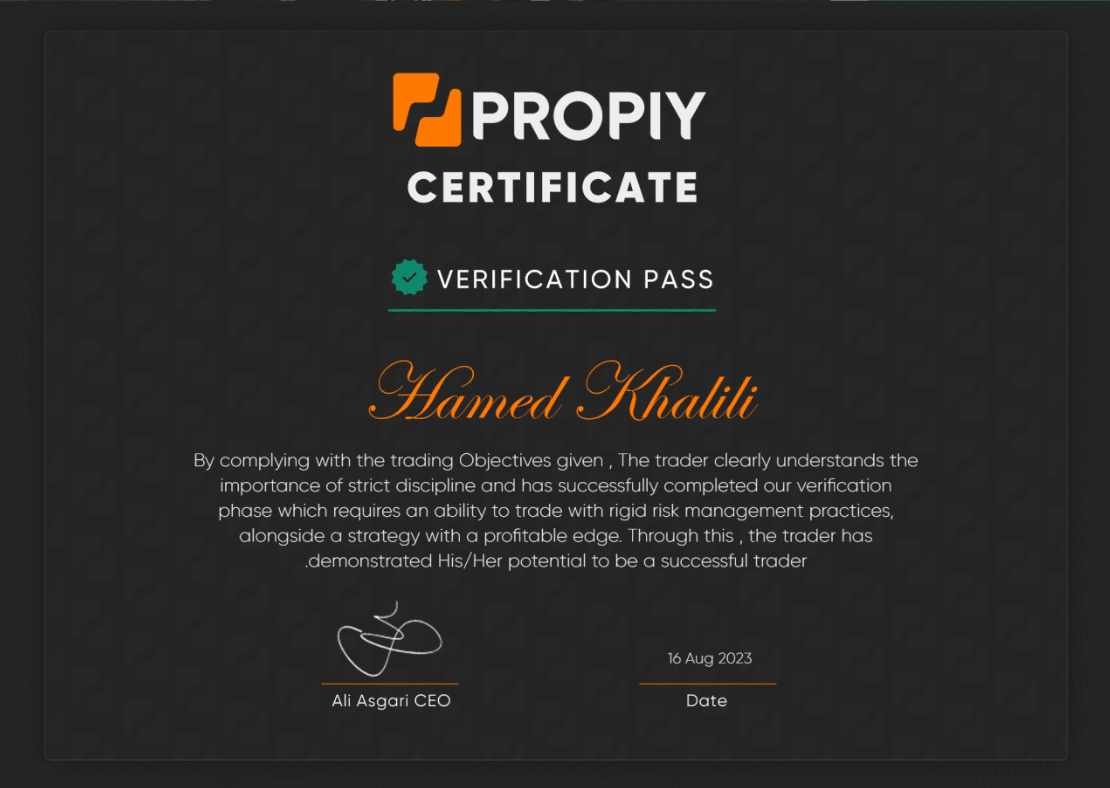
My first experience with prop trading came through a company called Propiy. Unfortunately the company later shut down, but the experience itself was extremely valuable. Since then I've become much more selective about where I trade. For me, prop firms are simply a way to access more capital.
When I think back, it wasn't a luxury purchase that made me feel successful. The real milestone was the moment I realized I could consistently cover my everyday living expenses through trading. Of course, over the years I've bought different things with trading profits, but none of them had the same emotional impact as knowing I no longer depended on another job.
The greatest reward wasn't buying something, it was buying freedom. Looking back today, I believe financial independence is the most valuable thing trading has given me, and everything else has simply been a bonus.
I failed two prop firm evaluations before achieving consistent success. Failing was frustrating, especially after investing so much time preparing. After each failed evaluation I went back to my trading journal and asked myself one simple question: was this a strategy problem, or was it an execution problem? Most of the time the answer wasn't the market, it was me.
That process taught me an important lesson: consistency isn't built by avoiding mistakes. What kept me going was the belief that every professional trader has gone through setbacks.
The most expensive lesson I've ever paid for cost me approximately $20,000, and it happened in the cryptocurrency market. At the time it was one of the toughest moments of my trading journey. That experience forced me to completely rethink how I approached risk, and it taught me something I still share with the traders I mentor today: the market doesn't owe us anything.
Ironically, that $20,000 loss became one of the best investments I ever made. Not because I wanted to lose it, but because it fundamentally changed the way I trade. If I could go back and avoid that loss, part of me probably would. And looking back today, I'm actually grateful for those two failed evaluations as well.
Without a doubt, my lowest point came after losing that $20,000 in the cryptocurrency market. For a short period I lost confidence in myself. Did I ever consider quitting? Honestly, no. I did consider changing my approach, my habits, and even the way I thought about the markets, but I never seriously considered giving up.
That difficult period forced me to slow down, review every mistake I'd made, and rebuild my confidence one trade at a time. Today I'm actually grateful I went through it. Every trader enjoys the winning streaks.
Did trading ever affect me mentally and emotionally? Absolutely. In the early years I dealt with many of the same challenges that most traders face. Then, over time, I realized something that completely changed the way I approached trading.
That realization also changed the way I teach other traders. Today I still experience emotions before and after trades, because we're all human. Looking back, I believe trading has been one of the greatest personal development experiences of my life.
Over the years my trading style has become much simpler than it was when I first started. Today I mainly focus on EUR/USD and Gold (XAU/USD). My strategy is based on my own refined interpretation of the RTM (Read The Market) methodology, which gradually evolved into what I now call RTREX.
I don't believe successful trading comes from predicting every market move. One area that has had a significant influence on my trading is my research into broker data. As for timeframes, I always begin with the higher-timeframe structure to understand the broader market context. Above all, my trading today is built on patience.
My trading day begins long before I consider placing a trade. The first thing I do is review the higher-timeframe market structure to understand the overall context. Once I have a directional bias, I monitor the lower timeframes and wait for price to reach the areas that fit my trading plan.
When I enter a trade, everything has already been planned in advance: my entry, stop loss, position size, and profit targets. Instead of sitting on the position, I use that time productively. At the end of the day, regardless of whether I made money or lost money, I review my execution. For me, consistency isn't built by having perfect trades.
One of my most recent losing trades was on EUR/USD. From a higher-timeframe perspective the market structure still supported my directional bias. Shortly after I entered, the market moved against me and eventually hit my stop loss.
Years ago a trade like that would have frustrated me. Today my reaction is completely different. After the trade closed I reviewed my journal and asked myself a simple question: did I follow my plan? The answer was yes. That means I don't consider it a bad trade, I consider it a losing outcome. Markets are probabilistic by nature.
If I could change one thing, it wouldn't be the trade itself. One trade never defines my performance.
One piece of advice I hear all the time is that you need to keep searching until you find the perfect strategy. I completely disagree with that mindset. In my experience, most traders don't fail because they're using a bad strategy.
Early in my journey I also spent time looking for the next best system. Every time I encountered a losing streak, I questioned the strategy instead of questioning my own execution. The biggest breakthrough in my trading came when I stopped chasing new methods and committed to refining one approach.
That's one of the reasons I developed my own approach, RTREX. And if I had to give one piece of advice to new traders, it would be this: stop looking for a perfect strategy. Because in the long run, your mindset, discipline and consistency will always have a greater impact on your results than constantly switching from one system to another.
Do the people around me understand what I do? To be honest, not at first. Like many people, my family and friends initially saw trading as something unpredictable, more like gambling than a real profession. I don't blame them for thinking that way.
Over time their perspective changed, not because I tried to convince them, but because they saw consistency. Today the people close to me fully respect what I do. One thing I've learned is that you don't earn people's trust by talking about trading, you earn it through consistency. Interestingly, many people now ask me how they can learn to trade, and my answer is always the same: don't expect it to be an easy path.
Trading has changed my lifestyle in ways that go far beyond financial rewards. One of the biggest advantages is having the freedom to manage my own time. People often imagine that professional traders spend all day watching charts, but in reality my routine is much calmer than that.
Trading has also made me much more patient. In everyday life, just as in the markets, I've learned that not every situation requires an immediate reaction. Another major change is the way I think about risk. Perhaps the greatest gift trading has given me is independence, not just financially but mentally. For me, trading isn't just a career anymore.
I don't believe I'm naturally more talented than traders who fail multiple evaluations. What separates us is probably how we respond to failure. Many traders treat every failed evaluation as proof that they need a new strategy, a new indicator, or even a different prop firm.
Whenever something went wrong, I stopped asking what was wrong with the market and started asking what I could have done better. That simple shift in perspective changed the way I approached trading. I also learned to think in probabilities rather than individual outcomes.
Another difference is patience. I'm completely comfortable doing nothing if the market isn't offering an opportunity that fits my plan. Most importantly, I stopped measuring success by short-term results. In my opinion, the traders who survive are not necessarily the smartest or the most aggressive. That's the mindset that has helped me continue moving forward, and I believe it's far more valuable than any single winning strategy.
If I could go back and give myself one piece of advice a year ago, it would be this: trust your process even more, and don't waste energy trying to control what you can't control. A year ago I already had a profitable strategy, solid risk management, and years of experience.
One thing I've learned is that consistency isn't about making every trade a winner. I'd also remind myself to spend less time searching for confirmation and more time trusting the preparation that had already been done. Another lesson I'd reinforce is to continue investing in research.
Finally, I'd tell myself not to rush the journey. In trading, meaningful progress is often invisible while it's happening. If I've learned anything over the past decade, it's that success in trading isn't built through dramatic breakthroughs.
If prop firms disappeared tomorrow, would I still be trading? Absolutely. Prop firms have been an important part of my journey because they provide access to larger amounts of capital, but they've never been the reason I trade. If every prop firm disappeared tomorrow, I would still wake up the next morning, open my charts, analyze the market, and trade my own capital exactly as I do today.
Beyond trading my own account, I would continue researching market behavior, particularly the impact of broker data and execution quality on technical analysis. I would also continue mentoring traders. To me, prop firms are a great opportunity, but they're not my identity. Trading is.
Whether I trade a funded account, my own capital, or spend my time researching and mentoring, my daily purpose would remain the same: to become a better trader than I was yesterday. At the end of the day, markets will continue to exist with or without prop firms.
And if someone gave me a $1,000,000 funded account today? Honestly, the size of the account wouldn't change my approach. Many people assume that having access to more capital means you should trade differently.
During the first few days I probably wouldn't be in a hurry to place any trades at all. Instead, I would spend time observing the market, confirming that current conditions align with my strategy, and making sure everything, from execution quality to risk parameters, is exactly as expected. Once I found a setup that genuinely met my criteria, I would execute it exactly the same way I execute every other trade.
If a trader becomes emotional simply because there's more money involved, the account size isn't the real problem. Whether I'm managing a $10,000 account or a $1,000,000 account, my responsibility remains exactly the same: protect capital first, execute the plan with discipline, and let probabilities work over time. To me, receiving a million-dollar funded account wouldn't be a reason to change who I am as a trader.
At the end of the first week, I wouldn't judge my success by how much money I had made. Did I remain disciplined? Did I follow my plan? Did I protect the capital I was trusted to manage? If the answer to those three questions was yes, I would consider the first week a success, regardless of the P&L.
Accounts can become bigger over time. Character doesn't. That's why I've always believed that protecting discipline is far more important than protecting profits.
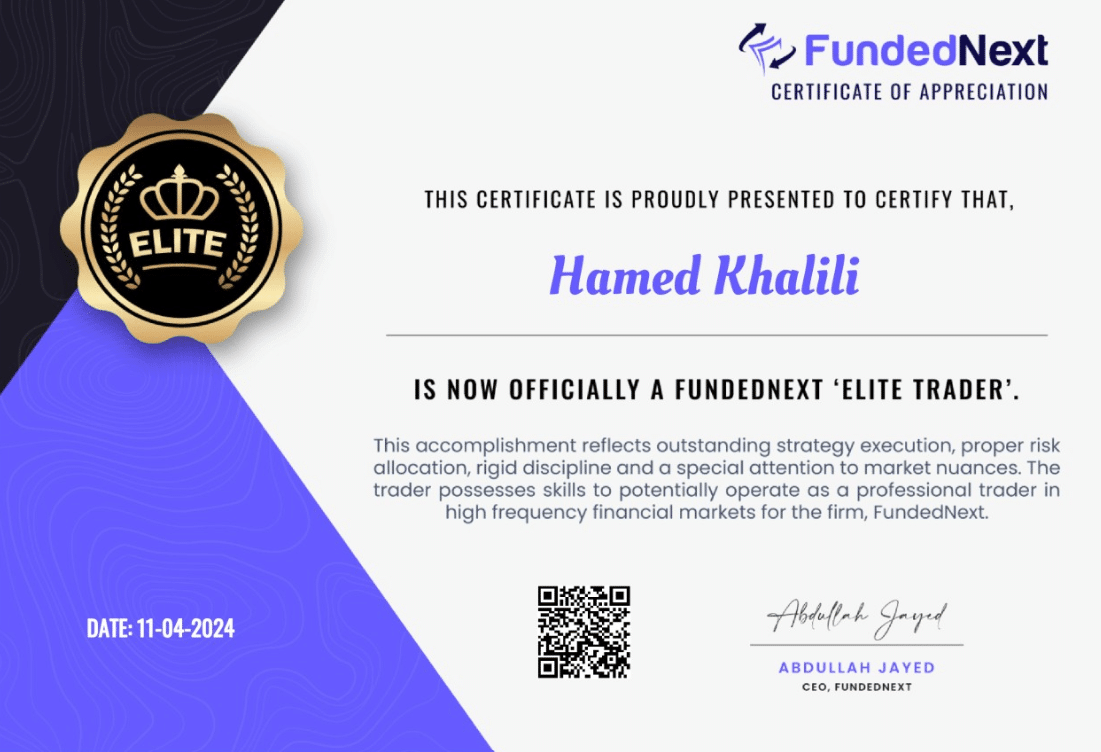
Verified funded - the receipts
About the writer - Hamed Khalili
Hamed Khalili, known as Forexvid, trades EUR/USD and Gold with his own RTREX method and mentors traders.


