


One Prop Trader a Day – Episode 135

Alex Critcher
Alex Critcher is a 36-year-old futures trader from Colorado who scalps MGC and MES with a mean reversion approach off static technical levels. He first got funded with Topstep in 2022, has more than 10 payouts, and is a former athlete and business owner. Here is his story, in his own words.
What happens when a former athlete and business owner treats trading as math instead of prediction? Alex Critcher, a 36-year-old futures trader from Colorado, scalps MGC and MES, first got funded with Topstep in 2022, and says he is in and out of a trade before you knew he was there. In this interview, he explains his mean reversion setups, how he manages risk, why he stacks payouts instead of chasing one big one, the 0DTE options lesson that cost him more than 5 percent of his account, and how he rates Topstep.
My name is Alex Critcher. I’m 36 years old and live in Colorado. The main instruments I trade are MGC and MES, with a secondary market depending on the trade type. I like the New York session, but I also trade the overnight sessions. My first time getting funded was with Topstep in 2022. I’ve felt doubt a lot, and I still do, but God has never directed me down a different path the way He did in my previous endeavors.
I struggled with intraday retail trading for the first three years, until late 2025, when I received my first payout. At that point, risk management became the most important part of my trading, along with two key playbook trades. I also reduced the number of instruments and timeframes I watch.
The first thing I bought with trading money was a trip to Louisiana. That was 2022, when I was making consistent income trading credit spreads. With the futures money, the first thing I bought was a 48” Samsung monitor so I could get rid of the extra monitors. Now I only have one. I didn’t believe it was really working yet at that point. Once I had over 10 payouts, I started to feel like I had something I could build on. But I’m never satisfied, because once you get complacent, you lose.
Before I got funded, I failed too many prop challenges, and I still do. There are fewer now, and if I do fail, it’s because I’m rushing my process. The most expensive lesson I’ve learned came when I was trading 0DTE SPX options in 2023 without a good framework for risk or a trading system. I got caught in a “Market on Close” trade, and let’s say I lost more than 5% of the account on that one trade.
Trading has taken a very emotional toll on me. I’ve never explored my mindset as much or as often as I do now. As a former athlete and business owner, nothing has challenged my mindset and growth as much as trading has. I constantly think about Nick Saban, the former Alabama football coach, and how his focus moved from the scoreboard to just the next play. I have to remind myself of that a lot.
I trade mainly with Topstep and have the most payouts there. I chose them because of my scalp-heavy trading system, but I’ve also traded with Tradeify, Take Profit Trader, and Apex, plus a personal cash account through NinjaTrader. My setup is based on a 5-minute chart using the current ATR. My main setup is a mean reversion play off technical levels like Fibonacci levels, EMAs, previous day and previous month levels, and ORB highs and lows. Almost all of those levels are static, except the EMAs. My second setup is a trend trade, but I don’t plan to hold it. It’s still a scalp. Both setups depend on the current market regime for the underlying. I’ve also learned to use IVR, a volatility ranking that helps me assess what kind of market I’m in and which trade type to use. I use data and statistics to build my setups and my edge. It’s just math.
I always use a stop. Once a trade starts working in my favor, I move my stop to just above breakeven right away, so I can’t lose on the trade. I set bracket orders and don’t hold past my take-profit target. I’m in and out of a trade before you knew I was even there. People who say they know what the market is going to do are full of it. Intraday retail traders, and everyone else for that matter, don’t know what’s going to happen next.
My typical trading day starts at 6:30 a.m. my time, before the market opens at 7:30. I make coffee and start my pre-market checklist. I log into Zoom and check in with WSGTA (Wall Street Global Trading Academy), with David Green and Peter Tuchman. I believe in surrounding yourself with traders who are better than you, so I’m always trying to do that. I trade for about 90 minutes at most in the New York session, then work out every day around 10 a.m.
I fill out a detailed daily report card before the market closes, covering my emotions for the day, my best trades, and my checklist. I also keep a trading journal called Log Book Journal (logbookjournal.ai) that records all my trade data, including setups and time of day, so I can keep refining my process and evolve when I need to. After that, I sit back down and trade sparingly during the overnight sessions, from New Zealand until the China open.
My most recent losing trade was a bounce play on MNQ. I don’t normally trade MNQ, but I’d been monitoring it, and based on the market regime at the time, I wanted to try a bounce play. My bracket order was too wide, and I ended up losing an evaluation account on that trade. The lesson I took from it is to stick with the instruments that best suit your personality. My biggest payout from trading credit spreads and 0DTE options is 2,093 dollars, and my biggest prop firm payout is 881 dollars. I chose to stack multiple payouts back to back rather than go for one big payout.
My wife and family are very supportive of my decision to pursue trading as a profession. My wife picks me up when I need it, pushes me, and gives me the tough love I need. What sets me apart from other people who trade prop firms is that I leave my ego at the door. I’m in and out of the market before you knew I was there. I have the grit and determination I built as a former athlete and business owner to see something through and find a way to make it work, unless God directs me elsewhere. If He does, I’ll gladly surrender to His will. If I were granted 1 million dollars, I would do everything exactly the same: use my risk calculator and trade my A+ setups.
My take on the firms
I’d give Topstep a 4 out of 5 based on my experience. I’ve chosen to trade with them because of their long track record as a business, and as a former and current business owner, I respect what it takes to build and maintain a company over time. Their rules have also been a good fit for my scalp-heavy trading style, which is an important consideration when choosing a prop firm.
One thing I appreciate is the responsible trader profile. If you blow too many evaluation accounts, Topstep can move you to this profile, which encourages you to focus on consistency rather than trying to run up your numbers. I think that’s a valuable feature because it reinforces the importance of managing risk and developing sustainable habits instead of repeatedly chasing a quick result.
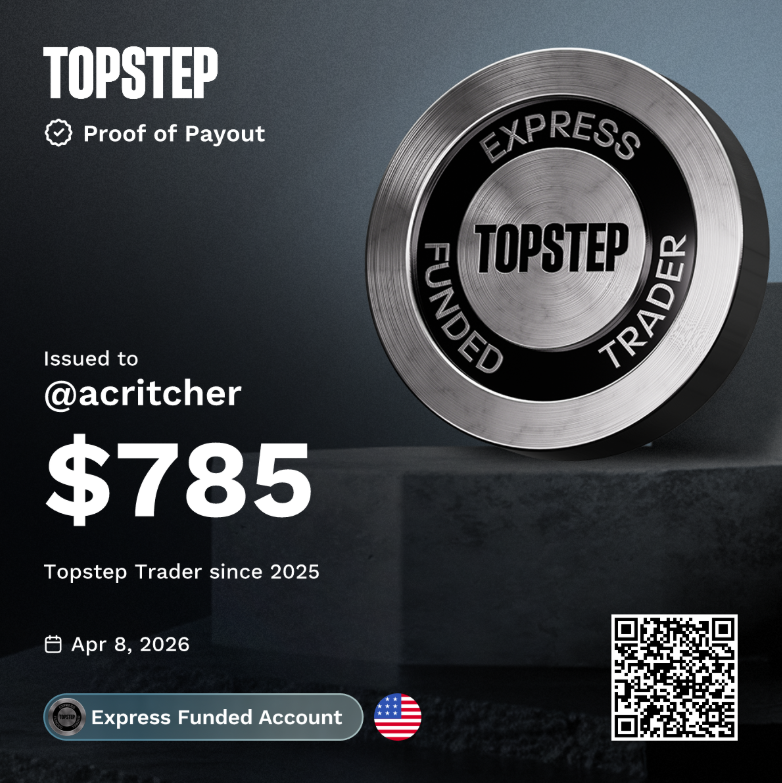
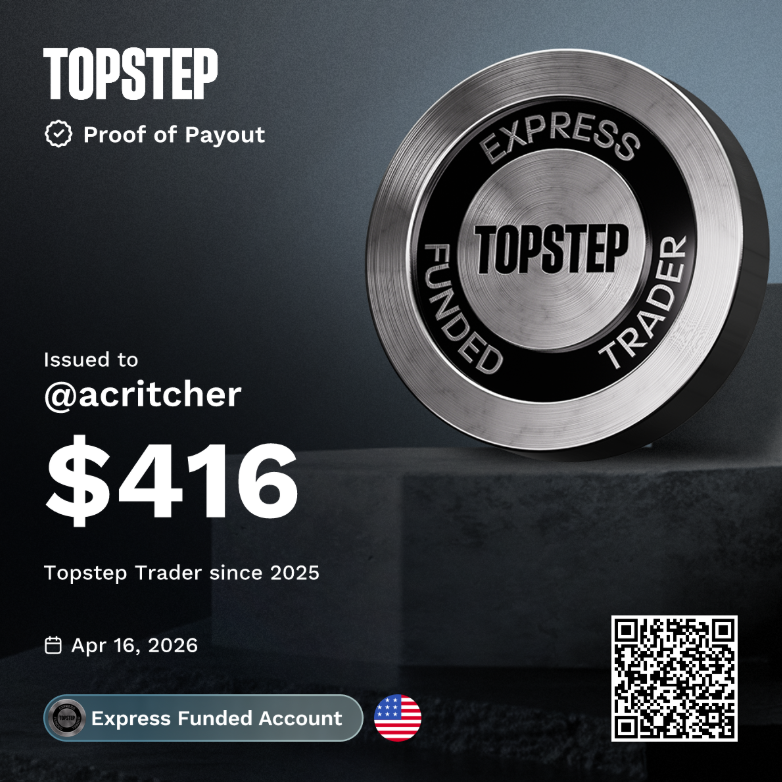
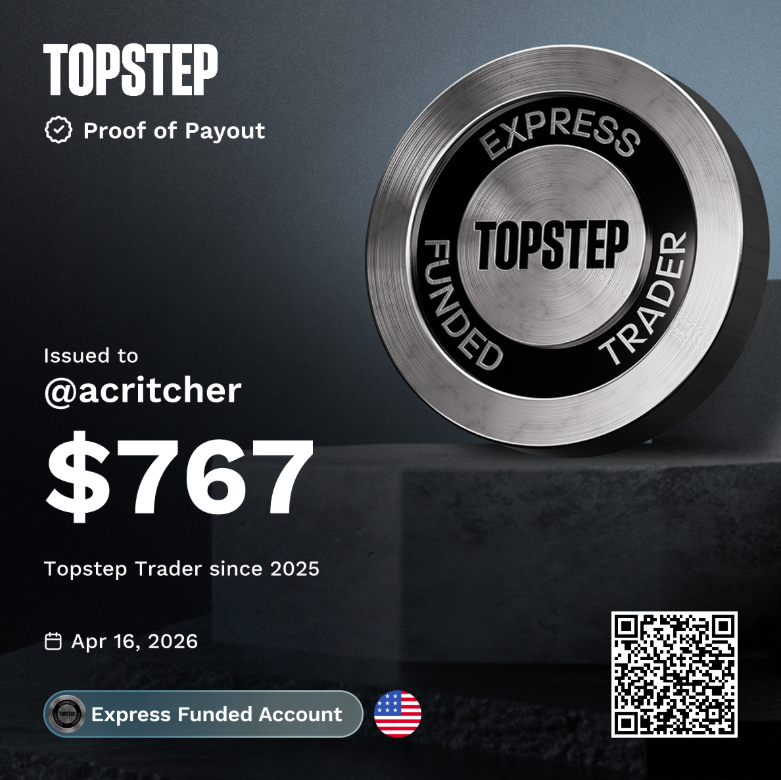
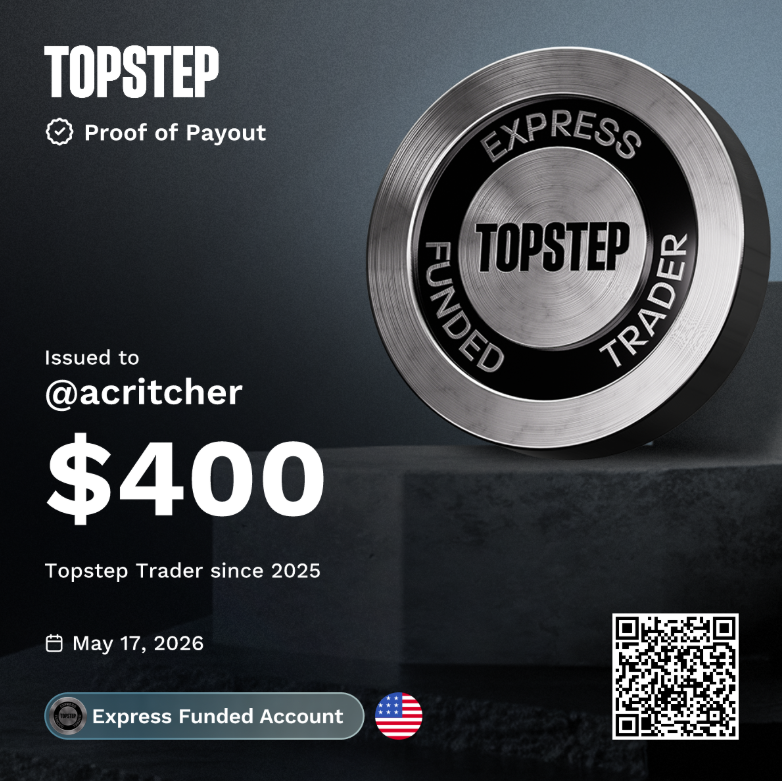
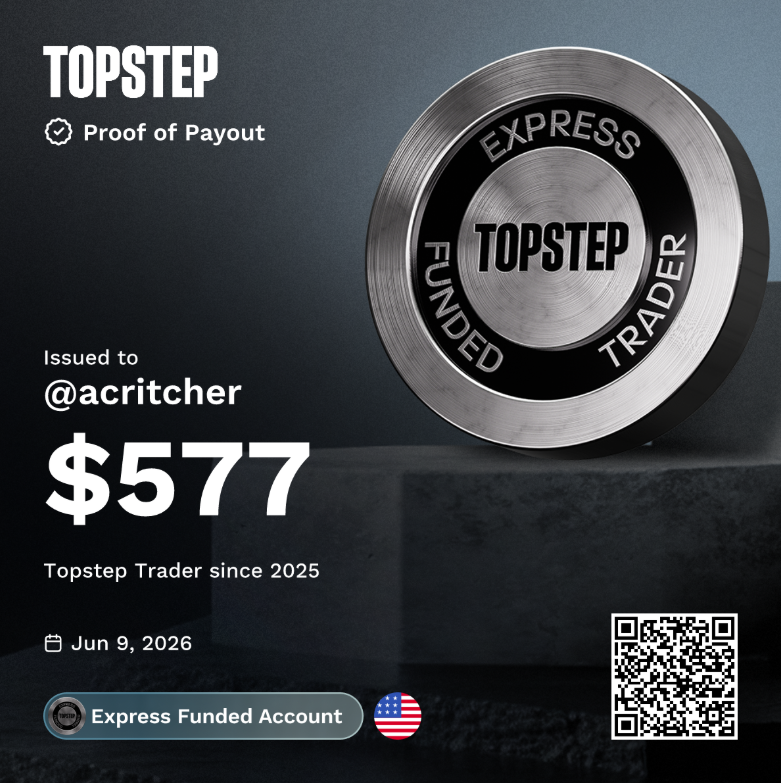
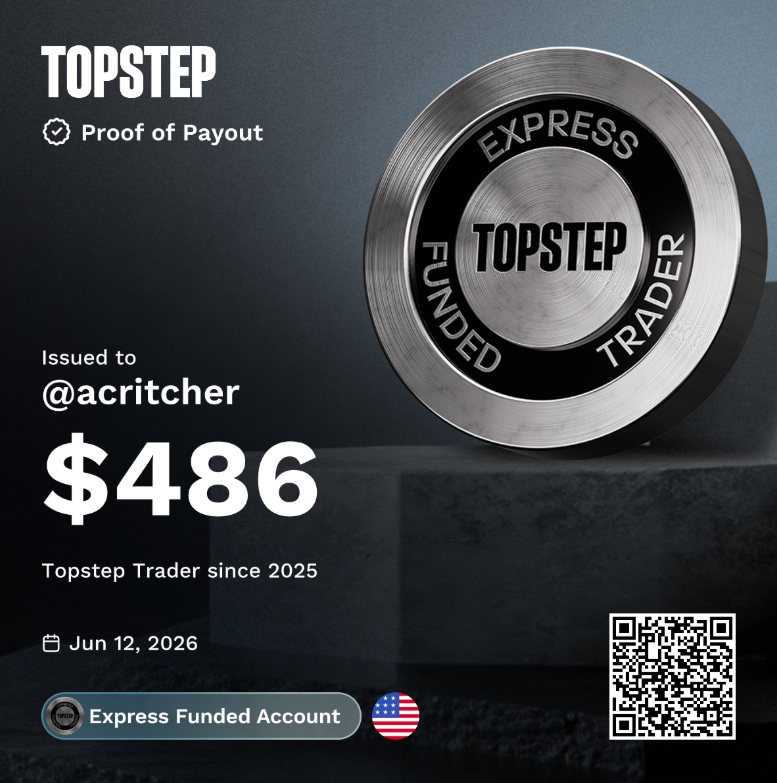
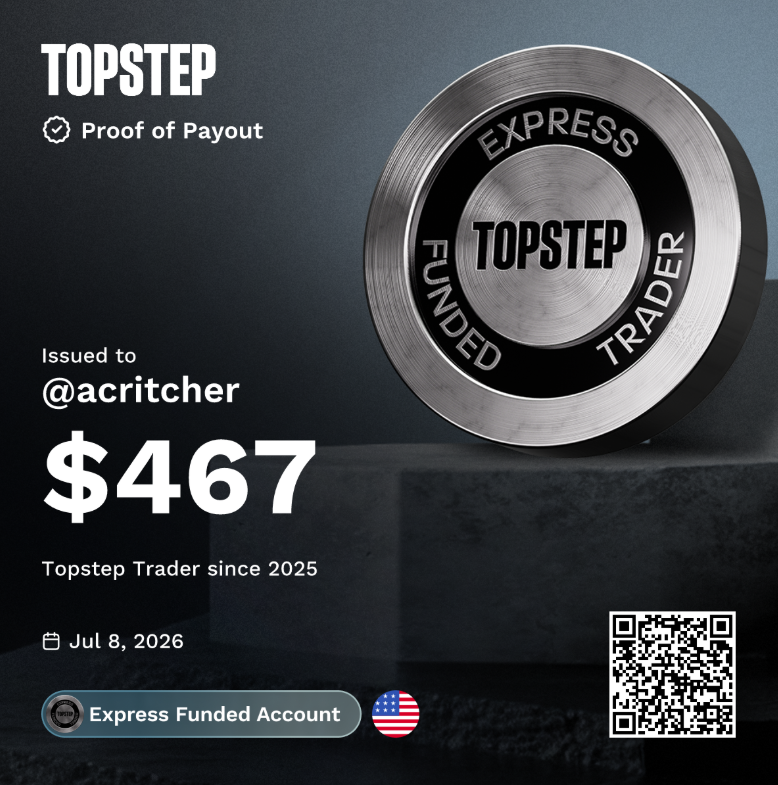
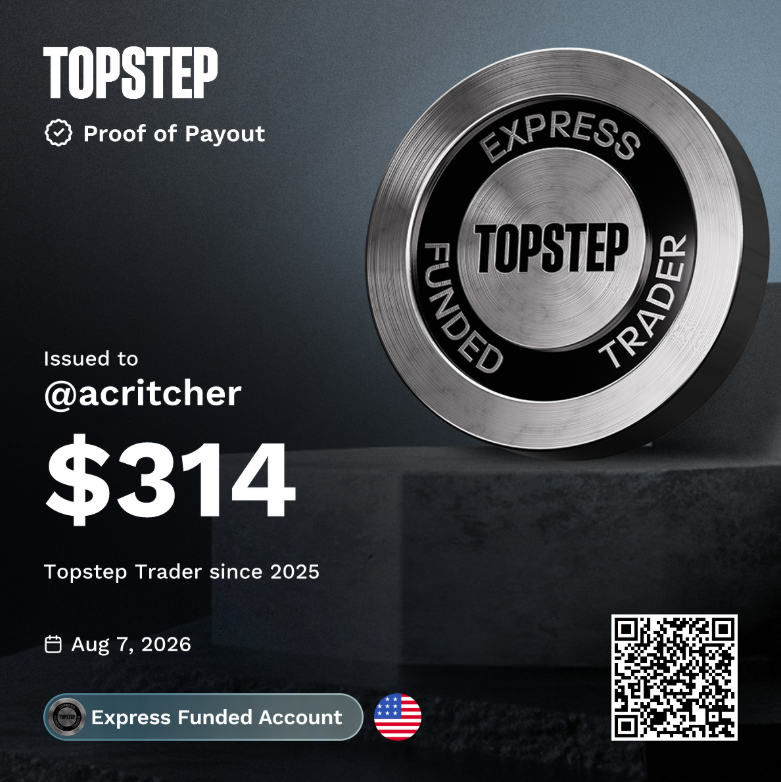
One area I’d like to see Topstep improve is offering an instant-funded account option. I understand the value of the evaluation process, but having an alternative for experienced traders who want to demonstrate their skills in a funded environment without going through the traditional evaluation would be a welcome addition. Overall, Topstep has been the firm I’ve had the most success with, and I appreciate that its structure fits the way I trade. My trader profile and documented proof of payouts are available here: Alex Critcher on Topstep
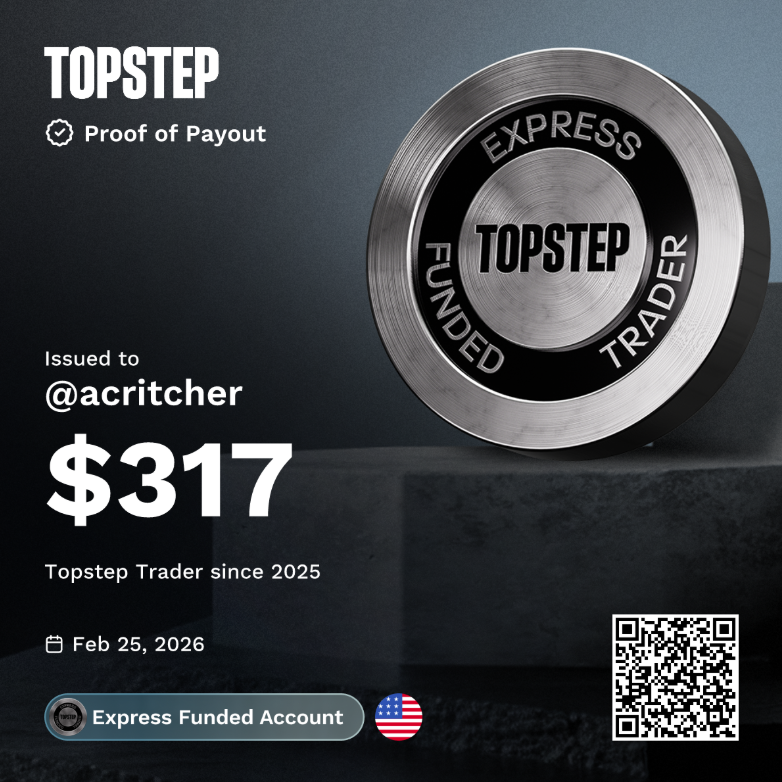
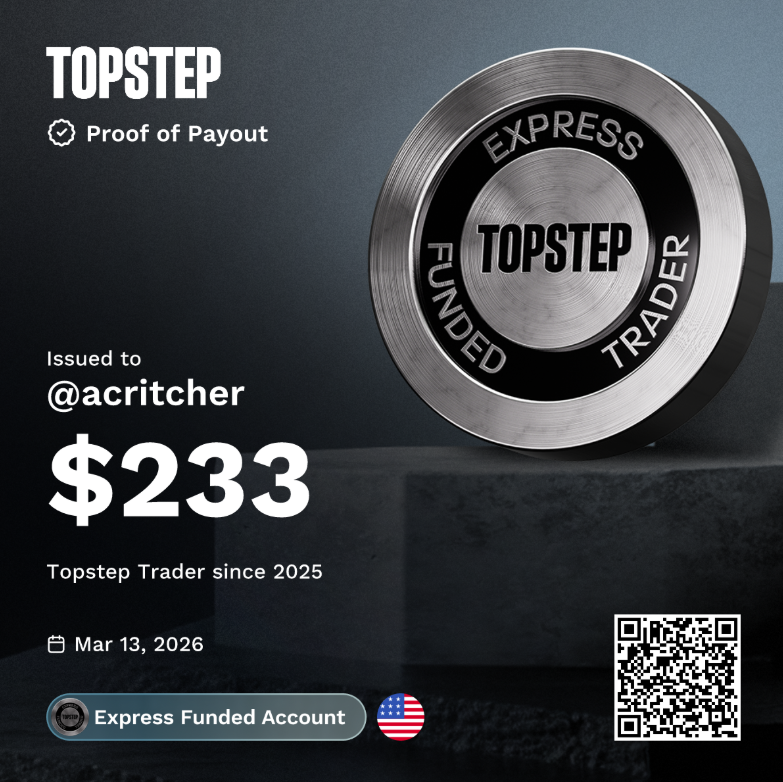
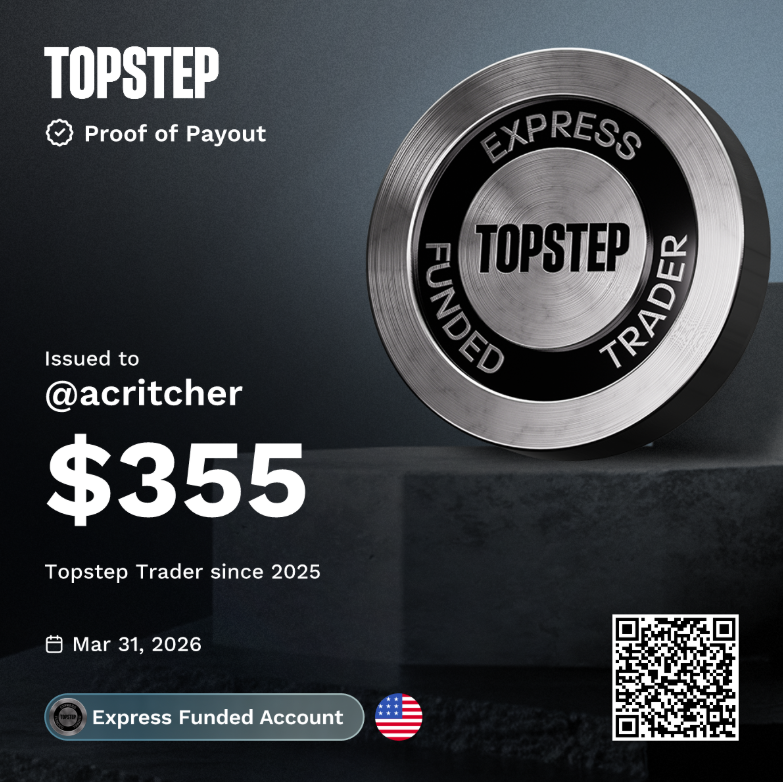
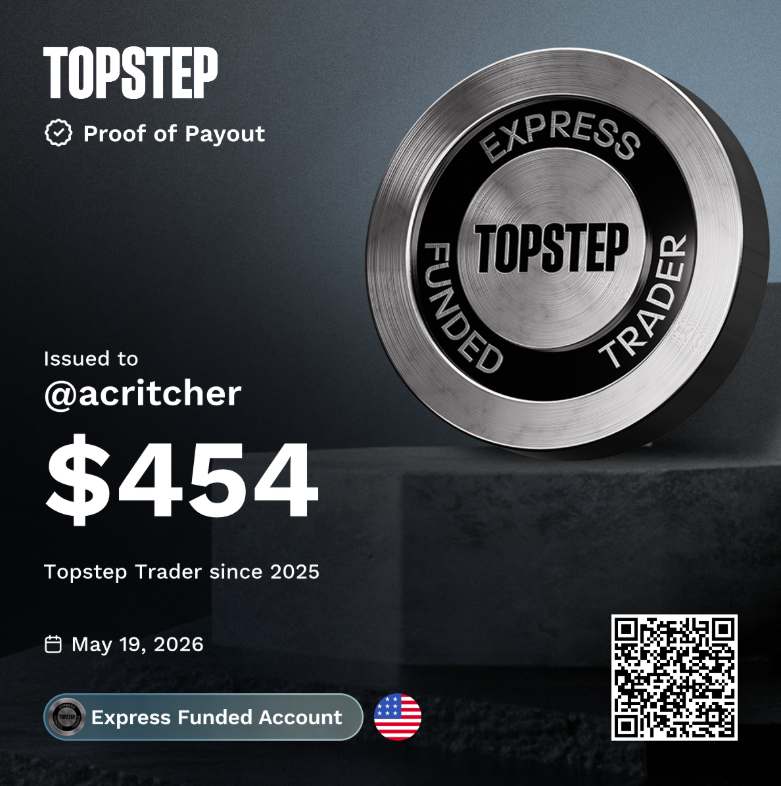
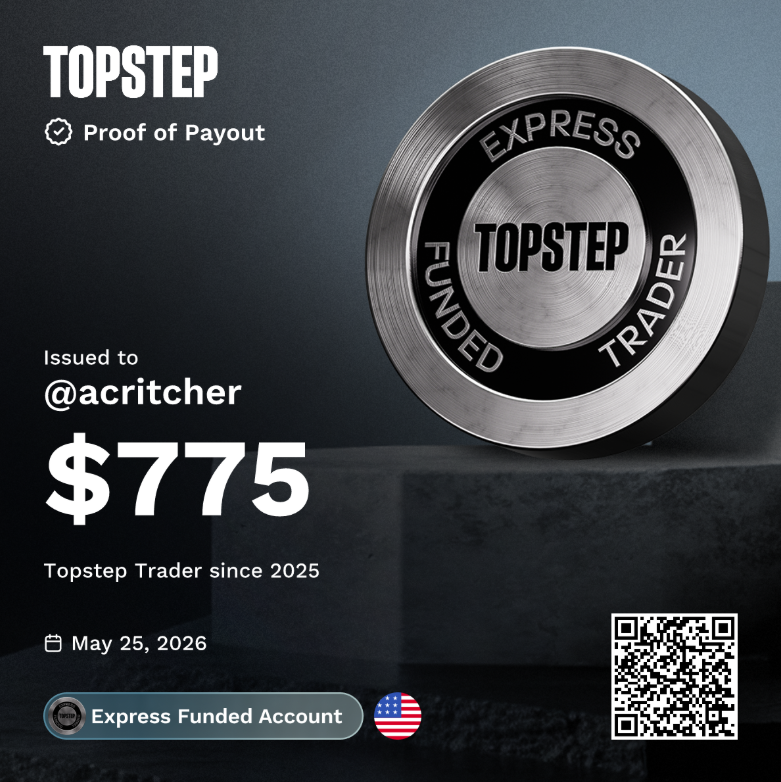
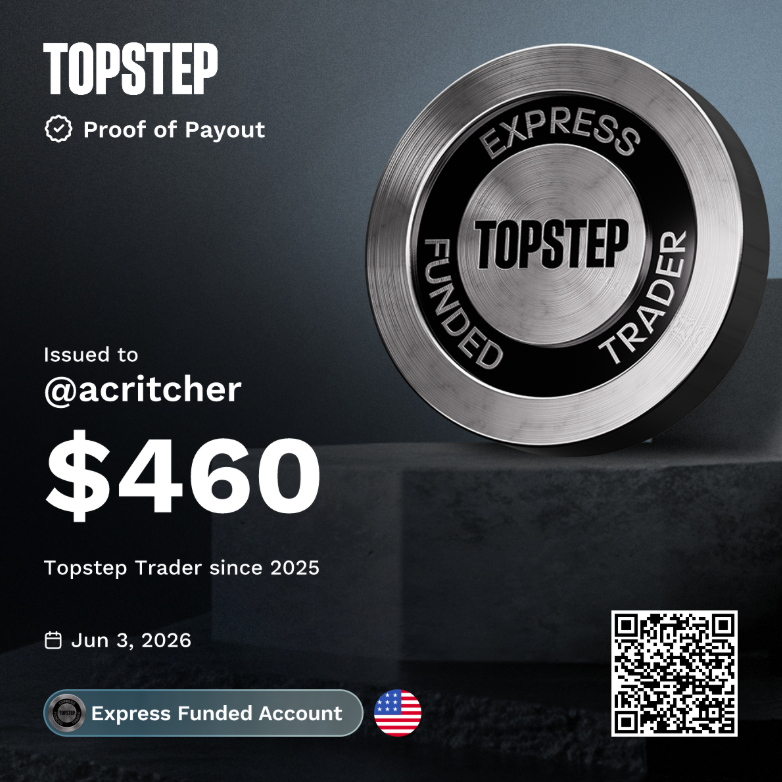
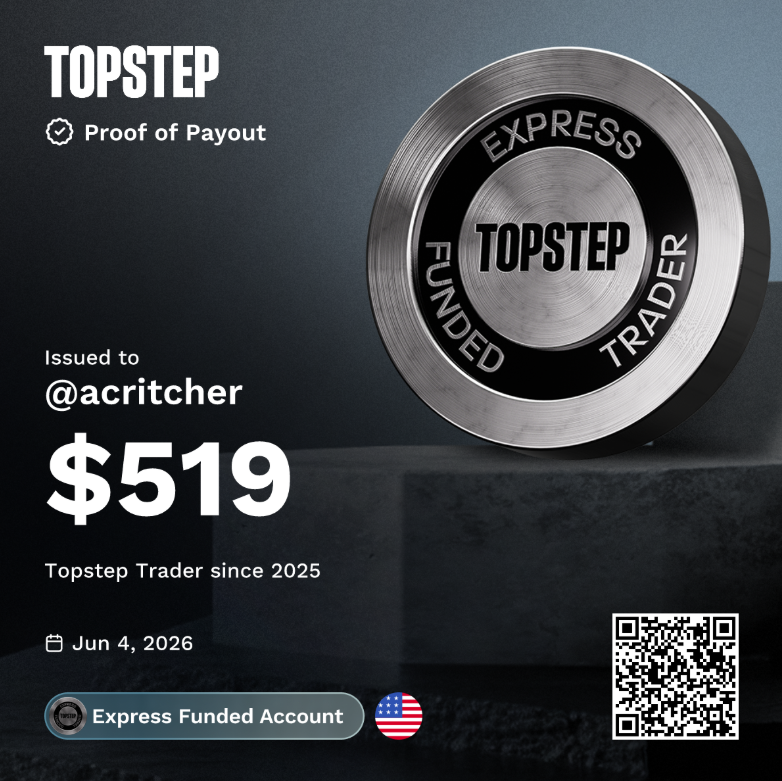
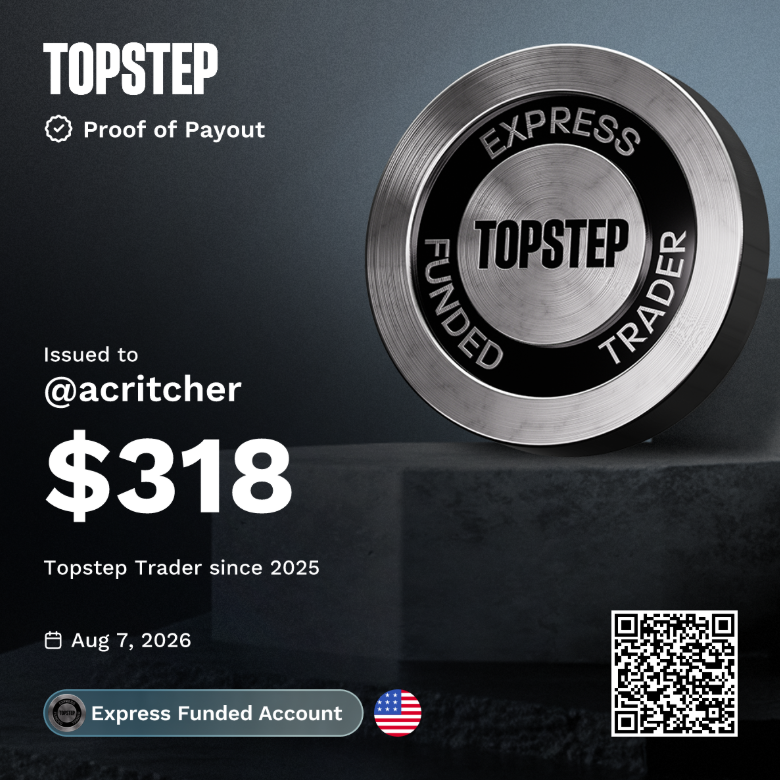
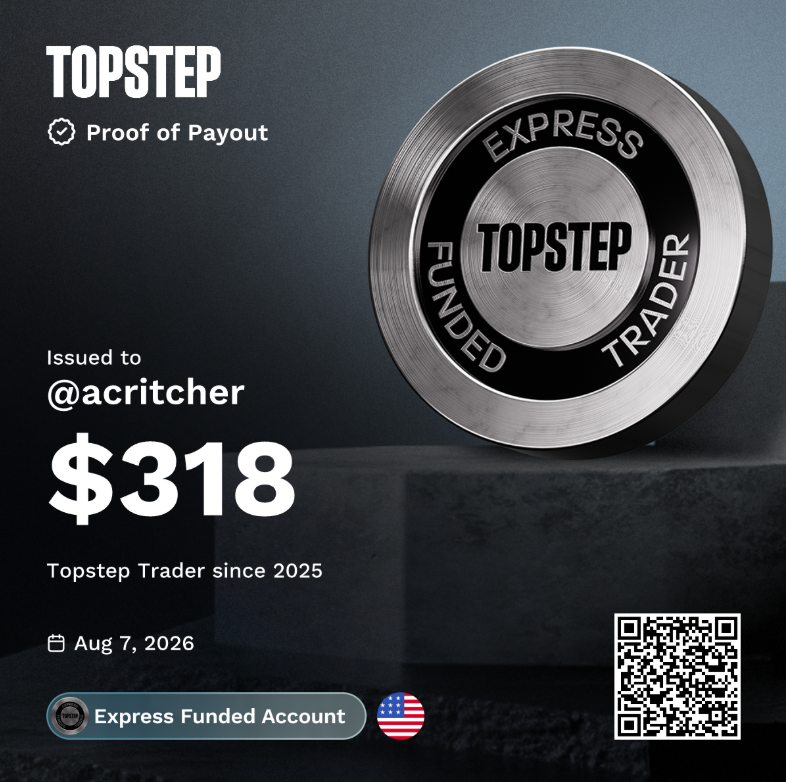
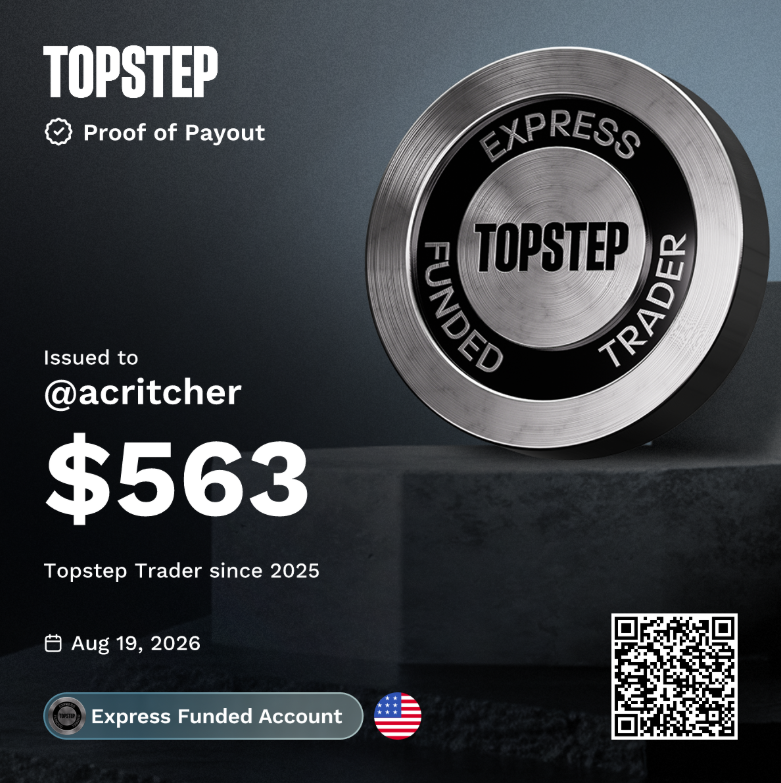
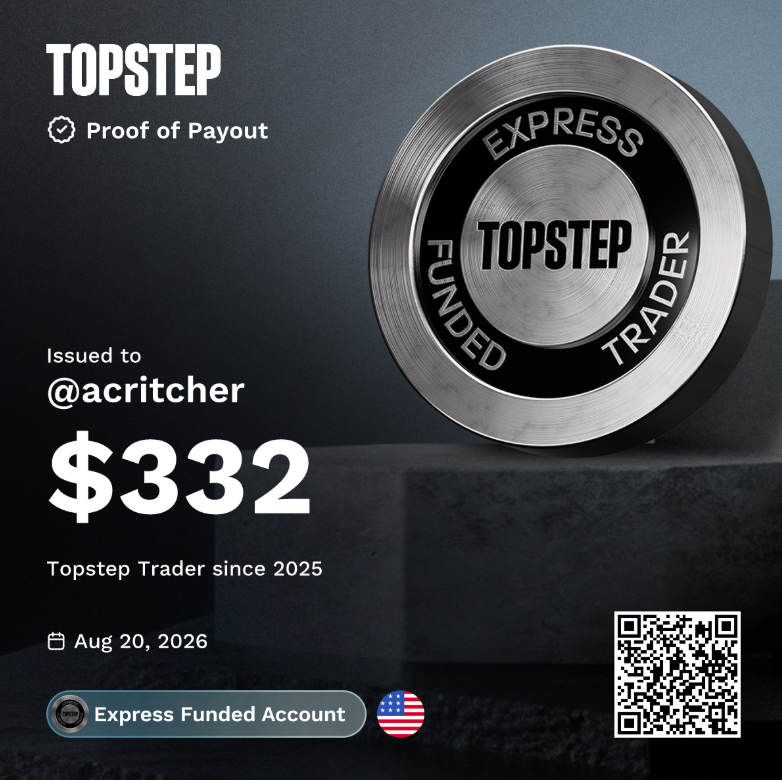
Verified funded – the receipts
About the writer – Alex Critcher
Alex Critcher is a 36-year-old futures trader from Colorado who scalps MGC and MES with a mean reversion approach off static technical levels. He first got funded with Topstep in 2022, has more than 10 payouts, and is a former athlete and business owner.
Enjoyed this article? Add JoinProp as a preferred source on Google.


