
One Prop Trader a Day – Rehaan Sharma: The Market Does Not Owe You the Last Trade Back


One Prop Trader a Day – Episode 114

Rehaan Sharma
Rehaan Sharma is a 17-year-old founder and futures trader who has been in the markets since he was 14. Today he runs Alverton Capital, a trading desk platform and proprietary firm building toward $2.5M in deployed capital, where he trades NASDAQ futures on the terminal his own company built. Here is his story, in his own words.
What does it take to keep buying evaluations after failing sixteen of them? Rehaan Sharma was 14 when he started and 15 when he finally passed, and the funded account that followed came with rules he had never had to respect before. In this interview, he explains the liquidity sweeps and volume profile behind his NQ entries, the 3,500 dollars revenge trading cost him at 15, the trade he took a few weeks ago against his own rule, and why a million dollar account would make him cut his risk to a quarter of what the rules allow.
I’m Rehaan Sharma, 17, from India. I trade index futures, mostly NASDAQ with some S&P. I’ve been in the markets since I was 14. I got my first funded account at 15, after sixteen failed evaluations. At 16 I tried to launch my own proprietary trading fund and ran straight into the age regulations, so I built the software side instead. That became Alverton Capital, a trading software company and proprietary desk, and its terminal is what I now use to trade every session. So I sit on both sides of this industry. I pass evaluations like everyone reading this, and I build the tools traders use to pass them.
That first funded account was with FundingPips. What changed was not the money. It was that the account stopped being a game I was trying to win and became a thing I was responsible for. Before that, an evaluation was a puzzle. I’d take a swing, blow it, buy another one, take a bigger swing. There was no real cost to being wrong except the fee. The day you’re funded, being wrong has a price you can’t reset. I started actually planning trades instead of reacting to charts. I started keeping a record. I started sizing to what the drawdown allowed rather than to what I felt like risking. The other thing nobody warns you about is that getting funded is not the finish line. It’s the start of a much harder problem, which is staying funded.
For a long time I bought nothing at all, and that’s the honest answer. My first payouts didn’t feel permanent. They felt like a fluke I hadn’t earned yet, and I was half expecting the whole thing to stop working, so I saved them and put them straight back into more challenges. For a while my trading money only ever existed as more evaluation fees. The first thing I actually spent it on was a proper trading setup: screens, the machine, the desk. Which sounds boring until you realise what it meant. I was buying equipment for a job I’d decided I was going to have. That was the point it stopped feeling like a hobby I was getting away with. Looking back, reinvesting everything instead of withdrawing was the right call, even though it came from insecurity rather than strategy. Most people do it the other way around and take their first win out to prove to themselves it’s real.
Somewhere between 16 and 17 evaluations failed before that account. I’m not proud of that number but I’m not going to hide it either, because it’s the honest one, and most people who quit quit at three or four. What kept me coming back is that I could see the failures getting better. Early on I was breaching max drawdown on day two because I was overleveraged and had no plan. Later I was failing at 6 or 7 percent because I got impatient near the target. Those are completely different problems. The second one is a discipline problem, and discipline problems are fixable. That’s what kept me buying the next one, the sense that I was failing in a slightly smarter way each time. Also, I was 14 and 15 when most of this was happening. I had nothing else I wanted to be doing.
The single most expensive lesson was $3,500, at 15. I’d built the account up and then gave it back in a stretch of revenge trading after one bad session. That’s the whole story. No clever market lesson, no exotic setup that failed. I lost, I wanted it back immediately, I sized up to get it back faster, and I made it much worse. The lesson cost me $3,500 and it is one sentence long.
I still think about it on days when I’m down early. It is the most useful thing I’ve ever paid for.
Trading did take a mental and emotional toll, and anyone who says otherwise is selling something. The worst part for me wasn’t the losses, it was the slumps. Stretches where nothing worked, where I’d follow my plan properly and still lose, and I’d start questioning whether the whole method was broken. That’s harder than a single bad day, because a bad day has a cause and a slump feels like it doesn’t. Two things fixed it for me. First, I stopped grading myself on P&L and started grading myself on whether I followed the plan.
Once you actually believe that, the emotional swings get a lot smaller. Second, I built a process I could lean on instead of my mood: a fixed pre-session routine, levels marked before the open, size decided in advance. When the routine makes the decisions, there’s much less for the emotion to grab onto. Having a team around me now helps too. When you review trades out loud with people, it’s very hard to keep lying to yourself about them.
I’ve traded with FundingPips, Lucid Trading and GOAT Funded Trader. What I look for, in order: do they actually pay, because everything else is decoration, and I want evidence of payouts going out consistently, not screenshots from one influencer. Are the rules written clearly, because the firms that hurt people aren’t usually the ones with hard rules, they’re the ones with vague rules. If I have to guess how consistency or news holding is enforced, I’m already at risk. I’d rather have a strict rule stated plainly than a soft rule I can trip over. Does the drawdown model fit how I trade, because I’m intraday on NQ, which means I need room to be wrong twice in a session without being dead, and a tight trailing drawdown suits a different trader than me. And how they behave when things go wrong: support response times, how they handle disputes, whether they communicate during outages. You find out what a firm actually is on a bad day, not a good one.
My style today is NQ primarily, ES occasionally, intraday only. I’m flat by the end of the session. My method is ICT derived at its core. I’m looking for liquidity being taken, then a reaction from a level I’ve already marked. Order blocks, supply and demand zones, and the sweep of an obvious high or low are the structural pieces. On top of that I use volume profile and auction market theory as a diagnostic layer rather than an entry trigger. Structure tells me where I’d want to be involved. The profile tells me whether the market is actually accepting price there or rejecting it. When those two disagree, I don’t take the trade. Timeframes are 15 minute for context and 1 to 5 minute for execution. I mark my levels before the open and I don’t add new ones mid session. If price doesn’t come to me, I don’t trade. Some days that means zero trades, and that’s a normal outcome, not a wasted day. The short version is that I try to be in the market for the hour where my edge exists and absent for the rest of it.
The New York open is 7pm my time, which honestly works well for me. School is done and the evening belongs to the market. I’m at my office by around 5:45 or 6pm, so about an hour and a half before the open, and that window is the most important part of my day. I go back through the previous session, where the highs and lows sat, where price got rejected, what was left unfilled. Then I mark the levels I care about for tonight and decide in advance what I’d need to see at each one to take a trade. I do all of this on our own terminal. Alverton Desk is the platform my company built, and it’s the reason I have any structure at all. It’s a ten module desk that pulls everything I need into one screen: levels, session context, profile data, my risk parameters and my own trade history sitting next to the chart. Before it existed I was flipping between five tabs and a notes app, and half my mistakes came from that. Now my pre-session prep is one pass through one system, and by the time the bell goes my decisions are already made. Then I trade the open. That’s usually the only window I’m genuinely interested in. After the session closes I’m working on the company. And three or four evenings a week my team and I spend another three to four hours on research: running market simulations, backtesting setups against historical sessions, and building out the algorithmic side of the desk. That’s become as important to my trading as the trading itself, because it’s where I find out whether a thing I believe is actually true or just a story I’ve been telling myself about a handful of screenshots. So most days are about an hour of trading and five hours of work around it. That ratio surprises people.
My most recent losing trade was NQ, on my Lucid Trading 100k account, a few weeks ago. I’d marked the previous day’s high before the open as the level I cared about most. Price ran at it inside the first fifteen minutes of the New York session and took it out. That’s my bread and butter setup: an obvious high gets swept, the liquidity above it gets taken, and price comes back down through it. So I shorted into the sweep, two contracts, stop about 25 points above, roughly a percent of the account at risk. The problem was that I entered on the sweep itself instead of waiting for the reaction. I’d been sitting on that level for an hour and a half and I wanted it to be my trade. Price never came back. It held above the old high and just kept going, and I got stopped out for around $1,000. Then I made the actual mistake. I re-entered short about fifteen minutes later, convinced the first one had just been early, and got stopped again for a few hundred more, total damage somewhere around $1,400. The setup wasn’t wrong. The level wasn’t wrong. What was wrong is that my own volume profile was telling me price was being accepted above that high rather than rejected from it, and I ignored it because the structure said what I wanted to hear. My whole rule is that when structure and profile disagree I don’t take the trade, and I took it anyway. What I’d do differently: wait for the reaction to confirm rather than front running it, and never re-enter the same idea inside the same hour. The second trade is the one that actually cost me, and it’s a smaller version of the same thing that cost me $3,500 when I was 15. That flaw doesn’t disappear. It just gets cheaper as you get better at catching it. The reason I keep a record of these is that my losing trades cluster. When I look back at a month of them, the same two mistakes account for most of the damage. You can’t see that from any single trade.
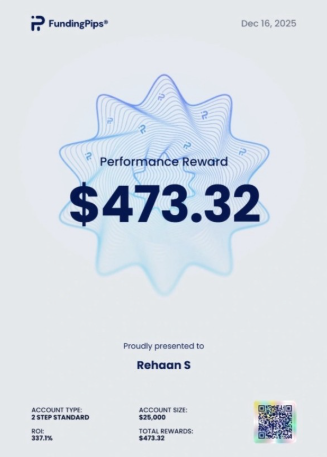
The biggest payouts so far are $4,000 in a single payout from FundingPips, and $3,500 from Lucid Trading. But the milestone that actually meant something wasn’t a payout. It was realising I’d built something other traders wanted to use. Alverton started as a tool for my own prep because nothing on the market did what I needed. The first time someone outside my circle asked for access to it, that landed harder than any withdrawal has. At 16 I tried to launch a proprietary trading fund and ran straight into the age regulations. That was a hard no I couldn’t argue with. So I built the software side instead, and that turned out to be the better business anyway. Alverton is in private alpha now and we’re working toward deploying around $2.5M of proprietary capital next year.
My parents were sceptical early on, and I don’t blame them for a second. Their teenager told them he was going to trade index futures. Any parent would have the same reaction, and most would have shut it down entirely. Mine didn’t. That’s the part I want on record. When I lost money, they didn’t say I told you so. They told me it was part of the process and to keep going. They’ve played a bigger role in whatever I’ve done than anything else has. There were moments where they quietly wondered if this would ever work, and that’s fair, because for a long stretch it didn’t. But they never used those moments against me. Eventually I stopped needing to argue the case. The work spoke for itself. With friends, I mostly don’t bring it up. It’s not a conversation that goes anywhere at school. My trading friends are a different thing entirely: almost all of them are six or seven years older than me, and they’ve been genuinely good to me. No condescension about my age, just honest feedback about my trades. That group has been worth more than any course I’ve bought.
What separates me from someone who quit after their third failed challenge is, honestly, mostly that I was too young to have a backup plan. Someone who quits at three usually has something else to go back to. At 14 I didn’t. This was the thing I was doing, so quitting wasn’t a decision I was in a position to make. But the real answer is that I treated the failures as data instead of verdicts. Three failed challenges tells you almost nothing except that you don’t know what you’re doing yet, which you already knew. Sixteen failed challenges, written down and reviewed properly, tells you exactly where you break. Every one of mine had a cause I could name afterward, and a lot of them had the same cause. Most people who quit at three aren’t short on talent. They just never gathered enough evidence about themselves to fix anything, so each failure felt like a judgement rather than a measurement.
If someone gave me a $1,000,000 funded account today, I’d trade it far smaller than you’d expect, and spend the week doing almost nothing. Week one on an account that size is not about making money. It’s about not doing anything stupid while my brain adjusts to the numbers. A 1 percent day on a million dollars is a number that will make a 17 year old do something reckless if he isn’t careful, and I know that about myself. So: same setups, same levels, same process. Risk cut to maybe a quarter of what the rules would allow. One trade a session, maximum two. The goal for the seven days is to end them still in the account with my process intact, nothing more ambitious than that. The mistake people make with a big account is thinking it requires a bigger strategy. It doesn’t. It requires the same strategy and a much better hold on yourself.
I’d scale up from week three, slowly, and only after I’d proven I could sit through a red day at that size without flinching.
Prop Firm reviews. For transparency I want to state I’m not affiliated with or sponsored by any firm mentioned here below. No referral links, no partnership. I’m writing about them because I actually trade with them.
FundingPips, 5 out of 5. FundingPips gave me my first funded account when I was 15 and I’ve traded with them ever since, so I’m not a neutral party. But the reasons I’ve stayed are practical, not sentimental. Payouts arrive. That’s the whole game and a lot of firms fail at it. My largest single withdrawal from them was $4,000 and I’ve never had to chase one or explain myself to get it. Their rules are written in plain language, which matters more than people realise. I know exactly what breaches my account before I open the platform, and I’ve never had a rule reinterpreted on me after the fact. Support answers quickly and answers the actual question rather than pasting a help article at you. The thing that stands out most is how fast they move. Every time I’ve thought something on their platform needed work, it’s been fixed within a week or two. They ship constantly and they clearly listen to the trader base rather than just announcing at it. For a space where plenty of firms go quiet the moment something breaks, that responsiveness is the difference between a firm you use and a firm you stay with. If I had to name one thing to improve, it would be the payout rails. Smaller withdrawals defaulting to crypto works fine if you’re set up for it, but for traders in regions where that adds friction or fees, more local options would make a real difference. It’s a small thing against everything else they do well, and knowing them it will probably be handled before this gets published.
Lucid Trading. Also strong. I run a 100k account with them and they’ve been reliable where it counts, including a $3,500 payout. Their drawdown structure suits an intraday NQ trader better than most, and the platform has been stable through the sessions I care about. Between the two, FundingPips is where I have the longer history, but I wouldn’t hesitate to recommend Lucid to anyone looking for a second firm to diversify across.
Verified funded – the receipts






About the writer – Rehaan Sharma
Rehaan Sharma is a 17-year-old futures trader and founder from India who trades NASDAQ and S&P index futures intraday using liquidity, auction market theory and order flow. He got his first funded account at 15 after sixteen failed evaluations, and runs Alverton Capital, a trading software company and proprietary desk working toward around $2.5M of deployed capital.Connect on LinkedIn


