
One Prop Trader a Day – Ibrahima Danso: Making Money Is One Skill, Keeping It Is Another


Ibrahima Danso
Ibrahima Jr Danso is a 20-year-old USC business student from Los Angeles who failed seven $100,000 evaluations, reached third on FTMO’s US leaderboard, and learned the hard way that making money and keeping it are two different skills. Here is his story, in his own words.
Verified funded – the receipts
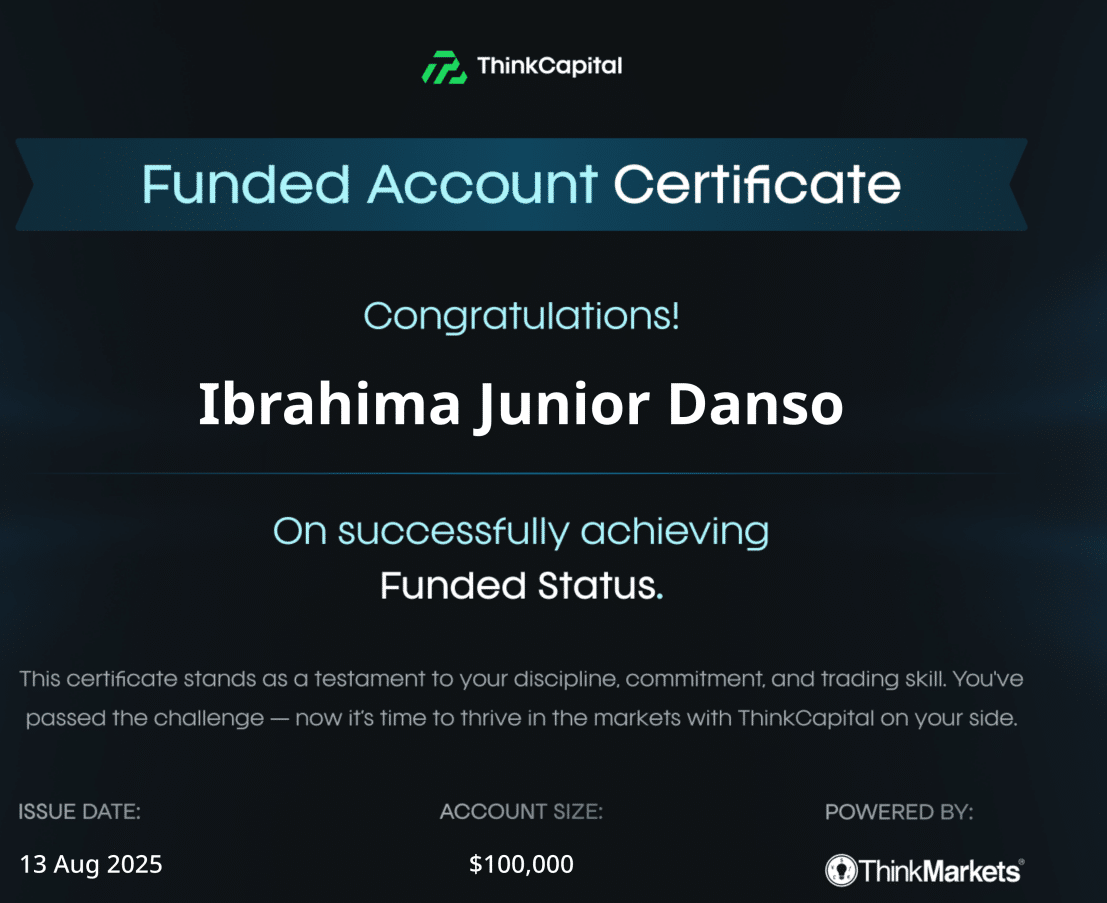



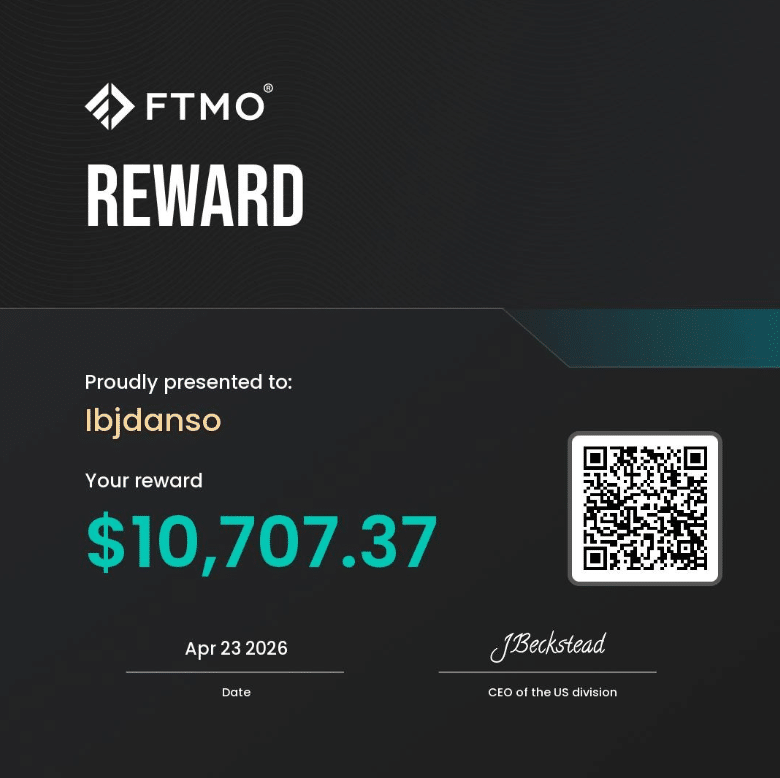
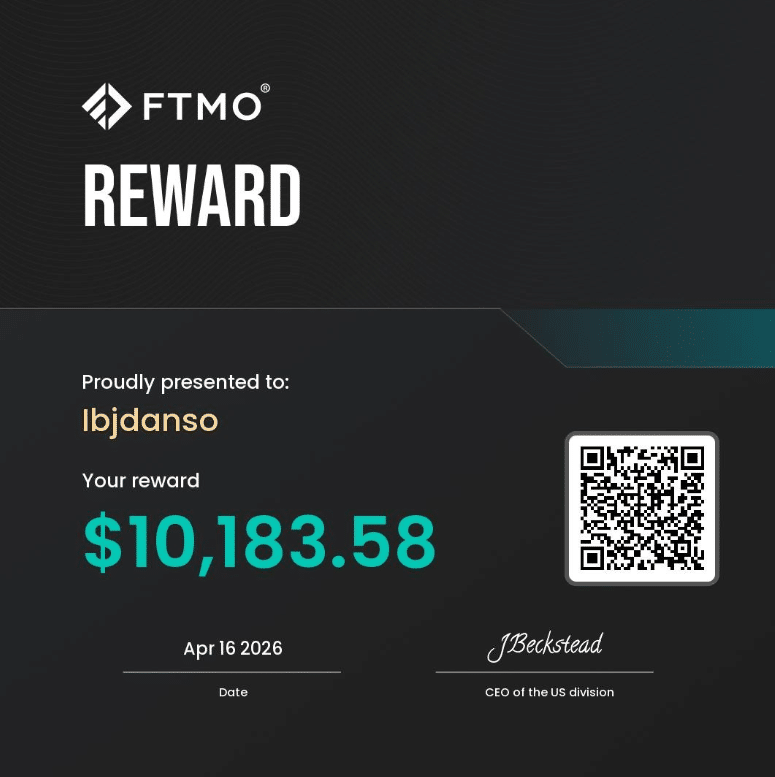
My name is Ibrahima Jr Danso. I am 20 years old, based in Los Angeles, and I am studying at the USC Marshall School of Business. I trade the major and minor forex pairs, gold and the US indices with a simple supply and demand strategy that follows the trend. One of my proudest milestones so far was reaching third place on FTMO’s US leaderboard.
As crazy as it sounds, I became a funded trader in August 2025, only six months after I started seriously learning to trade. I first discovered trading in May 2024 through copy trading and affiliate programs, lost a lot of money, and for a long time I never tried to trade myself because I assumed becoming consistently profitable was simply too complicated. In February 2025 I finally committed. Most of what I read said it could take years, but my mindset was simple: if other people could do it, why couldn’t I? My first funded certificate was tangible proof that I could, and from that moment my goal was no longer to pass once, but to prove I could do it consistently.
The first thing trading really gave me was not a watch or a car, it was financial independence. Being able to support my lifestyle and travel with money I had earned myself was the moment trading became real. It was never about expensive things, it was knowing I could rely on my own skills to build the life I wanted.
Before I got funded I failed around seven $100,000 evaluations. What kept me going was the progress I could see and how deeply invested I had become – I spent hundreds of hours analyzing charts and could barely go an hour without thinking about trading. Even when I failed, I was making fewer mistakes and following my plan better each time, so quitting never felt like an option. My most expensive lesson cost me around $7,000 in profit and my first funded account. After finally getting funded, my plan was to make two or three percent, protect the account, and wait for my first payout. On day one I made more than seven percent from a USDJPY sell and two gold buys. Instead of protecting it, I thought, if I made $7,000 in a day, how much could I make in 14? Greed took over, I abandoned my plan, gave it all back, and hit the maximum drawdown. That night I could not sleep. It taught me that making money is one skill, and having the discipline to keep it is another.
Trading has definitely affected me emotionally. Early on, after a loss I felt the need to win it back quickly, and after a big win I got overconfident, which led to overtrading and messing with my stops. You can be taught about trading psychology, but I think you only really understand it after living the consequences of your own mistakes. Over time I learned to judge myself by whether I respected my plan, not just by whether a trade made money.
Today I am a swing trader, so I do not need to sit in front of the charts all day. Most of my trades last between two and ten days across forex, gold and sometimes US indices. My approach is a simple trend-following supply and demand strategy. I start on the daily to set my bias, then drop to the 4 hour and 1 hour for my setup – a break of structure, at least a 50 percent Fibonacci retracement, a liquidity sweep, and a fractal break as the final confirmation. I also follow the fundamentals closely, using Forex Factory for the economic calendar, FinancialJuice for real time headlines, and publications like The Economist and The Wall Street Journal for the macro picture, so I understand the risk on or risk off environment.
Living on the West Coast I usually miss the start of the New York session, but as a swing trader that does not matter much. I wake up around 8:30, check my open positions, pending orders, points of interest and any important news. If there is no valid setup, I do not trade. When I do take a trade I set my stop and target, log it in my journal, and follow a set and forget mentality. The more you watch the charts, the more likely you are to overthink and interfere, so I set alerts and go on with my day, whether that is class, tennis, or the gym.
My most recent loss was a GBPCAD long where the trend, the technicals and the fundamentals all lined up. An unexpected geopolitical headline moved the market against me and hit my stop. I reviewed it in my journal and confirmed I had respected my setup and my risk, so I would not change a thing. No one has a 100 percent win rate, and I treat good losses like fees I pay to execute my edge.
One piece of advice I ignore is that beginners should stay on demo until they feel completely ready. Demo is useful for learning the platform and testing a strategy, but it cannot reproduce the psychology of having something real at stake. I went straight into $100,000 evaluations before I was ready. Failing them was expensive, but it exposed me to real pressure, greed and fear, and forced me to develop far faster than demo ever could.
Most people around me did not even know I traded when I started, so I was never judged or held back. Even now many still do not know, or do not fully get it when I explain. I was lucky to already have a good lifestyle thanks to my parents, so trading did not introduce me to those things – the difference is that I can support it myself now. I still live below my means. I do not need to prove success with expensive cars, and most of what I earn goes back into growing my funded allocation or into the stock market. For me this is only the beginning.
What separates me from someone who washed out at their third evaluation is how we interpret failure. A quitting mindset sees a third failed evaluation as proof that trading is not for you. I saw every failure as feedback about what I still needed to fix. A lot of people want the results but are not ready for the patience, repetition and sacrifice behind them. The advice I would give myself a year ago is simple: keep doing what you are doing. Right after high school I sold my PS5 because I knew it was time to get serious, and that focus is a big reason I became profitable so fast. The only warning would be not to let early success turn into overconfidence – keep the ambition, but always respect the plan. If prop firms disappeared tomorrow I would still trade my own capital and compound it over time. They helped me access larger capital faster, but they are not the reason I can trade. And if someone gave me a one million dollar account today, I would do nothing special: review the rules, wait for my setup, and trade exactly the way I do now.
To Omer and the team, thank you for building a place where real traders can tell the honest version of this journey. To anyone grinding through evaluations: your strategy can get you there, but discipline is what lets you stay. Respect your plan, protect your capital, and treat this as the long term game it is.
About the writer – Ibrahima Danso
Ibrahima Jr Danso is a 20-year-old swing trader from Los Angeles and a student at the USC Marshall School of Business. He trades forex, gold and US indices with a simple trend-following supply and demand strategy, reached third place on FTMO’s US leaderboard, and got funded just six months after committing to learning, after failing around seven $100,000 evaluations. He trades through firms including FTMO, BrightFunded and Think Capital, and lives by the lesson that making money and keeping it are two different skills.


