


Donny Jupikar
Donny Jupikar is a 34-year-old index and gold trader from Indonesia who failed 8 evaluations before his first payout, paid off his mother’s mortgage, and now trades NQ and Gold off supply and demand. Here is his story, in his own words.
Verified funded – the receipts
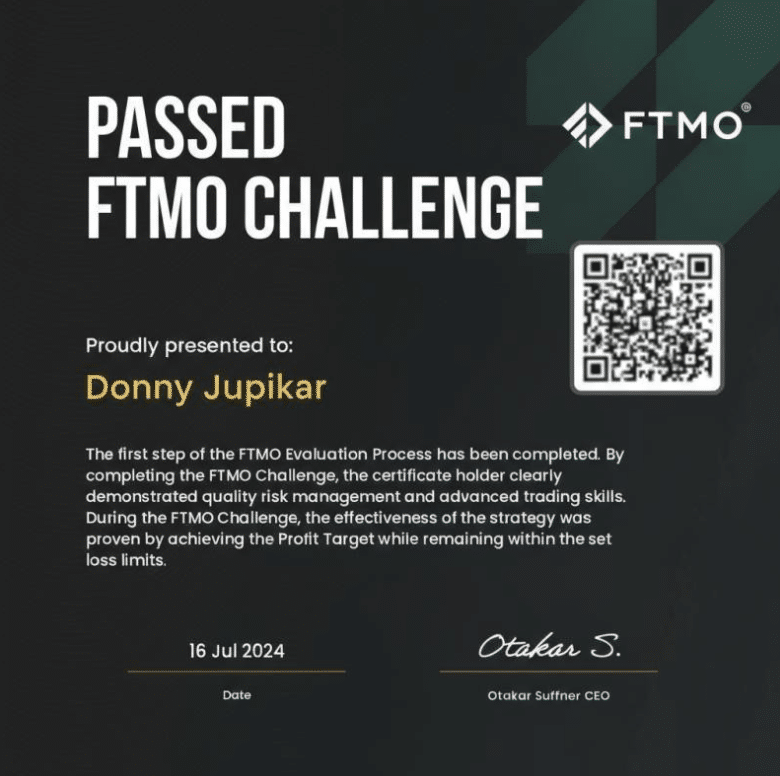
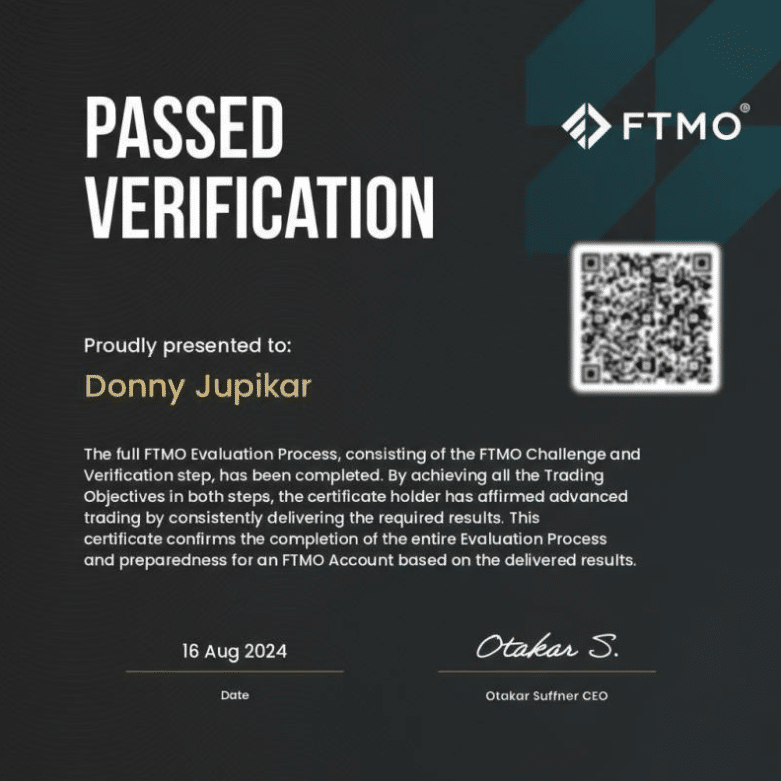
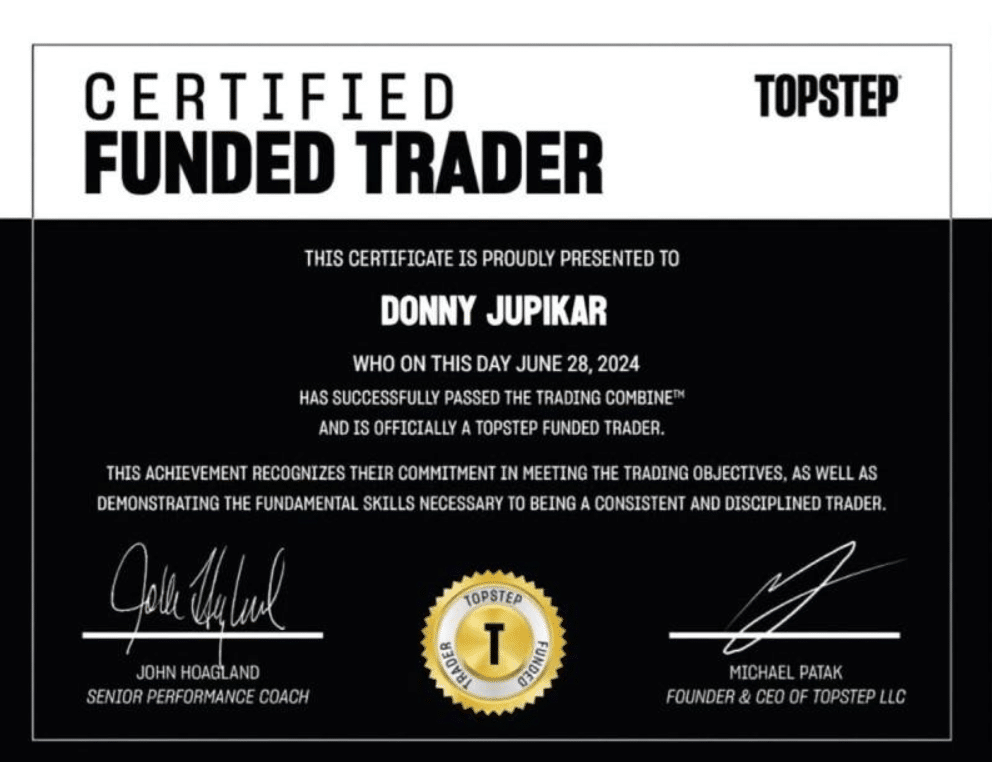
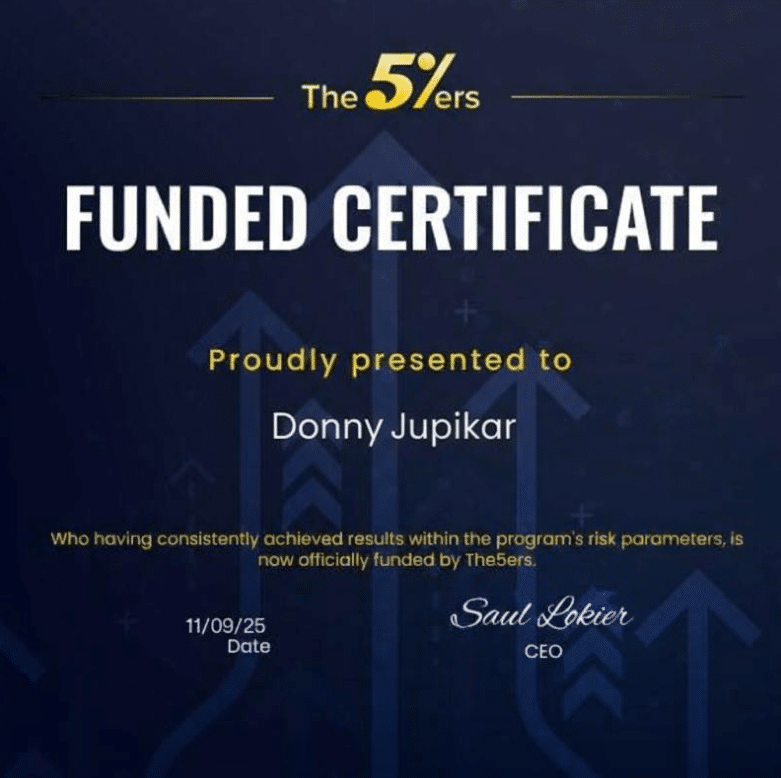
My name is Donny Jupikar. I am 34 years old, originally from Indonesia, and for the last few years I have been living between Singapore and Indonesia. I trade NQ, the Nasdaq, and Gold. Those two give me the volatility my strategy needs, so that is where I stay. When a decision starts to feel complicated, I go back to one rule: keep it simple. I ask what it would look like if it were easy, because complexity kills momentum.
I became a funded trader about two and a half years ago. The biggest change was not the money, it was the mindset. Passing that evaluation proved to me that I could execute a plan without blowing up, and that turned trading from a hobby into a business.
People always ask what the first thing I bought with trading money was. For me it was paying off my mother’s mortgage. That was not just a transaction. It was emotional proof that all the red days were worth it, and that this job had a real-world impact on the people I care about.
I failed 8 times before my first payout. What kept me going was the belief that the market is a pattern, and that if I could find the discipline to match that pattern, I would get there. I also kept a journal of why I was doing this, and reading it on the bad days pulled me through. My most expensive lesson was chasing the perfect strategy. Once I understood that the market is irrational and that there is no perfection in this business, I stopped searching and started executing.
My lowest point came after my third blown evaluation. I had lost a significant chunk of my savings and it felt like I was gambling, not trading. I actually closed my charts for two weeks and started looking for a regular job. For a long time I had a revenge trading problem too. I would lose a trade and immediately double down to win it back, and that builds a cycle of stress and anxiety. The high of a win was great, but the lows were destructive.
Today I trade a supply and demand strategy. I wait for price to break a key level or mitigate a fair value gap on the 15-minute or 1-hour chart, then I zoom down to the 1-minute or 5-minute for the actual entry. I am looking for reactive moves and momentum shifts, not predictions.
A typical day starts around 4:45 AM Singapore time so I can catch the London open and the New York close overlapping with the Asia session. I review the levels I marked the night before and I spend the first hour just watching price, not trading. I only take a trade if I see a clean setup that fits my daily thesis. By 7:00 AM my heavy trading is usually done. Then I review my trades, hit the gym, and spend the rest of the day reading or backtesting.
My most recent losing trade was a long on Gold, looking for a break above a key high. Price broke the level aggressively but immediately formed a choppy candle. I got in, set my stop, and it wicked me out instantly. I saw the momentum stall but I entered anyway because I was excited. What I would do differently is wait for the retest and a confirmation candle on the lower timeframe. I would have avoided that fakeout if I had just waited instead of chasing the break.
There is one popular rule I completely ignore: always scale into a winning position. I actually scale out. I take profits quickly and let the rest run with a trailing stop. Scaling in usually pushes me to move my stop to breakeven too early, which gets me stopped out for nothing instead of capturing the full move. I would rather lock in profit than maximize exposure.
Most people around me still think I am a gambler or that I got lucky. My close friends and family understand it is a serious profession now because they see the routine, but at family gatherings I still get asked what I am really doing these days. Trading has given me freedom. I am not tied to a desk or a corporate schedule, and I have become incredibly disciplined – I sleep early, wake early, and I have lost the anxiety of a 9-to-5 paycheck. The trade-off is isolation during market hours, because the market being open means I am often unavailable.
What separates me from someone who washed out at their third evaluation is risk management. They are usually swinging for a home run, while I am looking for base hits. They probably have a strategy, but they do not trust it, so they move their stops or over-leverage. I learned that survival is the most important metric. The advice I would give myself one year ago is simple: stop trying to predict the market and start reacting to it. You do not need to know where price is going, you just need to know what you will do if it goes there. Take your profits and stay humble.
If prop firms disappeared tomorrow I would still be trading, just with my own capital. I would scale down to swing or position trading without the leverage to scalp aggressively, and treat it as wealth management rather than daily income. And if someone handed me a one million dollar funded account today, my first seven days would be extremely conservative – only A+ setups, a low risk-to-reward to build a cushion, maybe 0.25% of risk per trade. The goal that first week would not be to make money. It would be to prove to myself that I can handle the psychological weight of that number without letting it touch my strategy.
To Omer and the team, thank you for building a platform that gives real traders a place to tell their story. To anyone still grinding: trading is simple, but simple is not the same as easy. Master your setups, know your risk, execute without deviation, and let survival be the metric you protect above all else.
About the writer – Donny Jupikar
Donny Jupikar is a 34-year-old trader from Indonesia, living between Singapore and Indonesia, who trades NQ and Gold using a supply and demand approach built on fair value gaps and market structure. After failing 8 evaluations early on, he rebuilt around strict risk management, a keep-it-simple mindset, and patience, got funded through firms including FTMO, Topstep and The5ers, and paid off his mother’s mortgage with his trading income. He treats trading as a business where protecting capital comes first.


