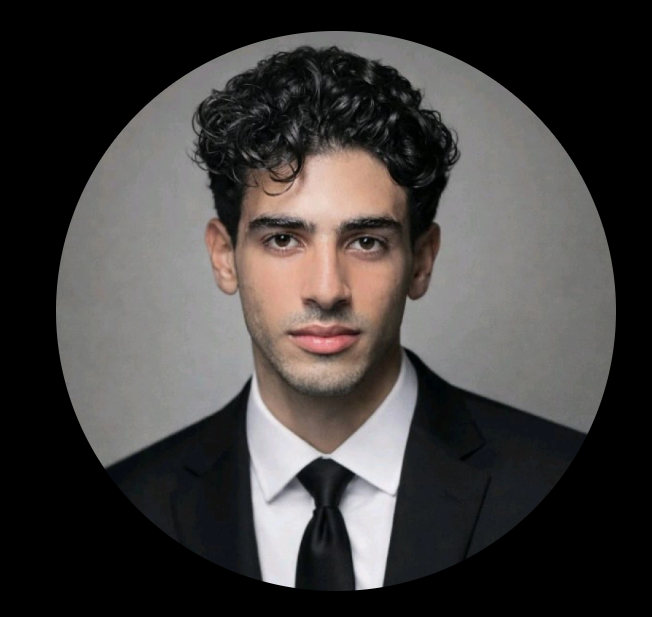
Adam Boumargoud is a 20-year-old student in Morocco, finishing his Bachelor’s degree in Commerce and Digital Marketing while building a trading career on the side. He started trading in 2023 and officially became funded on July 11th, 2025 – after four failed evaluations he treats less as setbacks and more as “tuition.” A sports background drives his approach: discipline, patience, and the long-view of an athlete. He trades NASDAQ and S&P500 during the New York open, with a conservative, systematic style focused on capital preservation and high-probability setups.
Q Quick intro – who are you, age, where are you from, and what do you trade?
A I’m Adam, a 20-year-old student finishing my Bachelor’s degree in Commerce and Digital Marketing in Morocco. I began my trading journey in 2023, and since then I’ve focused on mastering the markets alongside my academic studies. Outside the classroom, I’m deeply passionate about sports and staying active – the physical and mental discipline required in athletics translates directly to the patience and endurance needed to succeed in the markets. I primarily trade US indices, specifically NASDAQ and S&P500, focusing on high-probability setups during the New York session.
Q When did you become a funded trader? What changed for you at that point?
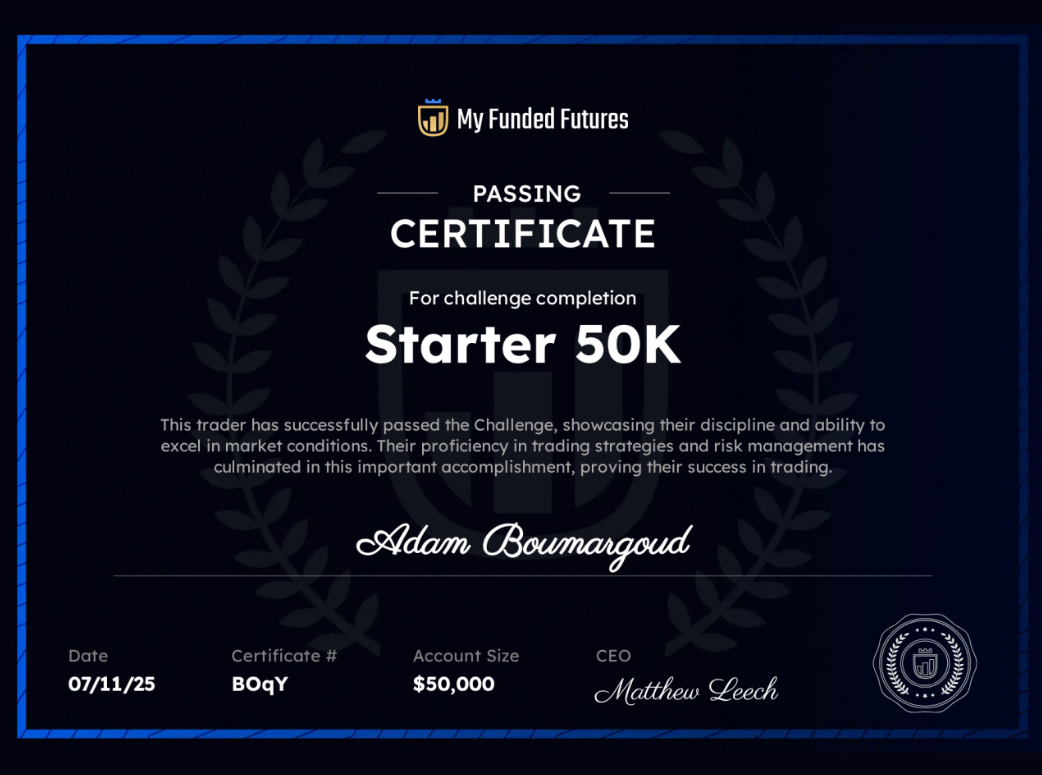
A I officially became a funded trader on July 11th, 2025. Passing that evaluation was a turning point – it fundamentally changed my perspective on the industry. It was the moment I realized that everything is truly possible in trading; the only variable is the amount of work and discipline you’re willing to put in. It shifted my focus from doubting the possibility of success to simply working harder and refining my process every day.
Q How did you feel when you became a funded trader for the first time?
A It was a rewarding moment that felt like a validation of my process. Passing the evaluation required a high level of consistency, so seeing that final confirmation was a great boost to my confidence. It proved that the hours I spent analyzing charts alongside my university coursework were paying off.
“I viewed each failure not as a stop sign, but as a necessary ‘tuition’ payment in the process of mastering a high-level skill.”– Adam Boumargoud
Q How many times did you fail before getting funded? What kept you going?
A I failed a total of four times before successfully getting funded. Those early setbacks were vital to my growth because they forced me to confront the flaws in my psychology and risk management. What kept me going was a clear long-term vision for my career – I viewed each failure not as a stop sign, but as a necessary ‘tuition’ payment in the process of mastering a high-level skill. My background in sports helped here as well: you don’t build elite performance overnight; it requires showing up even when things aren’t going your way.
Q What was your lowest point in trading? Did you ever consider quitting?
A My lowest point happened during a busy period at university when I tried to force trades while my mind was elsewhere. I realized then that trading requires 100% of your mental presence. I never truly considered quitting, however. I view challenges as opportunities to refine my strategy – much like how an athlete analyzes a poor performance to improve for the next game.
Q Did trading ever affect you mentally or emotionally?
A In the early days, the “rollercoaster” of wins and losses was definitely a challenge. However, my interest in sports helped me develop a resilient mindset. I learned to detach my emotions from the outcome of a single trade and focus instead on the quality of my execution and my long-term statistics.
Officially Funded
Adam’s verified funded trader certificate from MyFundedFutures – the milestone that capped four failed evaluations and years of disciplined study.
Q What does your trading style look like today?
A I’m a systematic trader focusing on NASDAQ and S&P500. I look for specific price action setups during high-liquidity windows, particularly the New York open. My approach is conservative – I prioritize capital preservation and only take trades where the risk-to-reward ratio is clearly in my favor.
Q What’s a typical trading day for you? Walk us through your routine.
A Being based in Morocco lets me align my schedule very well with the US markets. My day usually begins with focusing on my university studies. I dedicate my afternoons to the markets, starting with a pre-market routine of reviewing economic news and key technical levels. Once the session ends, I review my trades and then return to my evening studies or personal fitness.
Q Do people around you understand what you do? How do they react?
A It’s a mix of reactions. While some people see it as a complex hobby, my family has been my biggest supporters throughout the journey. They may not understand every technical detail of the NASDAQ or S&P 500, but they recognize the dedication and hours I put into my studies and my trading. Having that support system at home has been crucial – especially during the times I was working through the learning curve to become a funded trader.
Q How has trading impacted your lifestyle?
A Trading has instilled a high level of discipline in my daily life. It forces you to be organized, patient, and emotionally stable. It has also given me a practical “laboratory” to apply the economic and marketing theories I’m studying in my degree program.
Q What keeps you motivated to continue trading?
A The constant challenge of the markets and the goal of professional growth are my main drivers. I’m motivated by the idea of mastering a skill that requires both high-level analytical thinking and extreme emotional control.
“Psychology is 80% of the game. Don’t waste time looking for a ‘magic’ indicator – focus on mastering your own mind and your risk management.”– Adam Boumargoud
Q What would you tell your younger self when you first started trading?
A I’d tell my younger self that psychology is 80% of the game. Don’t waste time looking for a “magic” indicator – instead, focus on mastering your own mind and your risk management.
Q If I gave you a $1,000,000 funded account today, what would you do in the first 7 days?
A My first priority would be a deep dive into the rules and parameters of the account to understand them completely. In professional trading, execution is secondary to compliance – you have to know exactly what the boundaries are before you place a single order. After that, I wouldn’t change a single thing about my strategy. The goal of a professional trader is to remain consistent regardless of the account balance. I’d spend those first seven days executing the exact same plan I use now, ensuring my risk management remains ironclad and my execution remains disciplined.
Connect with Adam
Follow his journey and connect with him on LinkedIn.