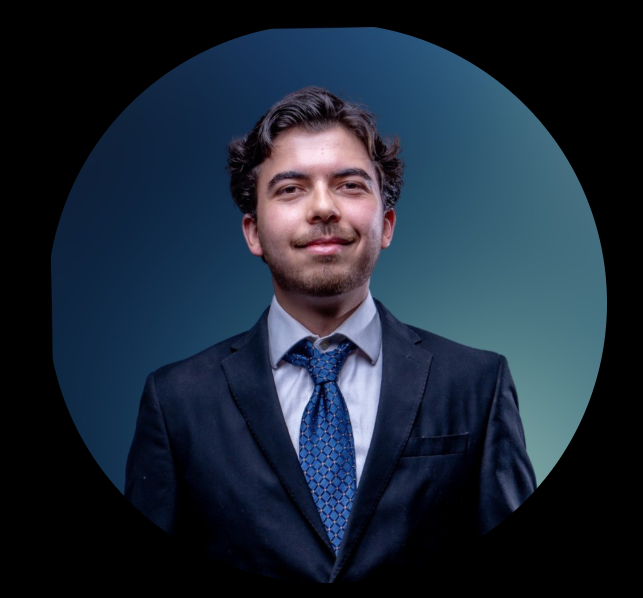
Diego Murphy is a macro fundamental FX trader based in Guadalajara, Mexico – a city most people don’t think of when they hear “FX trader.” He trades G10 FX spot (with MXN added) using positioning extremes, rate differentials, PMI cycles, and central bank policy divergence to find asymmetric setups. Outside of prop, he runs Murphy Capital Research, an institutional-grade FX macro research service in Spanish for traders across LATAM and Spain. He’s a CNBV-regulated investment advisor in Mexico under the Figura 3 AEI designation, and runs a public Darwinex track record where investors can follow and allocate to his strategy.
Q Quick intro – who are you, where are you from, and what do you trade?
A I’m Diego Murphy, based in Guadalajara, Mexico. I trade G10 FX spot with a macro fundamental approach. Outside of prop, I run Murphy Capital Research – an institutional-grade FX macro research service in Spanish for traders across LATAM and Spain – and I’m a CNBV-regulated investment advisor in Mexico under the Figura 3 AEI designation.
Q When did you become a funded trader? What changed for you at that point?
A I got funded with FTMO and started my Darwinex Zero account (DARWIN ticker: EPTN) about three years ago. What changed was how I approached risk. I’m still conservative by nature, but before getting funded I was extremely risk-averse – undersizing trades and exiting too early. Trading external capital with clear rules forced me to be more deliberate about position sizing, and to trust my framework when the setup was there.
Q How did you feel when you became a funded trader for the first time?
A Excited and frustrated at the same time. I clearly remember the trade that should have gotten me funded. I closed it a moment too early, and the profit wasn’t quite enough to hit the target – by 1 cent or so. I had to take another trade to finish the challenge, and that one finally got me through.
Q How many times did you fail before getting funded? What kept you going?
A I failed once before passing. I have a genuine passion for trading and markets, and I’ve always found this work intellectually interesting. That curiosity is what keeps me in the game even through the rough stretches.
Q What was your lowest point in trading? Did you ever consider quitting?
A I’ve been trading for about seven years, and the first two were unprofitable. That stretch was frustrating. Quitting never crossed my mind, but I knew something had to change. I started reading seriously – macroeconomics, statistics, trading psychology, lessons from other traders. That self-education was what pulled me out of the lowest point in my career. Since then, I’ve been profitable every single year.
“I dealt with self-doubt the institutional way – by separating process from outcome. If the trade was sized correctly, the thesis was data-backed, and the risk was defined, the result on any single trade is just noise.”– Diego Murphy
Q Did trading ever affect you mentally or emotionally?
A The hardest part for me wasn’t losses – it was self-doubt during periods when the thesis was sound but the market wasn’t cooperating yet. I dealt with it the institutional way: by separating process from outcome. If the trade was sized correctly, the thesis was data-backed, and the risk was defined, the result on any single trade is just noise. That mental shift is probably the single most important thing that improved my trading.
Q What does your trading style look like today?
A Medium-term macro fundamental on G10 (+MXN) FX. The core pillars are positioning extremes, interest rate differentials, PMI cycles, and central bank policy divergence. I look for asymmetric setups where positioning is stretched, the macro is aligned, and the central bank narrative is shifting. Timeframes are usually days to weeks, sometimes a month.
Q What’s a typical trading day for you? Walk us through your routine.
A Pre-market, I review overnight news, central bank communications, and any positioning updates. I update my models and check whether there’s a new trade signal or anything material developing. If something stands out, I run deeper research to validate the idea. Mid-morning, I write a daily FX commentary in Spanish for my subscribers – sharing insights and backtesting on what’s currently moving the market. For example: when oil is down 5% and SPX is up 5% in the same week, what does that historically mean for USD, AUD, and EUR? The afternoon is mostly research and content production for Murphy Capital Research, or working on quantitative tools – backtests, cointegration models, Pine Script indicators.
Q Do people around you understand what you do? How do they react?
A When I started, almost nobody around me really knew what I was doing. Guadalajara isn’t a typical financial markets hub like Mexico City, so trading FX wasn’t a familiar concept here. Over time, people have come to understand it better. The clients and traders I work with through Murphy Capital Research get it immediately, and that’s the audience that actually matters to me.
Q How has trading impacted your lifestyle?
A I’m not a millionaire (yet), and I think it’s important to say that openly – the prop trading space is full of unrealistic claims. What trading has given me is autonomy: I don’t work for anyone else anymore. Before this, I had an institutional analyst job, and trading on the side while keeping that income was what made the transition possible. I traded without financial pressure, which let me size positions properly and stick to my framework instead of forcing returns. My honest advice to anyone trying to go full-time: don’t quit your job until your trading can stand on its own. The pressure of needing the next trade to pay rent is the fastest way to blow up an account.
“Don’t quit your job until your trading can stand on its own. The pressure of needing the next trade to pay rent is the fastest way to blow up an account.”– Diego Murphy
Q What keeps you motivated to continue trading?
A I’m very motivated right now because when I look back at my track record, I can see real progress. I also see new investors on Darwinex growing their capital alongside mine, which adds a layer of responsibility and meaning to the work. And honestly, trading is intellectually demanding in a way that never gets boring – every cycle is different, every central bank reaction function shifts, every currency has its own properties and they change over time. I love it.
Q What would you tell your younger self when you first started trading?
A Learn about macroeconomics, central banks, and capital flows – then technical analysis. Most retail traders do it backwards, and that’s why most of them never make it past the first two years.
Q If I gave you a $1,000,000 funded account today, what would you do in the first 7 days?
A A million-dollar account doesn’t change the quality of setups available in the market that week – it only changes the size of what you can express when one shows up. I’d review G10 positioning extremes, run my models to check for divergences, review the central bank calendar, and then narrow down to two or three asymmetric setups where everything aligns. The traders who blow up million-dollar accounts are the ones who feel pressure to “do something” with the capital. The ones who survive treat it like any other account.
Track Diego’s Performance
Unlike most prop traders, Diego runs a public live track record on Darwinex – investors can follow his strategy, see his trades, and allocate capital to it directly.