


One Prop Trader a Day – Episode 111

Marvin Thapelo Mawasha
My name is Thapelo, and I am from South Africa. I trade forex, mainly AUD/USD and sometimes gold, building my bias on the higher timeframes and executing around the New York session.
My name is Thapelo. In Sepedi, one of the languages spoken in South Africa, my name means “prayer”, and that is where I am from. I trade forex, mainly currencies. I sometimes trade gold as well, but my main focus is the Australian Dollar against the US Dollar, AUD/USD.
I became a funded trader towards the end of 2025, and the biggest change for me was the feeling of vindication. It was not just about getting access to capital. It was confirmation that something I had spent years working on was becoming real. For a long time I believed I could trade, but becoming funded gave me proof that I could execute, reach targets and perform over a period. It was the moment where I could finally say: “I actually know what I’m doing.”
The interesting thing is that the first proof came before I even knew what prop firms were. I was still in varsity, my friends and I were moving into a new apartment, and I had a position open on either GBP/AUD or GBP/CAD. Looking back it was definitely a lucky trade, because I was overleveraged. My margin warnings were flashing, and eventually I uninstalled MetaTrader 4 because I could not handle watching it. When I reinstalled it later, the trade had gone into profit. I was ecstatic. The first thing I bought was a proper bed for myself while I was still at university. It sounds simple, but at that time it felt like proof that trading could create something tangible in my life.
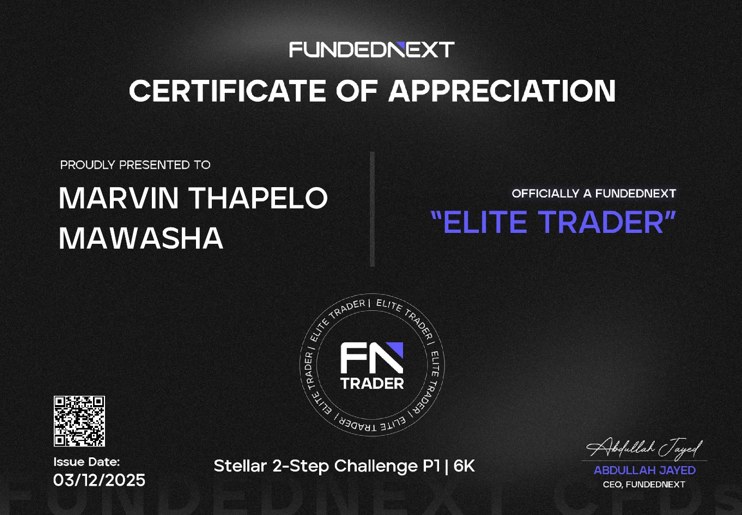
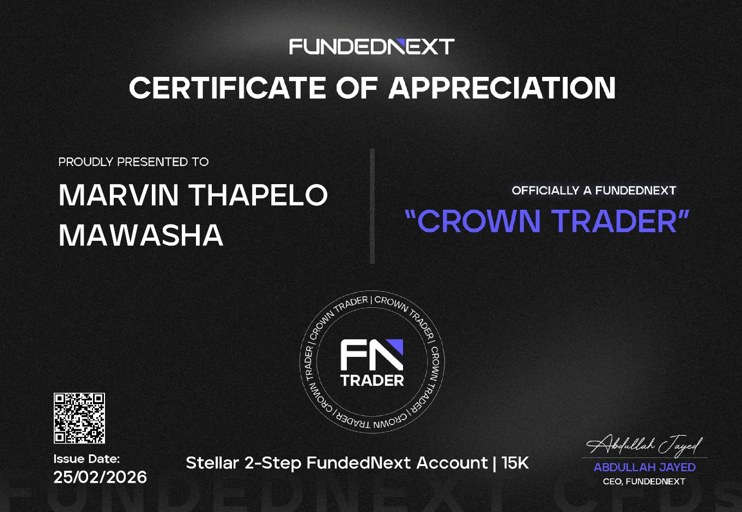
With prop firms, especially coming from South Africa, you cannot afford to fail endlessly. The challenges might be affordable relative to the funding you receive, but they are still expensive objectively. Before getting funded I failed around two or three attempts. I failed twice with FTMO over a longer period, then on my third attempt I passed a $6K FundedNext challenge, and in the same month I passed a $15K FundedNext challenge. What kept me going was bigger than just wanting funding. Trading is one of the few things I have learned in my life that truly ignited a passion in me. It makes sense to me, and I believe it has the potential to give me the life I envision. Even when there were no results, I still knew the upside was worth pursuing.
The most expensive lesson I learned was getting scammed. During the forex boom in South Africa around 2015 to 2017 I was still early in my journey. Around 2018, a group of friends introduced me to someone who claimed to be an account manager. A friend had invested R6,000 with him, other people followed, and collectively we lost over R60,000. The biggest mistake was going against what I believed from the beginning. I always wanted to learn trading myself, build a skill and earn from my own ability. Instead I trusted someone else with my money. When I wanted to withdraw profits, there were always excuses, and eventually he admitted he had lost the money and disappeared. The lesson was simple: if you want to build something, you need to take responsibility for building it yourself.
My lowest points in trading were not the losing trades. They were the times when I could not trade at all. Even then I was still interacting with the market, studying it and following price action as if I was participating. I have had many difficult moments: blowing accounts, not having money to fund accounts, being broke but still having trading ambitions, even withdrawing my last $10 from an account because I needed the money after funding it with everything I had. There are many lows, but I have never considered quitting. Trading has become part of my life. Out of all the things I could do, like gym, studying or work, trading is the one that comes naturally to me.
Trading has affected me mentally, all the time. Even after nearly nine years in the markets it can still be stressful, and I think that is simply part of the game. Over time I have learned that not every thought deserves to be trusted. Sometimes your mind is reacting to fear, frustration or recent losses rather than what the market is actually showing you. Years of journaling, trade data, funded accounts and performance records have given me confidence in my process. I no longer need to wonder whether my approach works, I know it does. The challenge today is not finding a strategy. It is executing consistently, managing emotions and avoiding the bad habits that can undermine good decisions. That is the real battle.
My primary asset is AUD/USD. Over the years I have moved away from looking for a single setup or pattern, and instead developed a framework built around establishing a strong directional bias. The higher timeframes, from the monthly down to the daily, are where I form that bias. Once I have a clear view of where I believe price should be trading, I move down to the 4-hour, 1-hour and 15-minute charts to look for execution opportunities. The foundation of my approach is premium and discount pricing, which many traders would recognise as market structure. My hierarchy of considerations starts with the asset itself, followed by the time of day, the US Dollar Index (DXY), major economic news events, and whether price is trading at a premium or discount relative to my higher-timeframe bias. I don’t trade news directly. I prefer to let the volatility settle and then look for opportunities once the market has revealed its intentions, which naturally aligns with the New York session, where I do most of my trading.
Ideally I wake up around 5 AM. I start with my hygiene routine, then have an alignment session for about an hour where I reconnect with my goals and prepare myself mentally for the day. Around 6:30 AM I go running. After that I come home, get work done, study sometimes, and around midday I go to the gym and lift weights. My trading happens later in the day. I focus on the New York kill zone, which is around 2:30 PM my local time. One thing I try to avoid is sitting on charts all day, because the market can start playing tricks on you. You start seeing things that aren’t actually there.
I learned from a loss that my rules allow for weekend holding, but even when you follow your process things can still go against you. After my stop was hit on the Monday open, I found another setup the following Friday. By market close price was still sitting around my entry, and I decided to close the position because I didn’t want to risk another Monday gap taking me out. Ironically, when the market opened the following Monday, the trade moved in my direction without ever gapping into my stop. Had I stayed in, it would have worked out. The lesson I took from that is that sometimes you can do everything correctly and still end up being wrong, and that is simply part of trading. Even being patient, waiting for your setup and following your rules can still result in a loss. The key is accepting that outcome, staying disciplined and waiting for the next opportunity.
There are a few pieces of popular advice I ignore. I don’t believe in trying to flip accounts quickly, I don’t believe in trading without stop losses, and I don’t believe in trying to predict news events and entering just before major announcements. Those things might work sometimes, but they are not sustainable. You might get lucky, but you won’t get lucky consistently. Trading is about having a process, managing risk and allowing probabilities to play out.
Do the people around me understand what I do? Not really. It is difficult, because when you start trading you often think it is easier than it is. You tell people, especially family, that this is the path you are taking and eventually it is going to work out. But as you grow as a trader you realise the journey is much harder than you originally thought. The difficult part is that I can see my own progress and other people can’t. They don’t see the knowledge, the experience or the improvements in my process. From their perspective it can look like time is passing and I am just failing. Their concern comes from not understanding the industry and wanting the best for me. They have accepted that this is what I am doing, because they know I am committed.
Trading taught me that whatever happens to me, good or bad, is connected to my decisions, and that lesson applies well beyond trading. Even if bad habits are rewarded in the short term, eventually they catch up with you. Watching charts alone in my room taught me a lot about discipline, accountability and consequences.
I don’t really like comparing myself to other traders, because you never truly know what is happening in someone else’s mind when they make decisions. Everyone has their own journey. For me the biggest difference is that I was willing to stay in the game. Trading is something I truly want, and quitting never made sense to me. The question is always this: what do you do when reality doesn’t match your expectations? When things are harder than you thought, are you willing to continue?
The advice I would give myself one year ago is simple. Keep going. Looking back, I sometimes wonder what I could have done differently, but the truth is that everything that went wrong helped me get it right. Every setback taught me something. The best thing I could have done was continue going through the process until something happened.
If prop firms disappeared tomorrow, I would trade forever. I started trading before prop firms existed for me, so why would I stop because they disappeared? Prop firms have been an incredible opportunity, because they remove a major barrier, which is access to capital. My goal is eventually to use payouts to build enough of a buffer to return to trading personal accounts. It would be a big setback if prop firms disappeared, but it wouldn’t change who I am as a trader.
And if I was handed a $1,000,000 funded account today, in my mind I already approach trading like that. The number doesn’t change the process. You treat it the same way: same risk percentage, same rules, same discipline. The bigger number shouldn’t change your behaviour. The only difference is the impact of the payouts, because 3%, 5% or 10% of a million-dollar account is life-changing money for someone like me, but the way I trade would remain exactly the same.
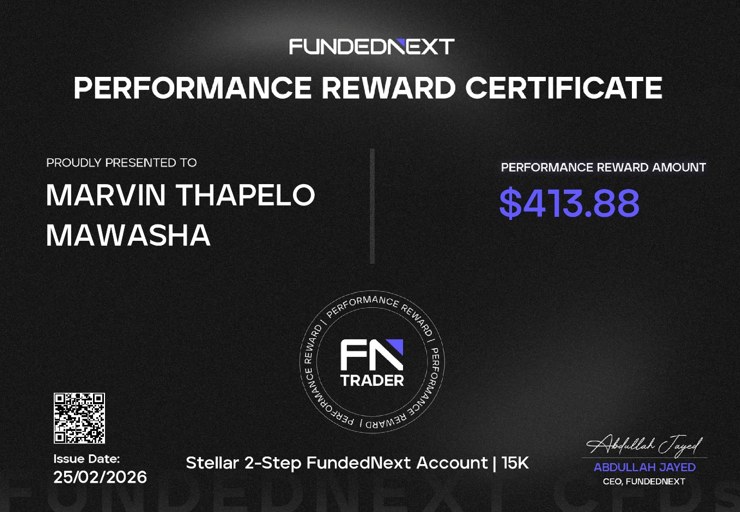
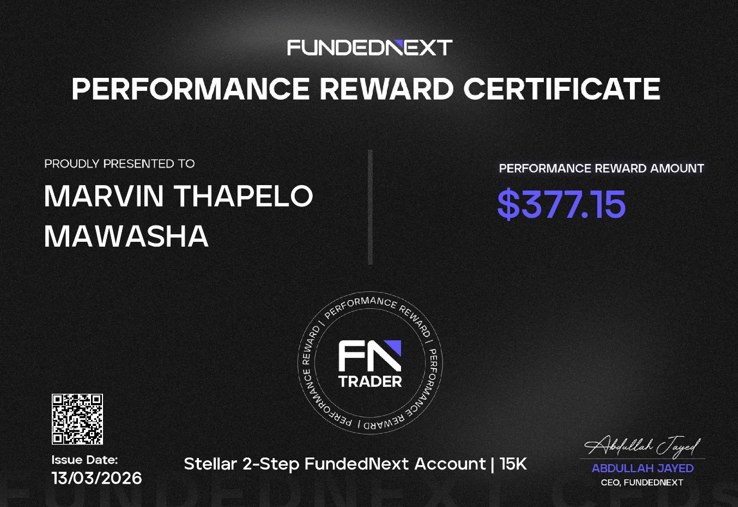
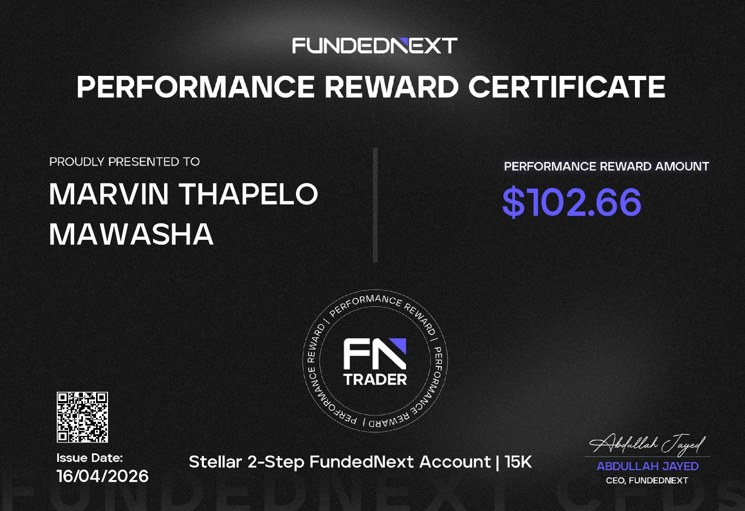
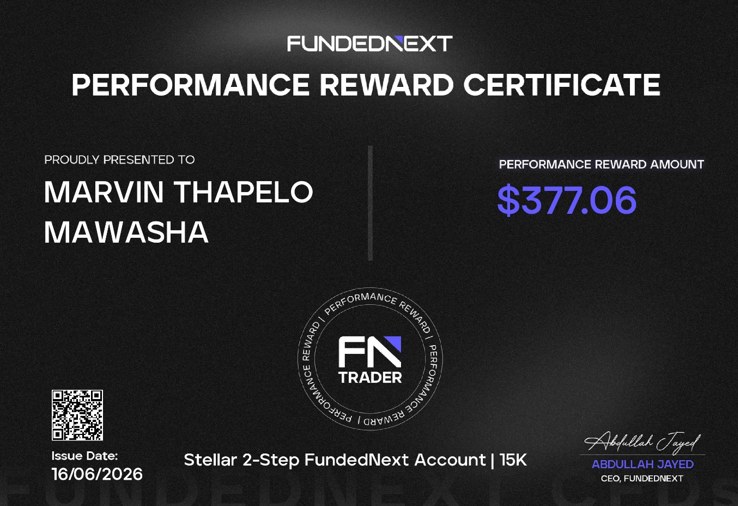
Verified funded – the receipts
About the writer – Marvin Thapelo Mawasha
Marvin Thapelo Mawasha is a South African forex trader with nearly nine years in the markets, trading AUD/USD from a higher-timeframe bias during the New York session and funded with FundedNext.Connect on LinkedIn


