

Quick answer
Most prop firm accounts die from psychology, not poor strategy – about 90-94% of failures trace to behavioral traps like revenge trading, self-sabotage near targets, and rule-breaking. The fix is mechanical: pre-trade checklists, stress monitoring, emotional journaling, and personal circuit breakers stricter than the firm’s.
Steps at a glance
- Use pre-trade checklists to interrupt impulsive decisions.
- Monitor physiological stress signals (heart rate, breathing) during trades.
- Journal trades with emotional context to spot recurring triggers.
- Set personal circuit breakers stricter than the firm’s rules as a buffer.
Key takeaways
- About 90-94% of failures come from behavioral factors – discipline loss (37.8%) and emotional trading (37.5%) – not technical skill.
- Revenge trading is neurochemical: cortisol spikes ~300% after losses, diverting focus from logic to fear.
- The ‘consistency paradox’ causes self-sabotage near profit targets due to imposter syndrome.
- Sunk-cost pressure from multiple challenge fees ($4,270 average) fuels desperation trading.
On this page
- Why Technical Skill Isn’t Enough
- Trap #1: The Revenge Trading Spiral (The Dopamine Chase)
- Trap #2: The Consistency Paradox (Fear of Success)
- Trap #3: The Rule-Breaking Rationalization Loop
- Trap #4: The Comparison Trap (Social Media FOMO)
- Trap #5: The Sunk Cost Fallacy in Challenge Fees
- The 4-Layer Psychological Defense System (Framework)
- How JoinProp’s Firm Comparisons Reveal Psychological Compatibility
- Conclusion: Psychology Is Your Edge, Not Your Enemy
- Key Takeaways
- Frequently Asked Questions
- Key Terms Glossary
- Frequently Asked Questions
Prop firm accounts represent a significant opportunity for traders to scale their capital without personal financial risk, yet the vast majority of participants consistently fail their evaluations or blow funded accounts. This recurring pattern often stems from deep-seated psychological traps rather than a lack of technical trading skill. Many traders successfully pass simulations but struggle indefinitely with live prop firm challenges because the pressure amplifies inherent behavioral biases. This article dissects the specific psychological pitfalls that routinely terminate funded accounts, providing a framework to understand and counteract them. We focus on the underlying mental processes that lead even skilled traders to self-sabotage, ensuring you grasp why these traps are so potent and how to build resilience against them.
Why Technical Skill Isn’t Enough
Technical proficiency alone rarely guarantees success in prop firm trading; instead, psychological resilience is the true differentiator. While traders might master chart patterns and indicators, the high-stakes environment of a prop firm challenge introduces emotional variables that can derail even the most robust strategies. Data from 2026 shows initial challenge failure rates between 90-94%, with only 5-10% of traders passing evaluations and a mere 7% of funded accounts receiving payouts according to Prop Firm Statistics 2026. Psychological factors, such as lack of discipline (37.8%) and emotional trading after losses (37.5%), are cited as top difficulties, with 40% of prop traders battling mental challenges overall per a Finance Magnates study. These figures highlight that most account blow-ups are behavioral, not technical.
Trap #1: The Revenge Trading Spiral (The Dopamine Chase)
Revenge trading is a compulsive reaction to a loss, where a trader deviates from their plan to aggressively recoup lost capital, often escalating position sizes or increasing trade frequency. This behavior is triggered by the brain’s innate loss-aversion response, which perceives financial losses as physical threats according to behavioral analysis. When a trader experiences a loss, cortisol levels can spike by approximately 300% within minutes, diverting blood flow from the prefrontal cortex (the logical decision-making center) to the amygdala (the fear center) as described in neuroscience research. This neurochemical imbalance drives impulsive, dopamine-seeking behavior to escape the discomfort of the loss, leading to irrational trades. Prop firm rules, particularly daily loss limits, are specifically designed to halt this destructive pattern before it escalates, yet many traders succumb, breaching these limits while attempting to recover small initial losses as noted by ThinkCapital.

Trap #2: The Consistency Paradox (Fear of Success)
The Consistency Paradox describes the phenomenon where traders self-sabotage their accounts just as they approach profit targets or a payout threshold. This isn’t a conscious decision but often stems from unconscious imposter syndrome and the psychological discomfort of success. Many traders, despite their technical skills, harbor an underlying belief that they don’t ‘deserve’ the capital or the profits, leading to a subtle self-handicapping as discussed by Trade Ideas. As a trader nears the 80% mark of their profit target, the pressure of potential success can trigger risk-averse behaviors that contradict their trading plan, or conversely, overly aggressive trades driven by a desire to “get it over with.” This often results in accounts blowing up in the final 20% of the target, not due to market conditions, but due to internal psychological shifts as highlighted in trading psychology discussions.
Trap #3: The Rule-Breaking Rationalization Loop
The rule-breaking rationalization loop is a dangerous progression where traders convince themselves that “just this once” exceptions to their trading plan or prop firm rules are justified. This seemingly minor deviation can quickly escalate. The pattern typically begins with bending a rule, such as slightly exceeding risk per trade, then progresses to outright breaking rules like overleveraging or holding trades overnight against firm policy. This is often driven by psychological justifications stemming from greed or fear, leading to violations that prop firms have zero tolerance for. Prop firms are not just testing profit ability; they are rigorously testing discipline and adherence to risk management protocols per Velotrade analysis. Overtrading, for instance, accounts for 60-70% of account breaches, often triggering drawdown violations according to MyForexFirms.

Trap #4: The Comparison Trap (Social Media FOMO)
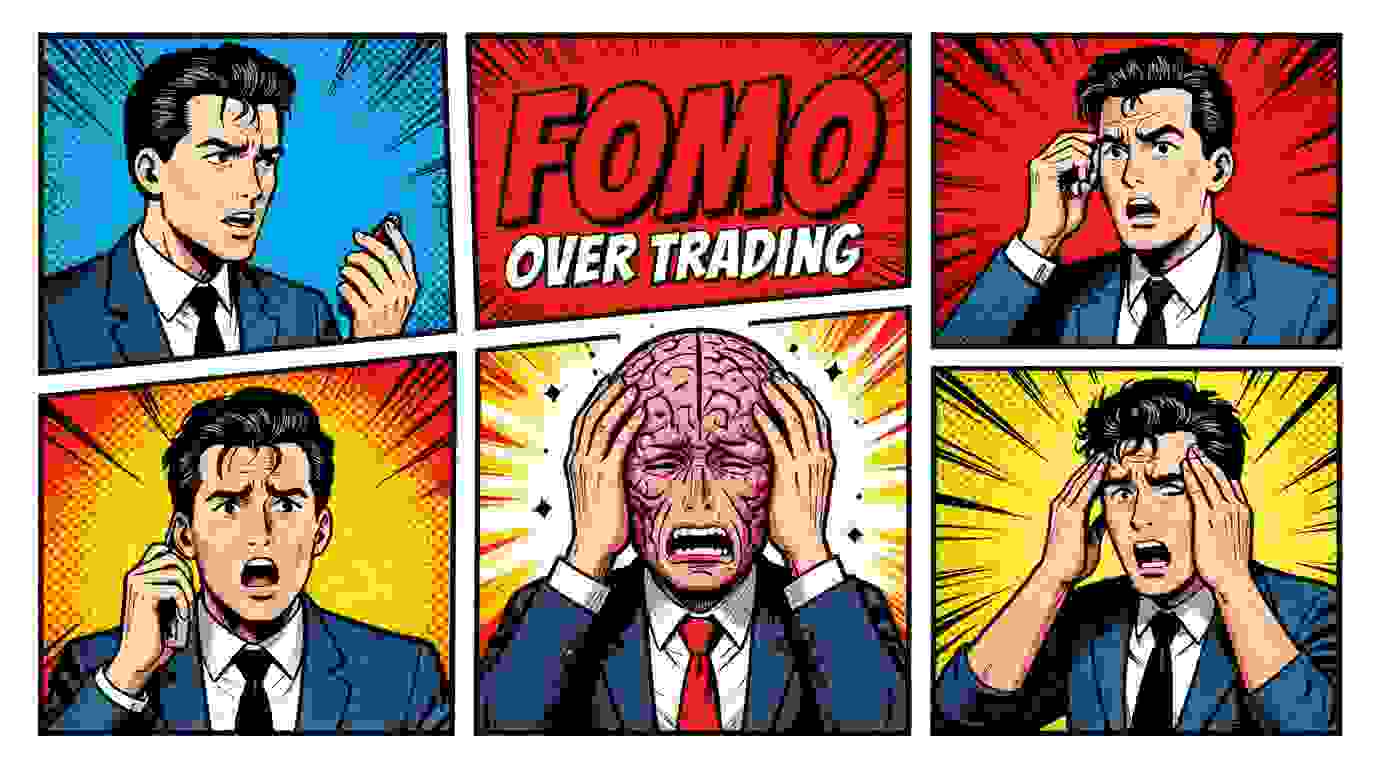
The comparison trap refers to the psychological pressure traders experience from observing the perceived success of others on social media. Platforms like Instagram and Twitter often showcase only wins and large payouts, creating an unrealistic benchmark and fostering a fear of missing out (FOMO). This selective exposure can lead traders to overtrade, increase position sizes beyond their plan, or chase volatile assets in an attempt to “keep up” with others as studied in the FOMO effect on online traders. A 2026 FINRA Foundation study found that social media users are more prone to fraud and risk-taking, often driven by entertainment and social motives rather than sound financial analysis according to their research. The prop firm challenge is a solo endeavor that demands focus on one’s own plan, not a social performance.
Trap #5: The Sunk Cost Fallacy in Challenge Fees
The sunk cost fallacy manifests when traders continue to pursue a prop firm challenge—often with increasing desperation—because of the money and effort already invested in previous failed attempts. This bias makes it difficult to walk away, even when logic dictates it’s a losing proposition as explained by Charles Schwab. Paying for multiple challenge attempts, which can average $4,270 in evaluation fees per Prop Firm Statistics 2026, creates a significant psychological weight. The thought “I’ve spent $X on attempts, I MUST pass this one” leads to desperation trading, increased risk-taking, and further rule violations. This financial pressure directly correlates with overtrading and disregard for risk management, a pattern that prop firms’ business models inadvertently exploit through repeated challenge fees from the same pool of struggling traders according to FGN Consulting.
Prop Firm Rule Structures & Psychological Pressure Levels
| Firm | Daily Loss Limit | Max Drawdown | Trading Day Minimum | Psychological Pressure Level | Best For Psychology Type |
|---|---|---|---|---|---|
| JoinProp Partner Firms (Aggregated) | Varies (often 4-5%) | Varies (often 8-10%) | Varies (4-5 days) | Moderate to High (depends on specific firm selection) | Traders seeking tailored options and transparent comparisons |
| FTMO | 5% | 10% | 4 | High (rigid daily resets, balance-based drawdown) | Disciplined traders who build profit cushions |
| MyFundedFutures | No | EOD-based (trailing) | 5 | Lower (intraday flexibility, no daily “kill switch”) | Scalpers, intraday traders who hate daily limits |
| The5ers | 5% | 10% | 5 | High (strict consistency, hyper-growth scaling pressure) | Aggressive, consistent traders with robust systems |
| Funded Next | 5% (optional for futures) | 10% (trailing) | 5 | Moderate (some flexibility, but still daily caps) | Traders who value flexibility with structured risk |
| TopStep | Varies (often 3-4%) | Varies (trailing) | 5 | High (strict trailing drawdown, lower daily limits) | Futures traders with tight risk management |

The 4-Layer Psychological Defense System (Framework)
To combat these pervasive psychological traps, traders need a structured defense system that goes beyond mere willpower. The 4-Layer Psychological Defense System provides a proactive framework.
- Layer 1: Pre-trade Rituals that Force Rational Decision-Making. This involves implementing non-negotiable checklists before every trade. These rituals (e.g., verifying market conditions, confirming risk-reward, checking news calendar) interrupt impulsive actions and ensure adherence to a predefined plan as recommended by AronGroups.
- Layer 2: Intra-trade Emotional Monitoring. Develop acute awareness of physiological stress signals during a trade, such as increased heart rate, shallow breathing, or tension. Recognizing these signals allows for immediate intervention, such as stepping away from the screen for a brief period, before emotions lead to irrational decisions per Trade With The Pros.
- Layer 3: Post-trade Journaling that Identifies Pattern Triggers. A comprehensive trading journal should track not only technical details but also emotional states (e.g., FOMO, stress, confidence) before, during, and after each trade as suggested by TradesViz. This helps identify recurring psychological triggers that lead to deviations and blown accounts, allowing for targeted self-correction.
- Layer 4: Account Circuit Breakers (Self-imposed Rules Stricter Than Firm Requirements). Implement personal risk limits that are tighter than the prop firm’s rules. For example, if the firm has a 5% daily loss limit, impose a personal 2% limit. This creates a buffer zone, allowing for emotional recovery and preventing a full breach of the prop firm’s rules as part of building daily trading routines.
How JoinProp’s Firm Comparisons Reveal Psychological Compatibility
Choosing the right prop firm isn’t just about finding the highest payout or lowest fee; it’s about finding one whose rules align with your psychological risk profile. JoinProp’s prop trading comparison platform helps traders identify firms whose structures either mitigate or exacerbate common psychological traps. For instance, understanding prop challenge rules and drawdown limits is crucial. Firms with more forgiving daily loss limits or longer evaluation periods can reduce the immediate psychological pressure that triggers revenge trading or overtrading as discussed in the JoinProp Academy. JoinProp allows you to filter and compare firms based on these critical parameters, helping you select a partner that supports your mental game rather than fighting against it. By analyzing factors like scaling plans and evaluation pressure across different firms, JoinProp helps you make an informed decision that optimizes for psychological compatibility, not just perceived opportunity.

Conclusion: Psychology Is Your Edge, Not Your Enemy
Ultimately, the traders who master their psychology consistently outperform those with superior technical setups. The prop firm industry serves as a hidden filter, where psychological resilience is the true test of a trader’s longevity and success. While technical prowess gets you in the door, managing your mind ensures you stay funded. By understanding and actively countering the psychological traps discussed—revenge trading, fear of success, rule-breaking rationalization, social comparison, and the sunk cost fallacy—traders can transform their mental game from a vulnerability into their strongest edge. Implementing a robust psychological defense system is not optional; it is the cornerstone of sustainable prop trading success.

Key Takeaways
- Prop firm failures are overwhelmingly psychological (90-94% failure rates) rather than technical.
- Revenge trading is a neurochemical response to losses, driving impulsive attempts to recoup capital.
- Fear of success (imposter syndrome) often leads to self-sabotage near profit targets.
- Rule-breaking rationalization escalates from minor deviations to account termination.
- Social media FOMO creates pressure to overtrade and deviate from personal plans.
- The sunk cost fallacy in challenge fees fuels desperation trading and increased risk.
- A 4-Layer Psychological Defense System (rituals, monitoring, journaling, circuit breakers) is essential.
- JoinProp helps traders find firms whose rules align with their psychological profile.
Related on JoinProp
Frequently Asked Questions
What percentage of prop firm account failures are caused by psychology versus lack of trading skill?
Approximately 90-94% of prop firm account failures are attributed to psychological factors, not a lack of technical trading skill according to 2026 statistics. Many traders possess winning strategies but struggle to execute them consistently due to emotional interference, leading to rule violations rather than strategy failures.
How do I know if revenge trading is why I keep failing prop firm challenges?
You are likely engaging in revenge trading if, after a losing trade, you immediately increase your position size or trade frequency outside your plan, or violate daily loss limits while trying to recover small losses within the same session as described in neuroscience of trading. This pattern is driven by the brain’s loss-aversion response.
Why do I always blow my account right before hitting the profit target?
Blowing an account right before a profit target is often due to the “consistency paradox” or fear of success, amplified by imposter syndrome as highlighted by Trade Ideas. The psychological discomfort of winning can trigger self-sabotage, leading traders to deviate from their plan in the final stretch, often by becoming overly aggressive or excessively cautious.
Which prop firm has the most forgiving rules for traders who struggle with psychology?
JoinProp’s comparison platform can help identify firms with more forgiving rules, such as higher daily loss limits or longer evaluation periods, which can reduce psychological pressure according to JoinProp Academy insights. Firms like MyFundedFutures, which utilize end-of-day drawdowns instead of strict daily limits, offer more intraday flexibility, potentially suiting traders prone to stress from immediate caps. Explore psychological aspects of prop trading.
What is the best way to stop breaking prop firm rules when I’m in a losing trade?
The most effective way to stop breaking prop firm rules is by implementing Layer 4 of the 4-Layer Psychological Defense System: self-imposed circuit breakers as part of building daily trading routines. Establish personal rules that are stricter than the firm’s requirements, such as a smaller personal daily loss limit, to create a buffer zone and prevent full rule breaches.
How much does paying for multiple challenge attempts affect my trading psychology?
Paying for multiple challenge attempts significantly amplifies the sunk cost fallacy, creating financial pressure that often leads to desperation trading per FGN Consulting analysis. This increased pressure directly correlates with higher instances of rule violations and overtrading, as traders feel compelled to recoup their investment.
Is it normal to feel like I don’t deserve funded capital even after passing the challenge?
Yes, it is common to experience imposter syndrome even after successfully passing a prop firm challenge as noted by Trade Ideas. This feeling can trigger risk-averse behavior that deviates from your trading plan or lead to self-sabotage, as prop firms primarily test psychological resilience and discipline, not just profit generation. Explore common reasons why traders fail prop firm accounts.
What are the warning signs that social media is affecting my prop trading decisions?
Warning signs that social media is influencing your prop trading decisions include feeling pressure to trade when seeing others’ wins, increasing position sizes to “keep up,” trading outside your plan to match perceived peer success, or experiencing FOMO-driven overtrading per research on the FOMO effect. This indicates a shift from rational decision-making to social comparison.
How do I journal my trades to identify psychological patterns before they blow my account?
To identify psychological patterns, your trading journal should track emotional states (e.g., FOMO, stress, confidence) before, during, and after each trade, alongside standard technical data as suggested by TradesViz. Document rule deviations, physiological signals, and recurring triggers across multiple trades to proactively spot and address destructive patterns.
Can I use JoinProp to find prop firms that match my psychological trading style?
Yes, JoinProp’s comparison filters are designed to help you identify prop firms with rule structures that align with your psychological strengths and weaknesses. By comparing daily loss limits, drawdown types, and evaluation pressure, you can select a firm whose rules support your mental game, rather than exacerbating your psychological vulnerabilities. Explore 5 major reasons why new prop traders fail.
Key Terms Glossary
Revenge Trading: Impulsive and aggressive trading to recover losses, often involving increased position sizes or frequency, driven by emotional responses.
Consistency Paradox: The psychological phenomenon where traders self-sabotage their progress just as they approach profit targets or success thresholds.
Imposter Syndrome: A persistent internal experience of feeling like a fraud despite verifiable accomplishments, leading to self-doubt and fear of being exposed. Explore strategies to pass a prop firm challenge.
Sunk Cost Fallacy: The tendency to continue an endeavor because of invested resources (time, money, effort), even when it is irrational to do so.
FOMO (Fear Of Missing Out): Anxiety stemming from the belief that others are experiencing rewarding experiences from which one is absent, often intensified by social media.
Psychological Resilience: The ability to mentally or emotionally cope with a crisis or to return to pre-crisis status quickly, essential for sustained trading success.
Circuit Breakers: Self-imposed, stricter trading rules designed to halt trading activity before prop firm limits are breached, providing a buffer for emotional recovery.
Frequently Asked Questions
Why do prop firm failures happen despite good trading skills?
About 90-94% result from psychological factors like discipline loss (37.8%) and emotional trading after losses (37.5%), not technical deficiency.
What triggers revenge trading?
Loss aversion spikes cortisol and drives dopamine-seeking behavior, pushing traders into impulsive position increases to escape discomfort and recoup losses.
Why do traders blow accounts right before hitting the target?
The consistency paradox – imposter syndrome creates unconscious self-sabotage as the discomfort of success triggers deviations from the plan.
How does social media affect prop trading?
FOMO from watching others’ wins drives overtrading and oversized positions beyond your plan, reducing rational decision-making.
Can rule-breaking be prevented?
Yes – set self-imposed circuit breakers stricter than the firm’s rules to create buffer zones before an actual violation.
Enjoyed this article? Add JoinProp as a preferred source on Google.


