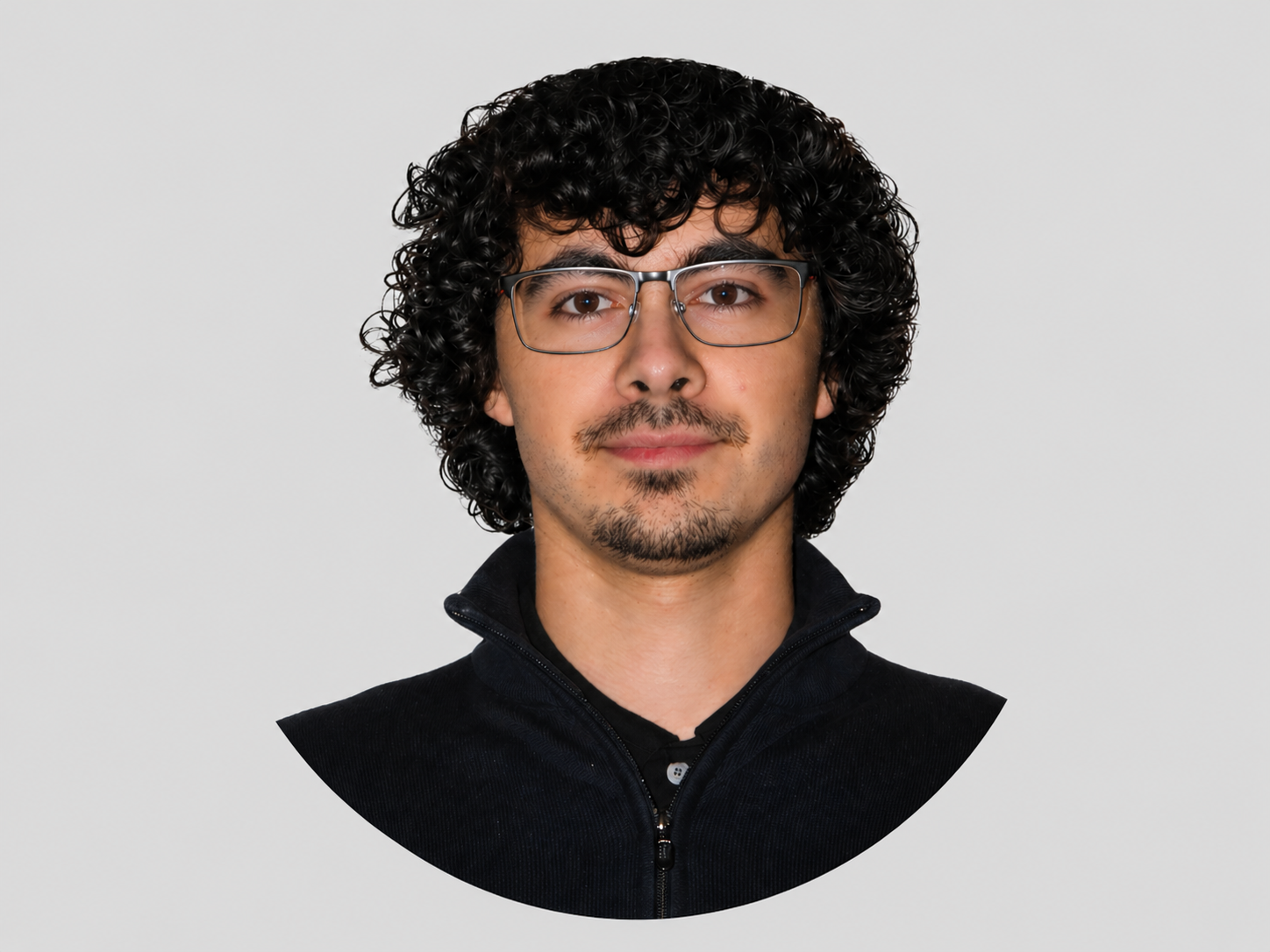
Pedro Martins is a 28-year-old trader based in Porto, Portugal. He started trading in 2017, lost $20,000 in a single week during the 2021 Russia–Ukraine outbreak, then stepped away from the charts for nearly a year before rebuilding his confidence. Today he trades XAU/USD, US30, and Nasdaq across multiple funded accounts, with discipline, patience, and emotional control at the center of his approach.
Funded since2023
Trading since2017
Primary assetXAU/USD
Portugal🇵🇹
Trading CompanyAquaFunded
Q Quick intro – who are you, how old are you, where are you from, and what do you trade?
A My name is Pedro Martins, I’m 28 years old, and I’m based in Porto, Portugal. I mainly trade XAU/USD, US30, and Nasdaq.
Q When did you become a funded trader? What changed for you at that point?
A I became a funded trader for the first time in 2023 with My Forex Funds. That milestone completely changed how I approached risk management – it made me more disciplined and more patient with the way I manage my capital.
Q How did you feel when you became a funded trader for the first time?
A The initial feeling was a deep sense of accomplishment. It felt like all the time, effort, and setbacks had finally paid off. At the same time, it came with a sense of responsibility – I now had to be even more disciplined and consistent to maintain that level.
Q How many times did you fail before getting funded? What kept you going?
A I can’t really complain – I passed my first challenge with My Forex Funds on the first attempt. After the company shut down, I had to transition to other firms, and that’s where things became more challenging. It took me around 3 to 4 attempts on some challenges before getting funded again. Despite that, I never considered giving up. Trading has always been a passion of mine, and that’s what kept me going.
Funded Across Multiple Firms
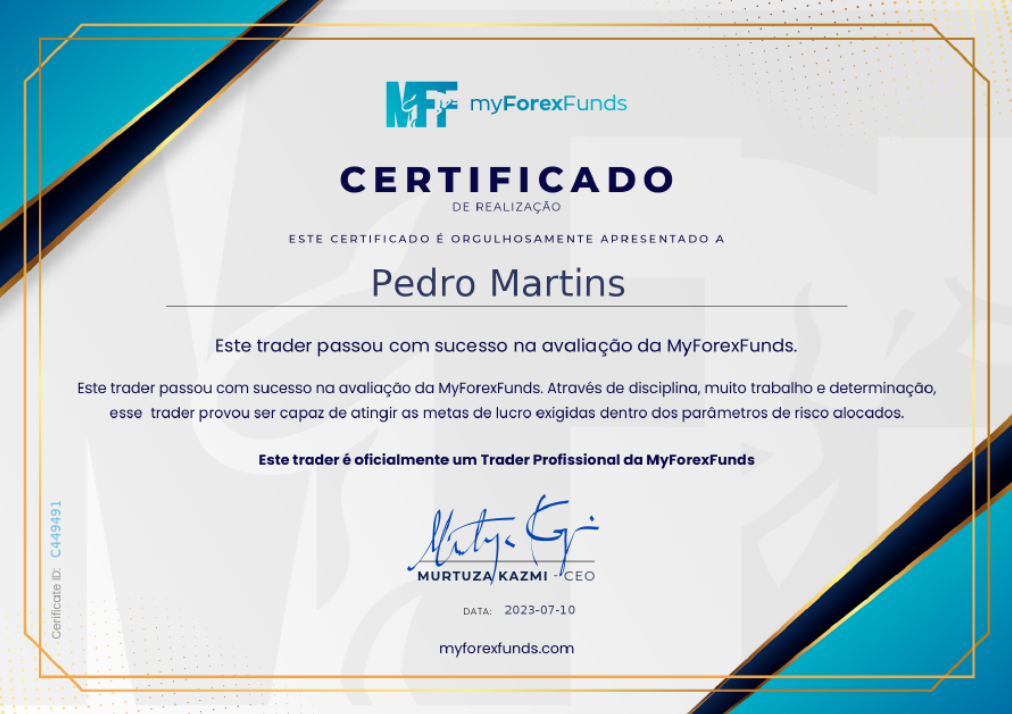
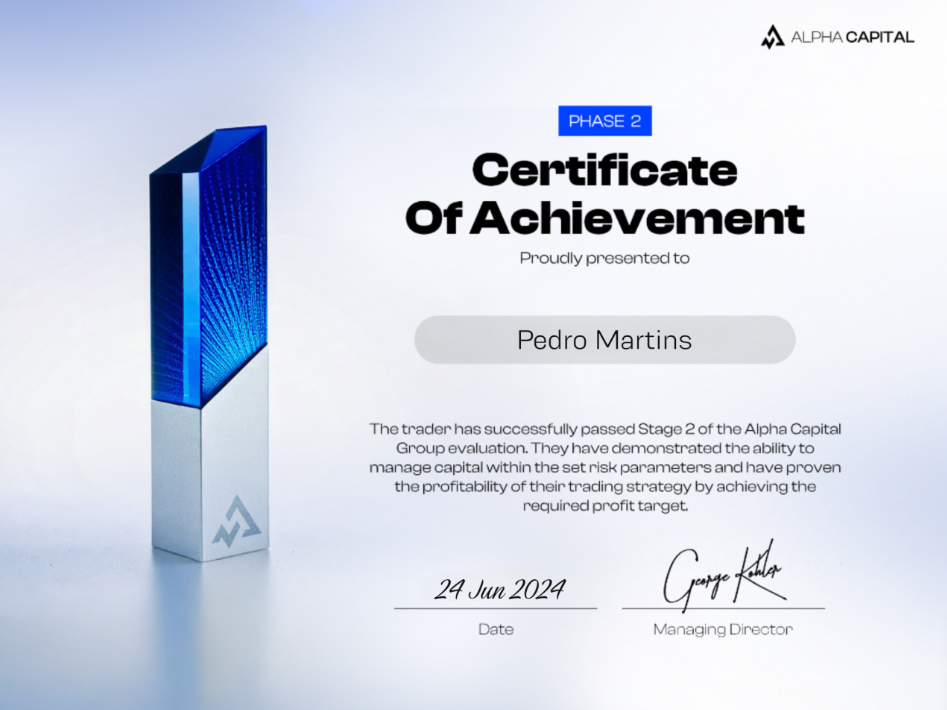
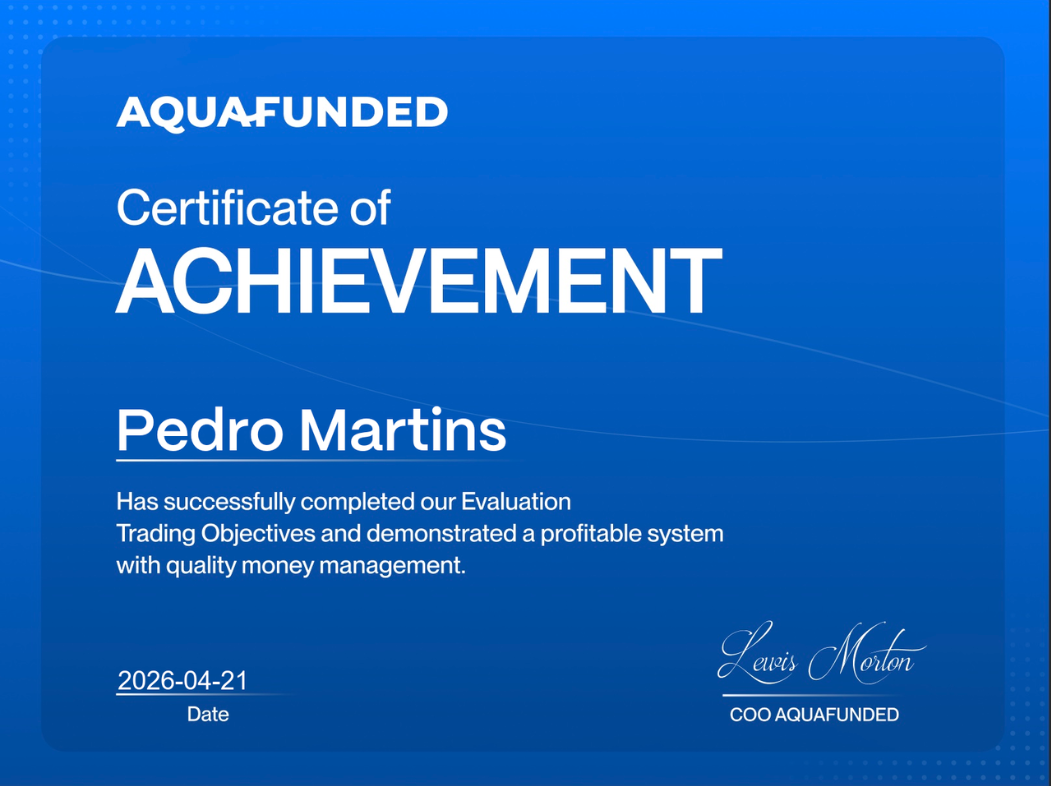
Pedro has been funded across multiple prop firms since 2023 – starting with My Forex Funds, then transitioning to Alpha Capital and AquaFunded after MFF shut down. Below are his official Certificates of Achievement from each.
Q What was your lowest point in trading? Did you ever consider quitting?
A I was first introduced to trading in 2017/2018 through a friend. I went through some mentorships, and both 2019 and 2020 went very well – to the point where I started to feel almost invincible. In 2021, during the outbreak of the Russia–Ukraine war, I experienced a major setback and lost around $20,000 in a single week. That moment had a significant psychological impact on me. For about a year, I struggled to even open the charts. But over time, at my own pace, I rebuilt my confidence and returned to the markets with a more mature mindset.
“Trading is not just about strategy. It’s about emotional control and self-awareness.”– Pedro Martins
Q Did trading ever affect you mentally or emotionally?
A Yes – especially after the experience I went through in 2021. Losing around $20,000 in such a short period had a strong psychological impact. It created a lot of self-doubt and made me step away from the charts for a while. During that phase, I realized that trading is not just about strategy, but also about emotional control and self-awareness. Over time, I worked on managing my emotions, becoming more disciplined, and approaching the markets with a clearer mindset. That experience ultimately made me a more resilient and controlled trader.
Q What does your trading style look like today?
A My preferred asset is XAU/USD. I focus on supply and demand zones – particularly areas where liquidity is likely to be present – with my levels depending on the current market structure, whether bullish or bearish. I do my higher-timeframe analysis on the M15/M30, refine my entries on the M5, and use the H1 to identify key zones. My main priority is always to trade in alignment with the overall trend, because that aligns me with higher-probability setups.
Q What’s a typical trading day for you? Walk us through your routine.
A I usually start my day by marking my key levels – in many cases they’re already defined from the previous day if the market hasn’t developed much. I set alerts at those levels and then step away from the charts, avoiding unnecessary screen time until price reaches my areas of interest. I often use that time to focus on other activities, like physical exercise. If the market doesn’t align with my analysis, I simply stay out. There’s always another opportunity the next day.
“If the market doesn’t align with my analysis, I simply stay out. There’s always another opportunity the next day.”– Pedro Martins
Q Do people around you understand what you do? How do they react?
A Most people around me don’t fully understand what I do. In the beginning, it was difficult for my family to accept that trading was something I wanted to pursue seriously. Over time they’ve become more accepting, even if they don’t completely relate to it or fully validate the path. I’ve learned to stay focused on my goals and trust my own process.
Q How has trading impacted your lifestyle?
A Trading has had a significant impact – especially in terms of time freedom. It allows me to structure my day without being tied to a fixed schedule. That flexibility gives me the opportunity to focus on other aspects of my life – hobbies, personal development – that wouldn’t be possible in a more traditional work environment.
Q What keeps you motivated to continue trading?
A The passion I still have for it. It’s something I genuinely enjoy, and that makes it easier to stay consistent over time. Without passion, it’s very difficult to maintain motivation in such a demanding field. For me, that passion is what drives me to keep improving and pushing forward.
Q What would you tell your younger self when you first started trading?
A Focus on one strategy, backtest it properly, and be more patient. One of my biggest mistakes in the early years was constantly looking for opportunities and feeling the need to always be in the market. The reality is that even with poor habits, there can be profitable periods – and that’s where the real danger in trading lies. It can create a false sense of confidence, which often leads to bigger losses later on.
Q If I gave you a $1,000,000 funded account today, what would you do in the first 7 days?
A I’d approach it the same way I trade today. My focus wouldn’t be on the account size, but on executing my strategy with discipline and proper risk management.
Connect with Pedro
Follow his journey and connect with him on LinkedIn.