Taha Abousaad describes becoming officially funded at 18 after roughly 15–20 failed accounts. In this interview with Omer, the Moroccan student explains how revenge trading, oversized positions and pressure on his living expenses led him to focus on patience, journaling and disciplined execution. His account centres on gold and US indices during the New York session.
Age, education and account experiences refer to what Taha reported in the original interview. This editorial update does not represent a new interview or confirmation of his current results.
Trader profile, funding journey and costs
Details reported in Taha’s interview
Topic
What he reports
Background
Moroccan trader; age 18 and an ESSEC student at the time of the interview.
Path to funding
Roughly 15–20 failed accounts before becoming officially funded at 18.
Markets
Gold and US indices; occasional Bitcoin trades.
Approach
ICT / Smart Money Concepts, mainly in the New York session.
Routine
Session preparation, trade journaling and reviews of rule-following.
Account fees and total cost
Not disclosed. He describes repeated purchases and pressure on everyday expenses.
Payouts and net profitability
No independently audited figures provided in this interview.
👤 One Prop Trader a Day – Episode 09
About Taha
Taha Abousaad is an 18-year-old trader from Morocco, currently studying at ESSEC Business School – one of Europe’s top business schools. He started passing prop firm challenges at 17 (under his father’s identity, before he was legally old enough), failed 15-20 funded accounts in the process, and finally became officially funded at 18. He trades commodities (especially gold) and US indices – NASDAQ, Dow Jones, S&P 500 – using ICT and Smart Money Concepts during the New York session. Below the surface: a martial-arts kid who learned that discipline costs less when you’re paying for it in lot sizes instead of bruises.
Q Quick intro – who are you, age, where are you from, and what do you trade?
A My name is Taha. I’m 18 years old and I’m from Morocco. I’m currently studying at ESSEC Business School, one of the top business schools in Europe. I mainly trade commodities – especially gold – as well as indices like NASDAQ, Dow Jones, and S&P 500. Sometimes I also trade Bitcoin during major events or strong swing-trading opportunities. I’ve always been attracted to competitive and difficult environments, which is probably why trading became such an obsession for me at a young age.
Q When did you become a funded trader? What changed for you at that point?
A I officially became funded at 18, even though I started passing challenges when I was 17 – under my father’s identity, before I was legally old enough. Becoming funded completely changed my view of trading. Before, I was mainly focused on making money quickly, but after passing I understood that trading is mostly about discipline, patience, emotional control, and understanding yourself mentally. It taught me that psychology is more important than strategy most of the time.
“Psychology is more important than strategy most of the time.”– Taha Abousaad
Q How did you feel when you became a funded trader for the first time?
A It honestly felt unreal. I still remember the moment my trade hit take profit and I received the confirmation email saying I passed the challenge. After failing multiple accounts before, that moment meant a lot to me. I couldn’t even sleep that night because I realized I had achieved something many retail traders never achieve. Social media sometimes makes funded trading look normal and easy because we constantly see people flexing payouts and multiple accounts, but the reality is that only a small percentage of traders actually succeed consistently.
Q How many times did you fail before getting funded? What kept you going?
A I probably failed around 15 to 20 funded accounts before finally succeeding. As a high school student at the time, it wasn’t easy – I was spending money that honestly could have gone toward normal teenage things like going out with friends or enjoying myself. But I kept going because I genuinely loved the challenge. Trading is one of the hardest mental games someone can experience, and I’ve always been someone who enjoys difficult things rather than easy paths. I believed that if I stayed persistent long enough, eventually I would figure it out.
Certificates and evidence
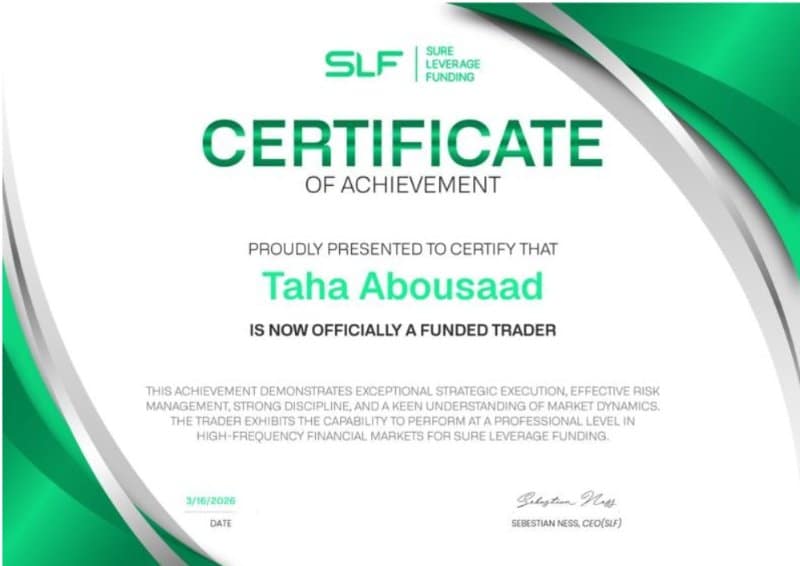
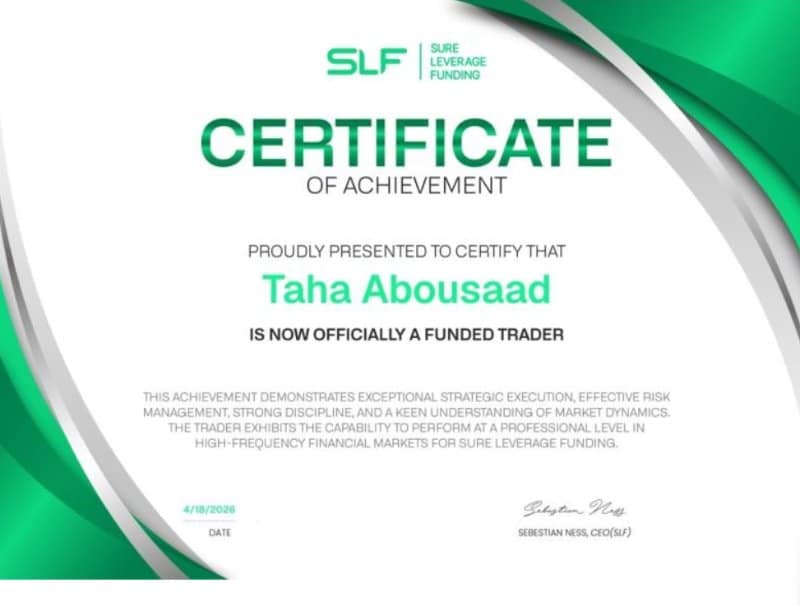
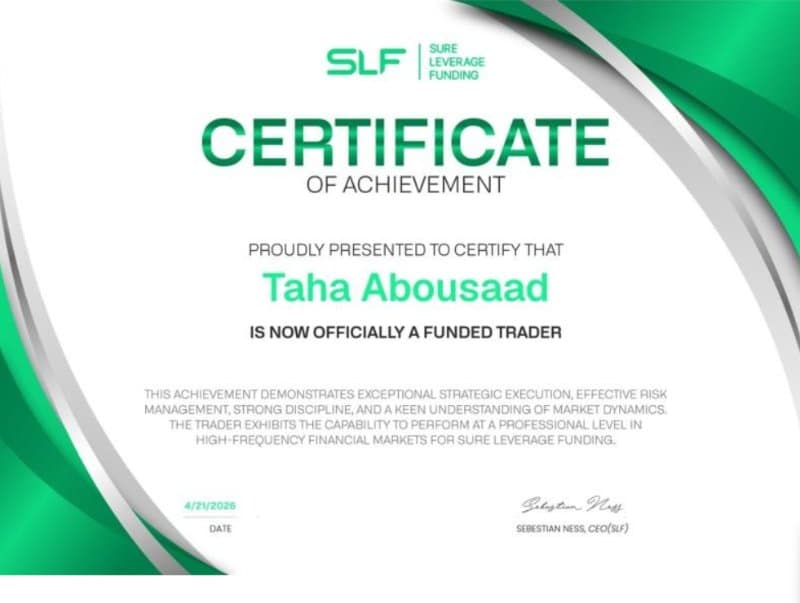
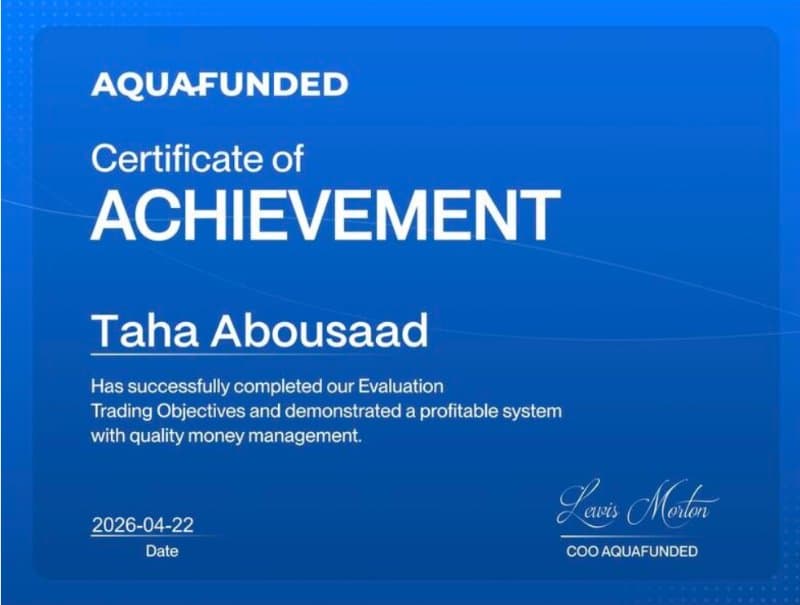
The certificates displayed below accompany Taha’s account of his funding journey. They are not an independently audited trading record and do not establish total fees, net profitability, verified payouts or whether an account remains active.
Q What was your lowest point in trading? Did you ever consider quitting?
A My lowest point was definitely during periods of revenge trading. Every time I lost an account, I would instantly buy another one and try to recover everything with one huge trade using oversized lot sizes. Since I mainly traded very volatile instruments like gold and indices, my stop loss would get hit in seconds sometimes. It got so bad that when I became a university student, I was stressing about basic expenses and even sacrificing money I needed for daily life just to keep trading. That period really damaged me mentally – I felt trapped in a cycle of losses and frustration. I thought about quitting many times, but deep down I knew the issue wasn’t trading itself; it was my lack of emotional control and discipline at that stage.
Q Did trading ever affect you mentally or emotionally?
A Definitely – especially during losing periods. Social media makes it even harder because you constantly compare yourself to traders posting huge profits every day. You start questioning yourself when you see someone claiming to make $50,000 or $100,000 in a single day while you’re struggling to make even a small profit consistently. There were moments where I felt overwhelmed, stressed, and even felt like I was failing in life because so much of my identity became attached to trading success. Sometimes I even wondered how professional traders manage to stay in the markets for 30 or 40 years, because mentally it can become exhausting.
Trading style and routine
Q What does your trading style look like today?
A Today my trading style is mainly based on ICT and Smart Money Concepts. I first mark the highs and lows of each session, identify liquidity levels, and define my daily bias. I look for liquidity sweeps, market structure shifts, fair value gaps (FVGs), inverse fair value gaps (IFVGs), and OTE retracements to refine entries on the lower timeframes – 1M and 5M. Most of my trades are during the New York session on gold and indices, and I usually aim for 1:3 or 1:4 risk-to-reward setups while focusing only on high-probability trades instead of overtrading every move.
Q What’s a typical trading day for you?
A Since I’m still a university student, my days are balanced between studying and trading. I usually wake up around 8:30 AM and first review what happened during the Asian and London sessions while I was asleep. Then I go to class, and during the afternoon I start preparing for the New York session – that’s the session I mainly trade. After my trades, I always journal everything and review my mistakes, especially if I broke one of my personal rules. Even if a trade wins, I still analyze whether the execution respected my system or not. Before sleeping, I often check the charts one last time, although I avoid trading market opens too aggressively because volatility can become dangerous.
Q Do people around you understand what you do?
A Not really at first. Most of my friends are in medicine or engineering, so trading feels very unusual to them. They usually ask funny questions about charts or how selling works in the market. What makes me laugh most is when they see funded accounts and think I personally own all that money. At first many people think prop firms are fake or that trading is some kind of scam, so I’ve become used to explaining the same things over and over again. But honestly, it’s always funny seeing their reactions.
Q How has trading impacted your lifestyle?
A Trading completely changed my mindset and discipline. I honestly think the discipline I learned through trading is stronger than what I learned doing martial arts as a kid. In trading, mistakes directly cost you money – and when money leaves your pocket because of emotional decisions, you learn very quickly. Trading taught me patience, emotional control, and how to stay calm under pressure. It also made me realize that sometimes when you stop forcing things in life and stay patient, better opportunities naturally come.
Q What keeps you motivated to continue trading?
A Of course money is part of the motivation, but honestly it’s not the biggest reason anymore. I’m motivated by the challenge itself and by the idea of building a name for myself in the trading and finance industry. Since I want to work in finance long term, trading became something bigger than just making money online. I also want to represent my country, my school, and my family in a positive way – and hopefully inspire younger people who are trying to achieve difficult goals themselves.
Q What would you tell your younger self when you first started trading?
A I would tell myself to slow down and trust the process. Don’t rush setups, don’t overtrade, and stop thinking success has to happen overnight. Most mistakes in trading come from impatience and emotions.
“Even making 1% consistently on a large account is already life-changing. My focus would be discipline and consistency – not trying to impress people with huge gains.”– Taha Abousaad
Q If I gave you a $1,000,000 funded account today, what would you do in the first 7 days?
A Honestly, I would become even more careful. With an account that size, protecting capital becomes more important than chasing profits. I would only take the highest-quality setups and probably risk around 0.5% per trade maximum. Even making 1% consistently on a large account is already life-changing, so my main focus would be discipline and consistency rather than trying to impress people with huge gains.
Connect with Taha
Follow his journey and connect with him on LinkedIn.
A routine of preparing, journaling and reviewing execution.
More emphasis on following his process than chasing large gains.
What the experience cost him
Repeated account failures and spending on replacement accounts.
Revenge trading with oversized positions.
Stress about living expenses and comparisons with social-media results.
These are Taha’s reported experiences. His story does not establish that repeated paid attempts lead to funding or that the approach produces consistent profits.
Frequently asked questions
How did Taha Abousaad become funded at 18?
Taha says he became officially funded at 18 after roughly 15–20 failed accounts. In the interview, he credits patience, emotional control and greater discipline; this is his personal account, not a typical success rate.
What markets and trading style does Taha describe?
He describes trading gold and US indices mainly during the New York session, using ICT and Smart Money Concepts. His answers mention liquidity sweeps, market-structure shifts and fair value gaps on one- and five-minute charts.
How much did his failed accounts cost?
Taha describes repeated account purchases and pressure on his living expenses, but does not disclose the total amount spent, individual challenge fees or net earnings. The number of failed accounts cannot establish his total cost.
What do the certificates on this page establish?
The page displays funded-account and achievement certificates alongside the interview. They are not an independently audited trading statement and do not establish net profitability, total fees, verified payouts or current account status.
What changed in his trading routine?
He says he prepares for the New York session, journals his trades and reviews whether execution followed his rules, including after winning trades. He also describes trying to avoid revenge trading and oversized positions.
Sources and editorial context
Primary source: the interview answers reproduced above, attributed to Taha Abousaad; interview by Omer, published by JoinProp with JoinProp Content Team attribution.
Supporting material: the five certificate images shown on this page. Their display should not be read as an independent audit of account history or returns.
Statements about psychology and trader success inside the interview are the speaker’s views, not statistical findings established by this article. References to account access before age 18 describe his past experience and are not instructions to use someone else’s identity.