Proprietary trading firms are rapidly integrating advanced AI for everything from trade analysis to risk monitoring and even evaluating aspiring funded traders. This quiet revolution is establishing new benchmarks for success, leaving many traditional traders at a significant disadvantage.
While AI-native competitors emerge, most traders still rely on manual strategies, unaware of how deeply AI is reshaping the prop trading landscape. This article will explore how AI is changing prop trading, identify where human traders still hold an edge, and outline actionable strategies to adapt.
AI-driven prop trading refers to the strategic integration of artificial intelligence tools and systems throughout the proprietary trading lifecycle, from pre-trade analysis and execution to real-time risk management and post-trade evaluation. This shift is creating a new skill floor for traders seeking funded accounts.
How Prop Firms Are Already Using AI (Behind the Scenes)
Prop firms are deploying AI extensively to enhance operational efficiency and mitigate risk, fundamentally altering the environment for funded traders. These systems provide a significant competitive advantage by optimizing various aspects of trading operations.
AI-powered risk management systems detect pattern trading and rule violations in real-time. This includes identifying abusive practices like latency arbitrage and toxic flow, which can lead to immediate account termination per TTT Markets.
- Automated trader evaluation scores are based on consistency metrics, drawdown behavior, and risk-adjusted returns, providing objective assessments.
- Predictive models flag high-risk traders before they blow accounts, with AIBI.Global’s AI achieving approximately 93% accuracy in forecasting trader profitability after just ten trades.
- Real-time trade analysis, powered by AI, can reduce emotional biases and improve win rates by up to 25%, according to a Deloitte study cited in 2026 industry analysis.
The EU’s MiFID III updates for 2026 also demand greater transparency, accelerating AI adoption for compliance and risk monitoring as noted by ESMA.

The New Breed: AI-Assisted Traders vs. Traditional Discretionary Traders
AI-assisted trading in prop contexts combines human decision-making with powerful analytical tools, creating a hybrid approach that outperforms pure manual or fully automated strategies. This synergy leverages the strengths of both human intuition and machine efficiency.
AI-assisted trading involves using tools for sentiment analysis, automated backtesting, and intelligent trade journaling, rather than fully automated execution. This allows traders to leverage AI’s analytical power without ceding full control.
- AI-assisted traders achieve an average ROI of 34.2% with a Sharpe Ratio of 1.24, significantly outperforming manual traders who average 18.7% ROI and a 0.42 Sharpe Ratio, based on 2025 data.
- Their maximum drawdowns are also lower, at -16.8% compared to -34.2% for manual traders according to Thrive.fi.
- Pure algorithmic trading often fails prop firm rules due to over-optimization, latency arbitrage flags, or lack of adaptability to novel market conditions as highlighted by Liquidity Finder.
The hybrid approach, blending human judgment with AI analysis, is emerging as the most profitable strategy per Firstock’s 2026 analysis.
Where Human Traders Still Have the Edge (For Now)
Despite AI’s advancements, human traders retain critical advantages, particularly in areas requiring nuanced judgment and adaptability. These strengths are essential for navigating complex and unpredictable market scenarios.
Humans excel at adapting to unprecedented market events that AI models haven’t been trained on, bringing invaluable qualitative analysis to the table. This includes interpreting geopolitical shifts or emergent macroeconomic narratives that AI struggles to contextualize.
- Psychological resilience and emotional regulation during drawdowns are uniquely human traits; AI cannot replicate discipline under pressure.
- Fundamental analysis and macro narrative interpretation offer insights beyond purely quantitative metrics, allowing for strategic long-term positioning.
- Prop firms still reward consistent human judgment over black-box systems, especially when a trader can articulate their edge and risk management framework.
The most effective approach today is a hybrid model, combining human intelligence with machine efficiency states Firstock.
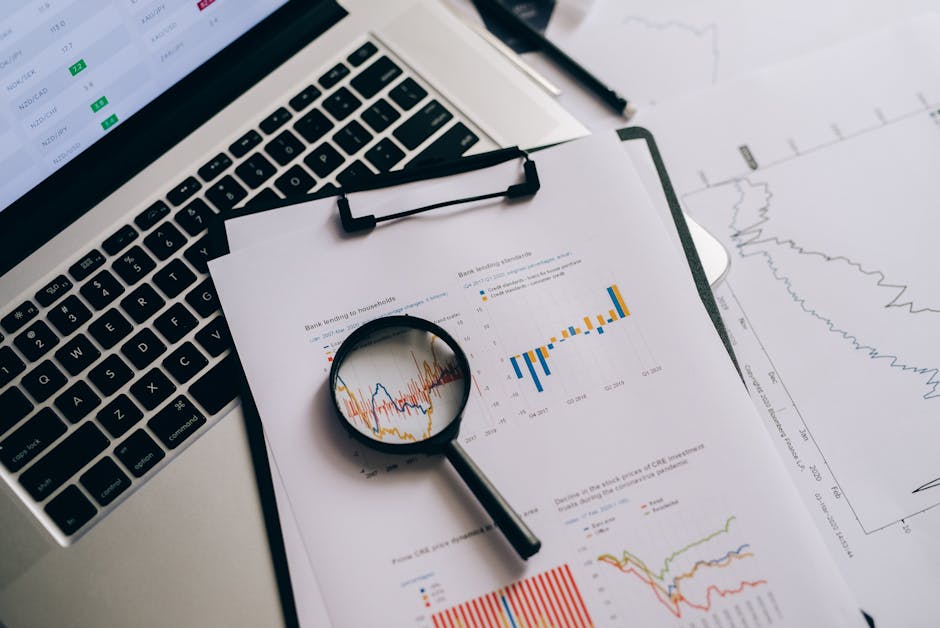
5 Ways to AI-Proof Your Prop Trading Career in 2026
To thrive in an AI-driven prop trading landscape, traders must proactively integrate AI tools and develop skills that complement machine capabilities. This strategic adaptation ensures long-term viability and competitiveness.
- Learn to use AI as a co-pilot: Integrate tools for sentiment analysis, trade journaling automation, and pattern recognition assistants to augment your decision-making. AI-powered journaling, for example, can reduce emotional trading errors by 30% according to Journalyze.
- Focus on strategies AI struggles with: Develop expertise in longer timeframes, fundamental catalysts, and multi-asset correlation plays where human insight adds significant value. These areas often involve qualitative judgment beyond typical AI pattern recognition.
- Develop meta-skills: Master robust risk management frameworks, precise position sizing discipline, and psychological consistency. These human-centric skills are crucial for navigating drawdowns and maintaining long-term profitability.
- Document your edge: Create a repeatable process that is explainable and transparent. Prop firms distrust pure black-box approaches and value traders who can articulate their methodology and risk controls.
- Choose firms that value hybrid traders: Utilize platforms like JoinProp to compare evaluation criteria across firms, identifying those that support AI-assisted strategies while maintaining a focus on human oversight and risk management. Consider firms that offer AI and prop trading resources.
By adopting these strategies, traders can transform AI from a threat into a powerful ally, increasing their chances of success in funded accounts. The skills a prop trader needs are evolving rapidly.

The Comparison: AI-Friendly vs. AI-Restrictive Prop Firms
The landscape of prop firms is bifurcating into those that embrace AI and algorithmic trading and those that maintain stricter manual-only policies. Understanding these differences is crucial for traders leveraging AI tools.
Different prop firms treat algorithmic and AI-assisted trading with varying degrees of acceptance, from full API access to outright bans. This diversity in rules impacts a trader’s ability to deploy advanced strategies.
Prop firms employ real-time risk engines and AI-driven detection systems to identify and flag algorithmic trading patterns, with particular focus on abusive strategies like latency arbitrage and toxic flow according to IntelligentHQ. This stricter enforcement is a major trend for 2026.
| Firm Name | Allows Algo/API Trading | AI Tool Restrictions | Evaluation Focus | Best For |
|---|---|---|---|---|
| Optimal Traders | Yes (explicit HFT/ALGO accounts) | Few, supports platform APIs | Low fees, fast payouts, scalability | Traders with advanced algorithmic strategies and high frequency trading (HFT) |
| The Trading Pit | Yes (bots, custom integrations) | C#/C++ developer-friendly | Developer-focused allocation | Programmers and advanced quant traders seeking API access |
| FTMO | EAs/cBots allowed | No direct REST API, strict rules against latency arbitrage | Consistency, risk management, controlled drawdowns | Traders using well-behaved EAs and emphasizing risk control |
| Apex Trader Funding | Yes (futures algos via R|Trader) | Adherence to specific futures platform rules | High pass rates, quick funding, futures trading | Futures traders utilizing automated strategies within platform guidelines |
| General “Strict” Firms | No (or highly restricted) | Bans on HFT, Martingale, grid trading, copy trading | Manual discretion, strict consistency rules (e.g., 30% profit cap/day) | Pure discretionary traders or those avoiding automation |
JoinProp’s analysis indicates that firms like Optimal Traders and The Trading Pit are best positioned for the AI trading era due to their supportive infrastructure for automated strategies per GrowYourPropFirm. Understanding algorithmic trading in prop firms is essential.

Key Takeaways
- Prop firms are extensively using AI for risk management and trader evaluation, raising the bar for challenge success.
- AI-assisted traders significantly outperform pure manual traders in ROI and risk-adjusted returns.
- Human traders still hold an edge in adapting to novel market events and applying psychological resilience.
- AI-proofing your career involves integrating AI tools as a co-pilot, focusing on meta-skills, and choosing AI-friendly firms.
- Firms vary widely in their acceptance of algorithmic and AI-assisted strategies; due diligence is crucial.
Conclusion: Adapt or Get Left Behind
The reality is clear: AI isn’t replacing prop traders yet, but it’s decisively raising the skill floor. Traders who strategically integrate AI tools and adapt their methodologies are the ones dominating funded account competitions and securing long-term success.
This evolving landscape demands a proactive approach. Start with one AI tool this month, track its performance delta, and iterate your process. The future of prop trading belongs to those who embrace the hybrid model, combining human ingenuity with AI’s analytical power. Explore reasons why new prop traders fail.
JoinProp helps traders navigate this new era by providing independent comparisons of prop firms, detailing their AI-friendliness, evaluation transparency, and rule sets. Our platform empowers you to choose a firm that aligns with your evolving, AI-enhanced trading strategy.
Frequently Asked Questions
Are prop firms using AI to evaluate traders?
Yes, prop firms are increasingly using AI for evaluation. They leverage AI for real-time risk monitoring, detecting pattern trading, and scoring traders based on consistency metrics and drawdown behavior, with some systems achieving 93% accuracy in predicting profitability after just ten trades.
Can I use AI tools to pass a prop firm challenge?
You can use AI tools to pass a prop firm challenge, but it depends on the firm’s rules. While AI analysis tools like sentiment trackers are generally allowed, full automation or high-frequency trading (HFT) is often restricted or banned due to rules against latency arbitrage or toxic flow per TTT Markets.
What is AI-assisted trading in prop trading?
AI-assisted trading in prop trading involves using AI tools as a co-pilot to enhance decision-making, rather than fully automating trades. This includes leveraging AI for sentiment analysis, automated backtesting, and intelligent trade journaling to improve trade selection and risk management.
Do AI traders perform better in prop firm evaluations?
AI-assisted traders generally perform better in prop firm evaluations. They show higher average ROI (34.2%) and lower maximum drawdowns (-16.8%) compared to manual traders according to 2025 data, while pure algorithmic trading may struggle with prop firm rules.
Which prop firms allow algorithmic trading in 2026?
Several prop firms allow algorithmic trading in 2026, including Optimal Traders, The Trading Pit, FTMO (for EAs/cBots), and futures firms operating through Rithmic/NinjaTrader like Apex Trader Funding. These firms often provide API access or compatible platforms for automated strategies as noted by GrowYourPropFirm.
How do I know if a prop firm will flag my AI trading?
To avoid flagging, review the prop firm’s specific rules on automated trading, HFT, and “toxic flow” patterns. Firms use AI-powered real-time risk engines to detect rule violations, so ensure your strategy aligns with their guidelines, particularly regarding consistency and trade frequency.
What AI tools should prop traders use?
Prop traders should consider using AI tools for sentiment analysis, automated trade journaling, and pattern recognition. These tools can help identify market trends, reduce emotional trading errors, and refine strategies without violating firm automation rules.
Will AI replace human prop traders?
AI is not expected to entirely replace human prop traders; instead, it is transforming the role. Human judgment, adaptability to novel market events, and psychological resilience remain critical, making a hybrid approach that combines human oversight with AI tools the most effective strategy. Explore prop trading training programs.
How is JoinProp helping traders navigate AI in prop trading?
JoinProp helps traders navigate AI in prop trading by providing independent comparisons of firms based on their AI-friendliness, evaluation transparency, and specific rules regarding automated trading. This allows traders to select firms that best suit their AI-enhanced strategies.
What’s the difference between AI trading and algorithmic trading in prop firms?
AI trading broadly refers to leveraging artificial intelligence for analysis and decision-making, while algorithmic trading specifically involves automated execution of trades based on predefined rules. In prop firms, AI analysis is often encouraged, but unsupervised algorithmic trading can be restricted if it violates rules like latency arbitrage or consistency requirements.
Key Terms Glossary
Proprietary Trading Firms (Prop Firms): Financial institutions that trade their own capital in financial markets, rather than on behalf of clients.
Funded Trader: An individual who has successfully passed a prop firm’s evaluation program and trades the firm’s capital for a profit split.
AI-Assisted Trading: A hybrid approach where human traders use artificial intelligence tools for analysis, insights, and risk management, but retain ultimate control over trade execution.
Algorithmic Trading: The use of computer programs to execute trades based on predefined rules and market conditions, often at high speeds.
Latency Arbitrage: An abusive trading strategy that exploits tiny price discrepancies between different exchanges or data feeds, often detected and prohibited by prop firms.
Drawdown: The peak-to-trough decline in the capital of a trading account, often a key metric monitored by prop firms for risk management.
Sentiment Analysis: The use of AI and natural language processing to determine the emotional tone or opinion expressed in text, often applied to market news and social media.
Evaluation Program: A simulated trading period offered by prop firms to assess a trader’s skills, consistency, and risk management before offering a funded account.